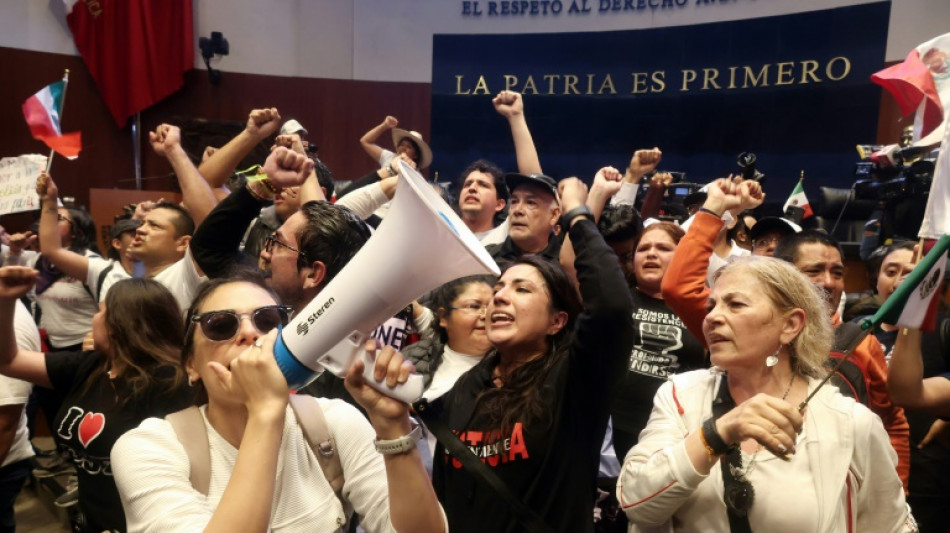
Mexico president signs contested judicial reforms into law / Photo: Silvana FLORES - AFP/File
 Former Iowa State Women's Basketball Players Accuse Coach Bill Fennelly of Abuse

 How Families Budget for Youth Sports Travel Seasons

 ALIX LASERS shareholders remove Michael Sobitsch as managing director in view of the circumstances
President Andres Manuel Lopez Obrador announced Sunday that he had signed into law controversial judicial reforms making Mexico the world's only country to elect all its judges by popular vote.
The outgoing leftist leader signed the decree in a video posted on social media, calling it a "historic day."
He was accompanied by president-elect Claudia Sheinbaum, his close ally, who will replace him on October 1 following her landslide election win in June.
Lopez Obrador had pushed hard for the constitutional changes, criticizing the current judicial system as "rotten," corrupt, and serving the interests of the political and economic elite.
Opponents and legal experts fear that elected judges could be more vulnerable to pressure from criminals in a country where powerful drug cartels regularly use bribery and intimidation to influence officials.
Lopez Obrador has frequently lashed out at the judiciary since taking office in 2018 -- in particular the Supreme Court, which has impeded some of his policies in areas such as energy and security.
Last week, legislators were forced to suspend their debate and move to another location after demonstrators stormed the Senate, chanting "The judiciary will not fall."
Opponents, who accuse Lopez Obrador of overseeing a trend toward democratic backsliding, have held a series of protests against the plan, under which Supreme Court and other high-level judges would be chosen by popular vote.
The United States, Mexico's main trading partner, has warned that the reforms would threaten a relationship that relies on investor confidence in the Mexican legal framework.
F.Bennett--AMWN



