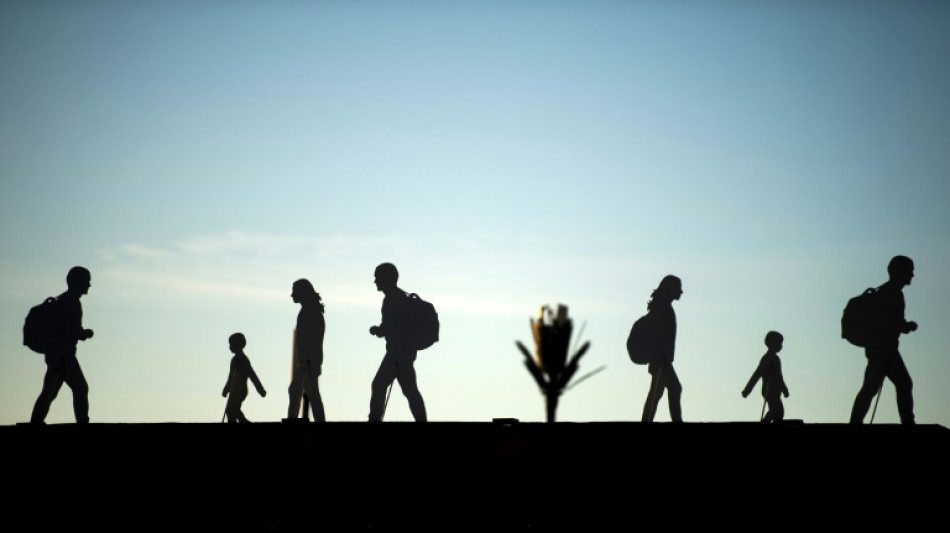
Double standard in Europe's treatment of Ukrainian, African migrants: IFRC president / Photo: FADEL SENNA - AFP/File
 SmartBuyerAI Gives Car Buyers an Itemized Check of Dealer Offers as FTC Steps Up Price Transparency Enforcement

 Fulcrum Metals PLC Announces Uranium Readings up to 0.42% U(3)O(8) at Charlot-Neely

 Devan Ekambaram and Susha’s 'Varuvaaiy' Makes History as First Tamil Song Nominated for a Grammy

The president of the Red Cross and Red Crescent societies on Monday rebuked what he said was Europe's starkly different treatment of African migrants compared to those from Ukraine.
"Yes, there is a double standard" when it comes to people seeking protections in Europe, IFRC President Francesco Rocca said during a press conference at the UN.
Rocca, who was attending a forum to assess the progress made since the adoption of a Global Compact on Migration in 2018, said there was no difference between "anyone fleeing Donbas (in Eastern Ukraine) or someone fleeing violence of the radical group Boko Haram in Nigeria."
The International Federation of Red Cross and Red Crescent Societies, which brings together more than 190 separate braches, was participating at the UN gathering of political leaders, civil societies and diaspora communities, among other groups.
While he applauded communities in Europe for embracing millions of refugees over a short period of time, Rocca regretted that only thousands of migrants had been welcomed from Africa, often arriving on the continent by way of the Mediterranean.
"Those who are fleeing violence, those who are seeking protection should be treated equally," he said, but added that "ethnicity and nationality should not be deciding factors in saving lives."
More than 150 countries in 2018 signed the United Nations' Global Compact for Migration, a non-binding pact that aims to draw up a framework to deal with the global challenges of migration.
Despite the known risks -- and mounting evidence of abuses -- migrants continue to trek toward Europe from Africa.
Tens of thousands of migrants attempt the dangerous and often deadly crossing from Libya to Italy every year, for example, with more than 31,000 making the journey by sea last year, according to UN figures.
Meanwhile Six million refugees have fled Ukraine since the war began in late February.
D.Moore--AMWN