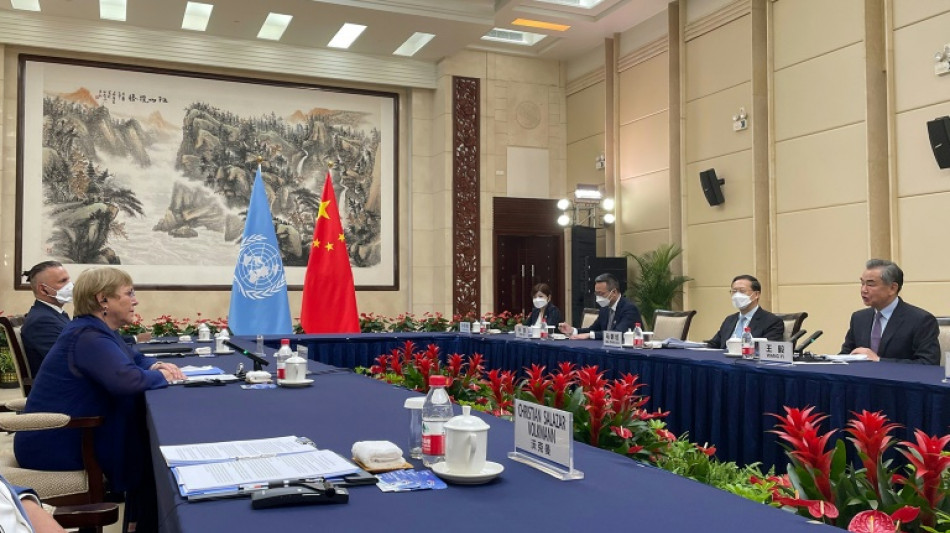
US 'concerned' after UN human rights chief visits China / Photo: Handout - United Nations High Commissioner for Human Rights/AFP
 Jumia Reports Third Quarter 2026 Results

 1933 Industries Completes LED Lighting Retrofit at Its 68,000 Sq. Ft. Cannabis Cultivation Facility in Las Vegas, Nevada - Ranks #3 in Cannabis Flower Sales

 DataMeds AI Subsidiary Helomics, Inc. Announces Cancer Target Discovery and Anticancer Peptides Drug Development Partnership With DiaGen AI, Inc.

 SmartBuyerAI Gives Car Buyers an Itemized Check of Dealer Offers as FTC Steps Up Price Transparency Enforcement

 Fulcrum Metals PLC Announces Uranium Readings up to 0.42% U(3)O(8) at Charlot-Neely
 Devan Ekambaram and Susha’s 'Varuvaaiy' Makes History as First Tamil Song Nominated for a Grammy

The United States expressed concern on Saturday over China's "efforts to restrict and manipulate" the UN human rights chief's visit to the Xinjiang region where Beijing is accused of detaining over a million people in indoctrination camps.
Michelle Bachelet's long-planned trip this week took her to the far-western Xinjiang region, where the United States has labeled China's detention of a million Uyghurs and other Muslim minorities a "genocide."
"We are concerned the conditions Beijing authorities imposed on the visit did not enable a complete and independent assessment of the human rights environment in (China), including in Xinjiang, where genocide and crimes against humanity are ongoing," US Secretary of State Antony Blinken said in a statement.
The top US diplomat reiterated his country's stance that Chinese authorities would not allow Bachelet full access during her long-planned trip, saying the United States was "concerned" about China's "efforts to restrict and manipulate her visit."
Bachelet defended her visit earlier on Saturday while still inside China, saying it was "not an investigation" but called on Beijing to avoid "arbitrary and indiscriminate measures" in its crackdown in Xinjiang.
She said the trip was a chance for her to speak with "candour" to Chinese authorities as well as civil society groups and academics.
Her visit was the first to China by a UN high commissioner for human rights in 17 years and comes after painstaking negotiations over the conditions of the visit.
- 'Warned not to complain' -
"We are further troubled by reports that residents of Xinjiang were warned not to complain or speak openly about conditions in the region, that no insight was provided into the whereabouts of hundreds of missing Uyghurs and conditions for over a million individuals in detention," Blinken said.
"The High Commissioner should have been allowed confidential meetings with family members of Uyghur and other ethnic minority diaspora communities in Xinjiang who are not in detention facilities but are forbidden from traveling out of the region."
Bachelet's remarks were also swiftly criticised by activists and NGOs, who accused her of providing Beijing with a major propaganda win.
"Resignation is the only meaningful thing she can do for the Human Rights Council," said Dilxat Raxit, spokesperson for the World Uyghur Congress advocacy group, while US-based Uyghur activist Rayhan Asat called it a "total betrayal" on Twitter.
The trip included a virtual meeting with President Xi Jinping in which state media suggested Bachelet supported China's vision of human rights.
Her office later clarified that her remarks did not contain a direct endorsement of China's rights record.
Witnesses and rights groups say more than one million people have been detained in indoctrination camps in the western Chinese region that aim to destroy the Uyghurs' Islamic culture and forcibly integrate them into China's Han majority.
Beijing denies the allegations and says it is offering vocational training to reduce potential for Islamist extremism.
Y.Aukaiv--AMWN