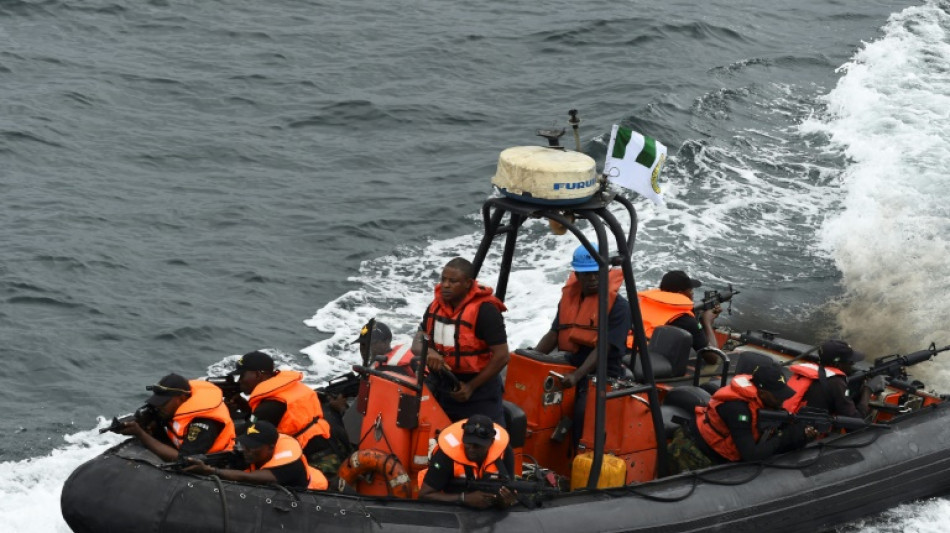
UN Security Council urges action on Gulf of Guinea piracy / Photo: PIUS UTOMI EKPEI - AFP/File
 Jumia Reports Third Quarter 2026 Results

 1933 Industries Completes LED Lighting Retrofit at Its 68,000 Sq. Ft. Cannabis Cultivation Facility in Las Vegas, Nevada - Ranks #3 in Cannabis Flower Sales

 DataMeds AI Subsidiary Helomics, Inc. Announces Cancer Target Discovery and Anticancer Peptides Drug Development Partnership With DiaGen AI, Inc.

 SmartBuyerAI Gives Car Buyers an Itemized Check of Dealer Offers as FTC Steps Up Price Transparency Enforcement

 Fulcrum Metals PLC Announces Uranium Readings up to 0.42% U(3)O(8) at Charlot-Neely
 Devan Ekambaram and Susha’s 'Varuvaaiy' Makes History as First Tamil Song Nominated for a Grammy

The UN Security Council on Tuesday urged greater action to stop piracy in the Gulf of Guinea, which has become by far the world's riskiest waters for maritime kidnappings.
A Security Council resolution -- approved unanimously despite high tensions between veto-wielding Russia and the West -- said it "strongly condemns" the spike of piracy in the West African waters.
The Council "urges member states in the region of the Gulf of Guinea to take prompt action, at national and regional levels, with the support of the international community, when requested by the state concerned."
It called on all nations in the region to develop their own plans and to criminalize piracy in domestic laws.
According to a UN report, 27 of the world's 28 recorded kidnappings at sea in 2020 took place in the Gulf of Guinea.
Stretching for 5,700 kilometers (3,500 miles) from Senegal to Angola, the Gulf of Guinea is rich in hydrocarbons and fisheries and borders some 20 countries, including ones with limited naval and coast guard capacities.
The resolution was co-sponsored by Ghana and Norway, which both said that piracy posed international risks.
Harold Agyeman, Ghana's ambassador to the United Nations, said that piracy constituted "one of the foremost security concerns on the African continent."
Piracy "risks compounding multifaceted challenges facing the region including a surge in terrorism, a return of coup d'etats, a deepening of climate change as well as the worsening impact of the Covid-19 pandemic."
A study by the Stable Seas research institute found that pirate groups, mostly in the Niger Delta, can earn around $5 million per year through theft and hostage-taking.
It said that conservative estimates put the cost of piracy to coastal states at $1.925 billion a year, including through lost employment.
X.Karnes--AMWN