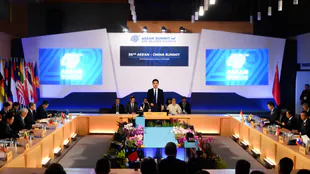
Merz, Macron huddle over NATO and EU-US trade row / Photo: John MACDOUGALL - POOL/AFP
 InterContinental Hotels Group PLC Announces Transaction in Own Shares - November 18
 Tocvan Defines Priority Gold Target Areas at Gran Pilar From Project-Wide Soil Sampling and Geologic Mapping; 225 Soils at or Above 100 ppb Gold
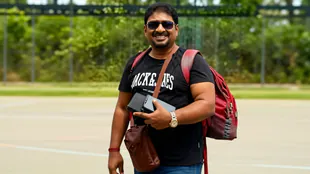
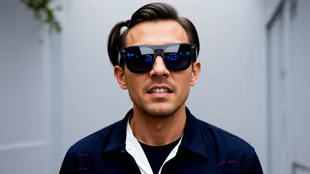 Xreal Aura Review: A Comfortable VR Alternative With Flawed Controls
French President Emmanuel Macron met German Chancellor Friedrich Merz in Berlin on Wednesday as they sought to present a united front on the US-EU trade row, NATO security and other pressing issues.
Macron and Merz, who took power in May, have been at pains to boost the partnership at the heart of the European Union as US President Donald Trump has rocked transatlantic ties.
Macron said bilateral "convergence ... whether it concerns defence, security, the energy transition, or artificial intelligence and quantum technology, is absolutely key to gaining efficiency, critical mass and cooperation".
Paris and Berlin, along with London and Warsaw, have pushed efforts to support Ukraine against Russia and build up the defence capabilities of NATO's European member states.
Merz and Macron during their working dinner were also to discuss the EU-US trade dispute after Trump threatened 30-percent tariffs against the bloc if no deal is reached by August 1.
Greeting Macron, Merz voiced optimism, saying that, as senior-level talks were being held, "we are hearing in these minutes that there could possibly be decisions".
Macron emphasised the shared European desire "to provide stability and have the lowest possible tariffs, but also, of course, to be respected as the partners that we are".
- 'Energy restart' -
The two leaders also have to discuss several bilateral stumbling blocks, ranging from joint defence projects to energy.
There has been disagreement over a combat aircraft to be made jointly by France, Germany and Spain. The head of French defence company Dassault, Eric Trappier, on Tuesday suggested that the viability of the project was in doubt.
Merz said that they would talk "about common foreign and security policy, and we will talk about the joint projects that we both discussed some time ago and on which we are working intensively".
Another tricky area is energy, where France relies heavily on nuclear power, which Germany has decided to phase out as it shifts increasingly to solar and wind.
Paris wants Berlin to commit to "technology neutrality" and effectively classify nuclear energy as climate-friendly.
Germany's previous coalition government of the Social Democrats and Greens rejected this, but Merz's centre-right CDU/CSU may be more open to the idea.
In a joint newspaper article in May, both leaders pledged a "restart in energy policy" and "equal treatment at the EU level for all low-emission energies".
F.Pedersen--AMWN