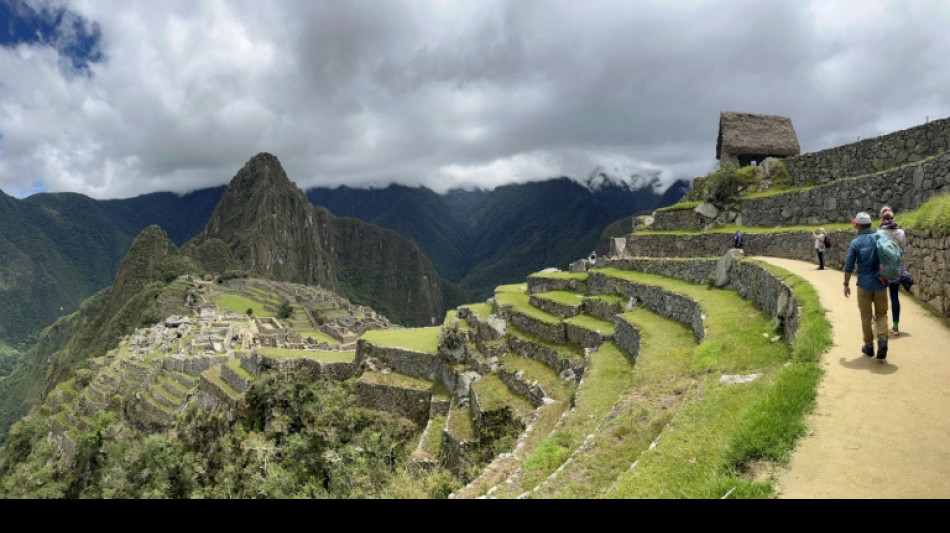
Protesting Peru residents block trains to Machu Picchu / Photo: Carolina Paucar - AFP/File
 Alberta Oil Drilling Forecast Drops in 2027 Despite Record Activity

 The Laundromat S.F. Celebrates Four Years with Smash Burger Wednesdays

 Gabriel Announces Dismissal of ICSID Annulment Application

 Mumbai Exhibition Showcases Shivaji Maharaj’s Wagh Nakh and Maratha Weapons

 Henan Grave Carved with Herbal Prescriptions Draws Hundreds of Visitors Daily

Train services to the Inca citadel of Machu Picchu, Peru's main tourist attraction, were suspended Monday as protesting residents placed logs and rocks on the tracks, police and PeruRail said.
A UNESCO World Heritage Site since 1983, the ancient fortified complex receives some 4,500 visitors on average each day, many of them foreigners, according to the tourism ministry.
Authorities have not given a figure for stranded tourists or an evacuation plan.
Residents are demanding that a new company be chosen to run the buses that ferry visitors from the Aguas Calientes train station at the foot of Machu Picchu, to the site itself.
Visitors arrive at Aguas Calientes from the city of Cusco -- the Inca empire's ancient capital -- some 110 kilometers (68 miles) away.
The previous bus firm's contract had come to an end after a 30-year concession, but services have continued -- presumably by the same company.
Residents similarly pressed home their social demands in January last year, when some 1,200 tourists had to be evacuated from Machu Picchu -- some without ever laying eyes on the site.
A year earlier, Machu Picchu was closed for 25 days during protests over the impeachment and arrest of then-president Pedro Castillo.
Machu Picchu was built in the 15th century at an altitude of 2,500 meters (about 8,200 feet) on orders from the Inca ruler Pachacutec.
It is considered a marvel of architecture and engineering.
Tourism is key to the economy of Peru.
M.Fischer--AMWN