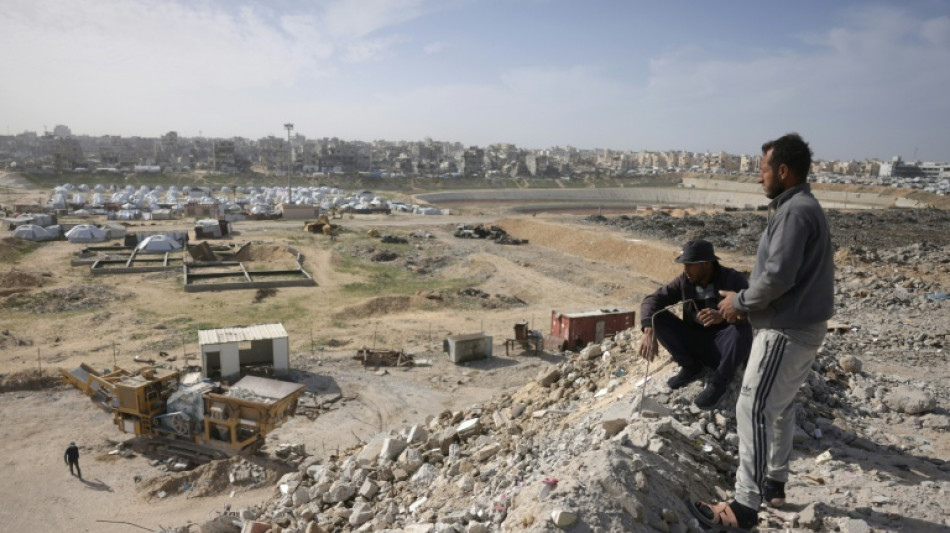
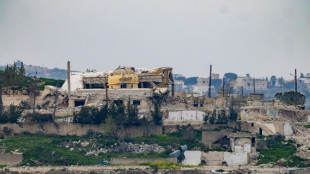
Trapped under Israeli bombardment, Gazans fear the 'new border' / Photo: Bashar Taleb - AFP
 India warns of power use as demand peaks during heatwave

 PSG's Moroccan defender Hakimi bids to have rape case dismissed

 German business morale rises for first time since Iran war

 Indian duo dies on Everest as record breaker warns of overcrowding

 Neuer to miss German Cup final in latest injury setback
 Palmer, Foden left out of England World Cup squad

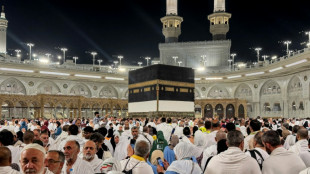 Middle East war casts shadow over million-strong hajj pilgrimage

 'Confusing': NATO allies sound out US on Trump's troop moves

 Slow Food's 'visionary' founder Carlo Petrini dies aged 76

 Dynasties clash as Barcelona and Lyon face off in Women's Champions League final
 North Korean women deny 'rough' play ahead of Asian club final

 Mangrove loss threatens Sierra Leone's oyster harvesters
 Vietnam auctions convicted tycoon's Hermes handbags for over $500k

 Uno targets Olympics in figure skating comeback

 What to look out for in final La Liga weekend

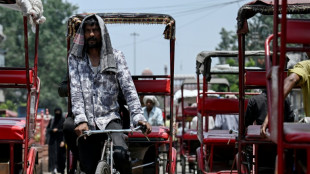 India generates record power as demand surges in severe heatwave

 Japan inflation slows more than expected in April

 NATO allies to sound out US top diplomat after Trump Iran ire
 Women's Tour Down Under to run alongside men's race
 French football's pioneering British champions

 Law changes and innovations to look out for at the World Cup
 'Dread': coral scientists fear bleaching El Nino could bring

 Gibraltar monkeys eat soil in junk food detox: study

 With Fed under intense Trump pressure, new chief to be sworn in at White House
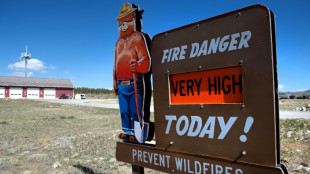 With record-low snow, Colorado preps for wildfire onslaught

When her children, trembling with fear, ask where the family can go to escape Israel's continued bombardment in southern Gaza's Khan Yunis area, Umm Ahmed has no answer.
In her small, devastated village near Khan Yunis city, recent Israeli strikes shattered the tenuous sense of peace delivered by a ceasefire that has largely held since October 10.
Residents say the attacks have targeted neighbourhoods east of the so-called Israeli-controlled Yellow Line -- a demarcation established under the truce between Israel and Hamas.
More than two years after a devastating war, tens of thousands of Gazans still live in tents or damaged homes in these areas, where the Israeli army maintains control and operates checkpoints.
Now, many fear being forced from their homes, compelled to move west of the Yellow Line.
"We don't sleep at night because of fear. The bombardments in the east are relentless," said Umm Ahmed, 40.
"My children tremble at every explosion and ask me, 'Where can we go?' And I have no answer."
Her home in Bani Suheila has been completely destroyed, yet the family has stayed, pitching a tent beside the ruins.
"Staying close to our destroyed home is easier than facing the unknown," Umm Ahmed said.
Crossing the Yellow Line to Al-Mawasi, west of Khan Yunis, is not an option for them.
There, makeshift camps stretch as far as the eye can see, housing tens of thousands of Palestinians who fled the fighting.
"There is no place left for anyone there, and not enough food or water," Umm Ahmed said, as Gaza remains trapped in a catastrophic humanitarian crisis.
- 'We will not leave' -
The war in Gaza began on October 7, 2023, following an unprecedented attack by Hamas on Israel that resulted in the deaths of 1,221 people, according to an AFP tally based on official Israeli figures.
Since the war began, more than 70,000 people have been killed in Gaza, according to the territory's health ministry. The vast majority of the territory's more than two million residents have been displaced, many multiple times.
A fragile ceasefire has been in place since October 10, though both sides regularly accuse each other of violations.
Under the truce, Israeli forces withdrew to positions east of the Yellow Line.
Earlier this month, Israeli army chief Lieutenant General Eyal Zamir described the Yellow Line as the "new border" with Israel.
"The Yellow Line is a new border line -- serving as a forward defensive line for our communities and a line of operational activity," he said to reserve soldiers in Gaza.
For Palestinian officials, the line is seen as a tool for permanent displacement.
"The objective is to frighten residents, expel them from their areas, and force them west," said Alaa al-Batta, mayor of Khan Yunis, denouncing the bombardments as "violations of the ceasefire agreement".
The Israeli military did not respond to AFP but has regularly reported strikes near the Yellow Line on what it described as suspected militants.
Mahmud Baraka, 45, from Khuzaa, east of Khan Yunis, described constant artillery fire and home demolitions in the area.
"It feels like we are still living in a war zone," he said.
"Explosions happen as if they are right next to us. The objective of the occupation is clear: to intimidate us and drive us out, so the region is emptied."
For now, residents feel trapped between bombardment and displacement, uncertain how long they can endure.
Despite the danger, Abdel Hamid, 70, refuses to leave his home located north of Khan Yunis, where he lives with his five children.
"We will not leave... this is our land," he said.
"Moving would not be a solution, but yet another tragedy."
bur-az-tgg-jd-glp/jsa
F.Schneider--AMWN