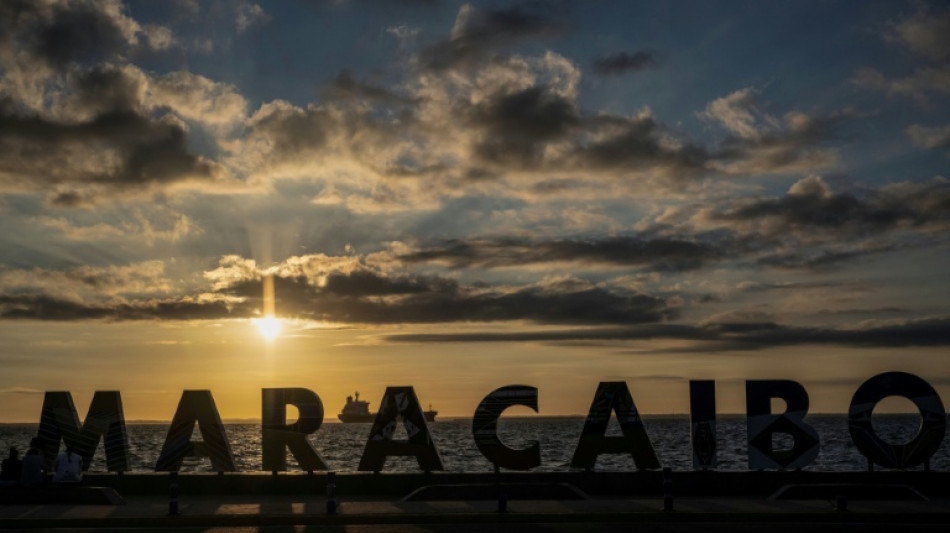
Confusion reigns over Venezuela's oil industry as US looms / Photo: Maryorin Mendez - AFP
 Commerzbank staff's legal bid against UniCredit rejected

 Amnesty calls latest US deportation to Eswatini 'unlawful'
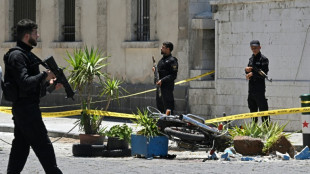 Syria says IS behind Damascus blasts, finds explosives cache
 Nasdaq dips as SK hynix arrives in NY

 Fiji captain shrugs off chairman's criticism ahead of England clash

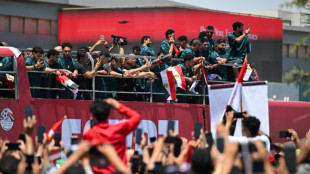 Hundreds welcome Salah's Egypt home after best World Cup run
 Piercing, matcha rituals lead Noskova in Kvitova's footsteps

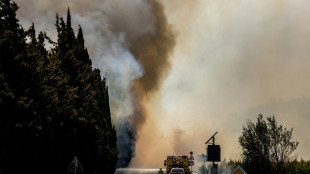 France wildfires burn twice as much land as last year: official

 Mandhana's fifty lights up inaugural women's Test at Lord's

 England World Cup winner Stiles died with brain injury, court told
 Stocks rise as SK hynix boosts AI trade
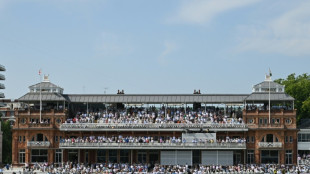 England bowl against India in historic first women's Test at Lord's
 Eleven dead, 19 missing as wildfire roars through southern Spain
 EU tells Meta to change Facebook, Instagram's 'addictive design'
 EasyJet accepts rival takeover bid from US investor Apollo

 UK schools, mentors team up to rescue 'lost boys' with football
 India's choked pavements fail pedestrians

 It's coming home: Bayeux tapestry arrives in London in overnight operation

 Pacific Islands reject missile test in 'blue continent'
 Wallabies skipper Wilson has full faith in rookie flyhalf

 Landslide kills five in Philippines as biggest typhoon in decades nears Taiwan
 Modi visits New Zealand as trade deal sparks India pushback
 Bayeux Tapestry to arrive in London after epic journey from France
 Syria authorities say captured IS-linked cell behind blasts
 Table for one: how Japan's 'Solitary Gourmet' became a TV hit
Between US demands for its crude, tankers threatened with seizure, storage tanks at overflow risk and bewildered local authorities, the outlook for Venezuela's oil industry has never been murkier.
In the country's key oil port at Maracaibo, on the northwestern border with Colombia, few tankers are waiting to either load or venture out into the Caribbean -- where American ships including the USS Gerald Ford, the world's biggest aircraft carrier, are waiting.
"They have oil that is stuck in Venezuela; they can't move it because of our quarantine and because it's sanctioned," US Secretary of State Marco Rubio said Wednesday.
"We are going to take between 30 and 50 million barrels of oil," he added. "We're going to sell it in the marketplace -- at market rates, not at the discounts Venezuela was getting."
What that means for Venezuela's oil prospects is anyone's guess, not least in the volatile political landscape after president Nicolas Maduro's seizure by US forces on narco-trafficking allegations.
But Washington is definitely banking on long-term control, according to Energy Secretary Chris Wright.
"We're going to market the crude coming out of Venezuela, first this backed-up stored oil, and then indefinitely," Wright said Wednesday.
- Tankers trapped? -
State-owned Petroleos de Venezuela (PDVSA) acknowledged Wednesday that it had entered "negotiations" to sell oil to the United States, on what it said would be the same terms as for other foreign customers.
"The process... is based on strictly commercial transactions under terms that are legal, transparent and beneficial for both parties," it said.
But the statement came as US forces seized two more tankers, after previously seizing two others after Maduro's capture.
Most shipping firms are holding back, either waiting at Maracaibo or avoiding it, even as a few tankers try to get past the US cordon.
Since Trump imposed a full oil embargo in 2019, Venezuela has relied largely on a "shadow fleet" to sell mainly to China, Russia and Iran, a prospect highly uncertain after the US incursion.
One tanker anchored in the Maracaibo bay on Wednesday, the Nord Star, is owned by Corniola and operated by Krape Myrtle, both based in Hong Kong and targeted by US sanctions.
"The shadow fleet is still operating, it's risky but it's getting out," one industry source based in Maracaibo told AFP.
- Uncertain potential -
But with most tankers blocked, storage tanks at Maracaibo are nearly filled to the brim, threatening devastating overflows even as derricks keep pumping to the south and east of the port's massive inland lake.
One operator, requesting anonymity, said local authorities "are ordering partner firms to cut output while waiting for tankers that will take the oil".
The partner firms, known as "co-enterprises", were created under former strongman leader Hugo Chavez to join forces with energy groups from China, Russia, Belarus and other allies.
Venezuela produces around one million barrels per day, above the 350,000 barrels immediately after Trump imposed a full oil embargo in 2019, though that was eased in 2023 after Russia's invasion of Ukraine.
But it remains far below potential for a country with the world's largest known oil reserves, and exploration suggests further huge fields could yet be found.
Caracas used to pump 3.5 million barrels daily but creaking infrastructure and scant investment make a return to that level unlikely in the short term -- unless Trump makes good on his pledge to get US energy groups back into the country soon.
Experts said it is likely that Trump will call and end to the US sanctions and embargo once his goals are met.
For David Smilde, a Latin America specialist at Tulane University in Louisiana, Venezuela has always wanted to sell oil to the US at market value, instead of "sanctioned oil at a big discount using ghost tankers".
In that sense, US companies coming into Venezuela would be "actually quite desirable", he said.
But if the the United States "really takes this oil and then does what it wants and maybe uses it to pay itself for the cost of an ongoing military operation, and none of it goes back to Venezuela ... that could cause a problem", he said.
L.Miller--AMWN