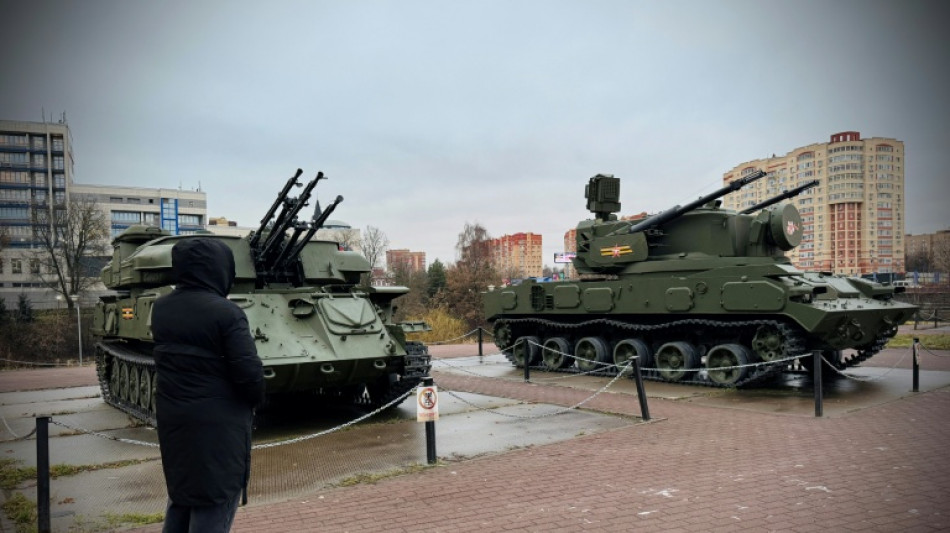
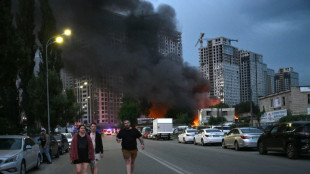
'Considered a traitor': Life of an anti-war Ukrainian in Russia / Photo: - - AFP
 Belgium boosted by Balogun furore: Tielemans

 Samsung expects 1,800% operating profit leap on AI boom

 Belgium thrash USA to end World Cup dream and set up Spain showdown

 France's Le Pen faces pivotal ruling in race for president
 NATO allies seek to win over Trump after Iran ire
 US leads international concern after China test-fires missile into Pacific

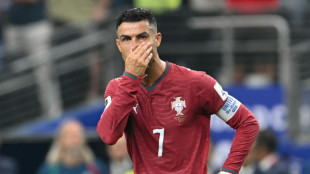
 Close to tears and on his own as Ronaldo's World Cup dream ends
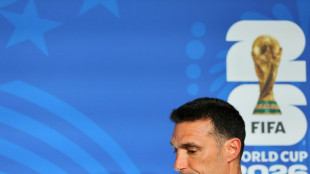 Argentina's gruelling World Cup schedule a concern for Scaloni
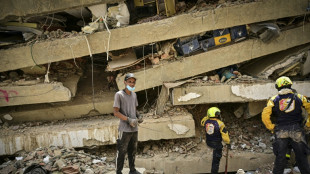 Race to recover bodies ahead of Venezuela quake cleanup
 Egypt coach Hassan says Palestinian suffering 'a shame on the world'

 NBA Kings waive six-time All-Star forward DeRozan
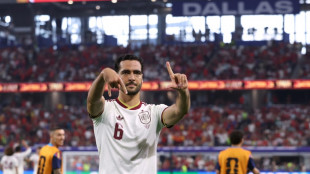
 Greaves and Hope centuries usher West Indies towards safety
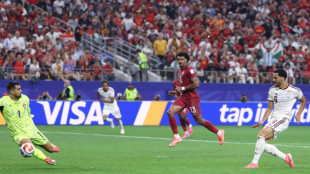
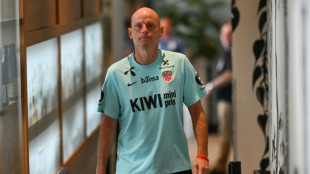 'I celebrated in bed' -- Norway's Solbakken stays grounded after beating Brazil
 Canada chooses Germany's TKMS to build new fleet of submarines
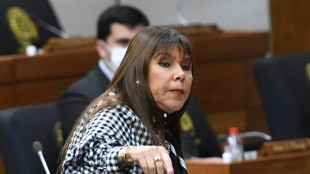
 Mbappe condemns racist abuse by Paraguayan senator after World Cup clash

 FIFA chief forced to defend Balogun World Cup reprieve
 Antetokounmpo says goodbye to Milwaukee in video
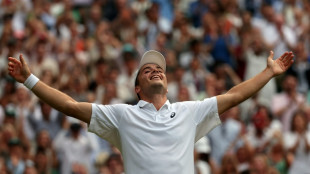 Fairytale Fery sinks Dimitrov to make Grand Slam history at Wimbledon
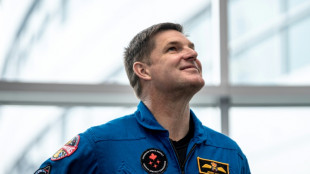 Canadian Artemis II crew member to retire from space agency
 Prince Harry arrives in UK amid security spat

 'Agony' in Cuba amid third nationwide blackout in six months
 For Trump's World Cup, 'America First' collides with world's game
 England's World Cup campaign takes flight with Mexico win
 Tour de France stage record still 'far away' for Pogacar

 Infantino told Trump FIFA disciplinary body is 'independent'

In war-torn Ukraine, her family considers her a traitor. In tightly controlled Russia, her life is defined by solitude.
A Ukrainian living in Russia for the past 20 years, Maria -- whose name AFP has changed for her safety -- has for four years watched with horror as her adopted homeland waged war against her native country.
Her parents are her only family in Ukraine who still speak to her. The rest of her friends and relatives there have cut her off.
"They consider me a traitor," Maria, 48, told AFP.
Her nephew, fighting for Ukraine, was wounded in combat while her son-in-law, drafted into Russia's army, was killed.
After moving to Russia to study, Maria stayed and would regularly visit Ukraine until 2022.
Moscow's decision to launch its full-scale military offensive on February 24, 2022 was "shocking" to her.
Maria has not seen her family in Ukraine since -- unable to leave Russia as her Ukrainian passport expired.
- 'Never see them again' -
She is now trying to get Russian citizenship to be able to travel more freely, but is caught in a vicious bureaucratic cycle.
Russia treats anyone with links to Ukraine as suspicious and has outlawed criticism of its military campaign.
According to Maria, Ukrainians trying to get Russian nationality face interrogations about their families -- and their opinion of the war.
In Moscow-controlled Ukrainian territory, Kyiv accuses Russia of handing out passports en masse, an attempt to erase the areas of their Ukrainian identity and history.
Maria told AFP she was constantly worried about her parents.
"My biggest fear is to never see them again."
When she phones her mother, the call is interrupted by "sirens and explosions" -- the soundtrack of Russia's four-year-long military campaign.
She sometimes sees reports that Russia has struck her home city. If the phone lines to her parents are cut, she scrambles to find out exactly what districts.
Around 900,000 Ukrainian citizens lived in Russia before 2022.
Some left after Russia's 2014 annexation of Crimea and more again after the Kremlin launched its 2022 offensive.
From Ukraine, some eight million fled to Europe in the first year of the war, the UN said.
At least 1.2 million -- mainly from eastern Ukraine -- fled to Russia, the UN said, but it has not published data on how many are still there.
Kyiv has accused Moscow of blocking and complicating travel to Russia by Ukrainians. Going through Russia is the only way for them to visit relatives in parts of Ukraine that Russia has captured and claims as its own.
- 'Huge fear' -
Along with forcing millions out of their homes, the war has killed hundreds of thousands of soldiers, tens of thousands of civilians and decimated much of eastern and southern Ukraine.
When her Russian son-in-law was drafted into Russia's army in 2022, Maria was torn.
"On the one hand, I felt sorry for him as it was forced," she said, recounting how he cried as he did not want to fight.
"On the other, I felt angry that he is going there to kill my relatives."
Her nephew was at the front on the Ukrainian side at the same time and she had a "huge fear" they would face each other across the battlefield.
"This thought that he (my son-in-law) could go and kill my nephew horrified me," she said.
When it was her son-in-law that ended up being killed, she had to comfort her daughter.
"He was her first love and we still cannot believe it as there was no burial, the body was not recovered."
Maria tried to talk about it with her parents in Ukraine.
"I tried to tell them that I feel sorry for my son-in-law. But they said: 'We don't. He made his choice'."
After that, Maria fell into depression, turning to a psychologist.
In Russia, where criticism of the campaign is banned, she was surrounded by supporters of the war.
In Ukraine, her relatives "did not want my support or compassion".
"I became a black sheep."
"We (Ukrainians in Russia) are not guilty of anything, we do not support (the offensive). We are worried for them and every strike, every bombing, affects us too," she added.
- 'Ukrainian songs' -
Maria decided to stop actively reading news about the war, finding it "too hard that I can't help my relatives."
But the conflict has affected all corners of life in Russia -- even splitting the beauty salon outside Moscow where she works.
"Many clients moved abroad because they did not support the military campaign," Maria said.
Others "stopped coming to me, just because I am from Ukraine and I do not support this war."
Her social circle shrank.
Urged on by officials and pro-war zealots, the Soviet-era practice of denunciations has skyrocketed in Russia during the war and Maria mostly prefers to be alone.
"It's more comfortable for me because I know that I will not betray myself and not denounce myself."
Her strategy for living among supporters of the war?
"I sing songs, Ukrainian songs, in my head" when listening to people publicly back the offensive.
As the war approaches the four-year mark, Maria has little optimism.
"I would like the war to end tomorrow," she said.
"But I understand it's not realistic, as each leader has his demands and nobody wants to compromise. No one cares about the people suffering."
B.Finley--AMWN