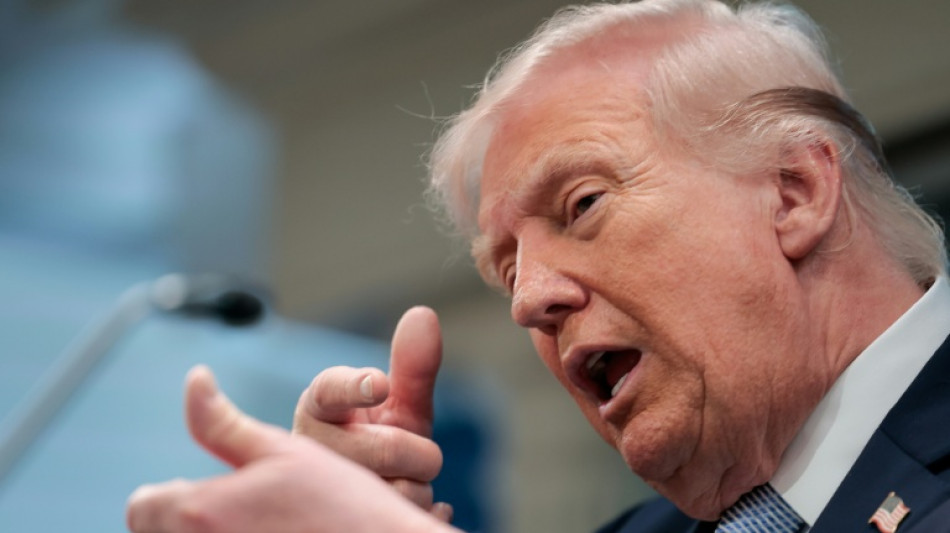
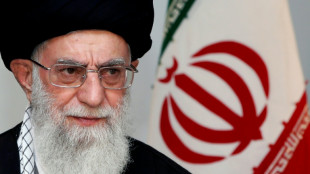
Iran nuclear programme 'set back' but not wiped out / Photo: Kent Nishimura - AFP
 England's Rashford unfazed by high-altitude Mexico World Cup test
 In Brazil, Bolsonaro family airs feud ahead of elections
 Postecoglou links up with Ronaldo at Al Nassr
 Sabalenka sets up Wimbledon last-16 clash with Osaka

 Dangerous heatwave hits peak temps along US east coast
 LeBron's agent makes case for 10 new clubs for 41-year-old star
 Trump heads for Mount Rushmore as US turns 250
 French Top 14 champions Toulouse fined for salary cap breaches

 Record-equalling Djokovic powers into Wimbledon last 16
 Ruthless Sinner powers into Wimbledon last 16
 England's Kane feels 'as good as ever' ahead of Mexico World Cup clash

 French Top 14 champions Toulouse fined for salary breaches

 Thousands more head for South Africa's borders

 Australia upbeat about 'ultimate professional' Perry's fitness for World Cup final

 Ukraine backers to vow major support at NATO summit
 Ayuso happy to fly under radar at Tour de France
 Curran ready to fill England gap left by Stokes exit
 Djokovic has history on the line at Wimbledon

 Hamilton sparkles in Silverstone sunshine
 Swift and Kelce set to tie the knot in glitzy arena extravaganza

 Police hunt for Ukrainian woman over Monaco bomb attack

 Kenya's abortion taboo is killing thousands of women
 Madonna returns to form with dancefloor filler "Confessions II"
 Dean says Australia final a 'fresh start' for England

 Wimbledon giving Serena 'as much time' as possible for doubles
The United States and Israel may have obstructed the path towards a future Iran-built nuclear bomb by severely damaging the Islamic republic's nuclear and ballistic capabilities in recent attacks.
But they have not succeeded in seizing its stockpile of highly enriched uranium, key to any future negotiations between Washington and Tehran, experts and diplomatic sources told AFP.
One of US President Donald Trump's justifications for the war he launched was an accusation -- denied by Tehran -- that Iran was developing an atomic bomb. Trump has repeatedly vowed to never allow the country to possess a nuclear weapon.
Israeli Prime Minister Benjamin Netanyahu, for his part, has stated that the previous war waged against Iran, a 12-day conflict in June 2025, as well as the current one "wiped out" Iran's nuclear programme.
But two European diplomatic sources, speaking on condition of anonymity, expressed caution about the future of Iran's atomic ambitions.
Immediately following the June 2025 strikes, "we were told the programme had been set back by several years, before the figure was revised to just several months", one source noted.
"Iran is no longer a threshold power as it once was," an Israeli diplomatic source, who requested anonymity, told AFP.
A "threshold" state has the expertise, resources and facilities needed to develop a nuclear weapon on short notice should it choose to.
The source argued that, in addition to the infrastructure damage suffered, Iran's know-how "has been seriously undermined by the elimination of the scientists and officials" and the targeting of universities "where the data centres containing Iran's expertise were located".
- 'Substantial setback' -
"Overall, this conflict has set back Iran's nuclear programme substantially," said Spencer Faragasso of the Institute for Science and International Security, a US think tank that monitors Iran's nuclear programme.
"It will take a significant amount of time, investment, and resources to reconstitute all of those lost capabilities," he said.
However, "the gains from the conflict are not permanent by any means".
Tehran still possesses a significant quantity of uranium enriched both to 60 percent, close to the 90-percent level required to make an atomic bomb, as well as a stockpile of uranium enriched to 20 percent, another critical threshold.
Prior to the US strikes in June 2025, the International Atomic Energy Agency (IAEA) calculated that Iran possessed approximately 440 kilogrammes of uranium enriched to 60 percent, well above the 3.67-percent limit set by a 2015 agreement from which the United States subsequently withdrew.
Since June 2025, the fate of this stockpile has remained uncertain, with Tehran refusing access to IAEA inspectors at the sites ravaged by US and Israeli strikes.
IAEA Director General Rafael Grossi has repeatedly called for the return of international experts.
- Removing enriched uranium -
Part of the stockpile of highly enriched uranium (HEU) is believed to remain buried in the tunnels at the Isfahan site in central Iran.
"At least 220 kilogrammes – roughly half of Iran's declared stockpile of 60 percent HEU – is believed to be stored in the underground tunnel complex at Isfahan," said Faragasso.
"The status of the other half is unclear, but we believe it is buried under the rubble at Fordow as large significant quantities of 60 percent HEU were produced prior to the June 2025 war," he said.
Only an independent inspection would be able to dispel these doubts.
The issue is how this uranium could be removed from Iranian territory under any eventual accord.
Russia reiterated on Monday that it remained ready to accept Iranian enriched uranium on its soil as part of any potential peace agreement between Washington and Tehran.
"This proposal was put forward by President (Vladimir) Putin during contacts with the United States and with countries in the region," said Kremlin spokesman Dmitry Peskov, in response to a question from AFP.
But that scenario is a red line for the Europeans in view of the war that Russia has been waging against Ukraine for more than four years.
Moscow and Tehran are cooperating on nuclear matters through Iran's Bushehr power plant, built and operated with Russian assistance for civilian purposes.
The Iranians "don't have an ability to enrich uranium anymore... So it means they cannot build a nuclear bomb at the moment," said Danny Orbach of the Hebrew University of Jerusalem.
"But they still have the enriched material, which is the hardest thing to obtain," he said.
A.Mahlangu--AMWN