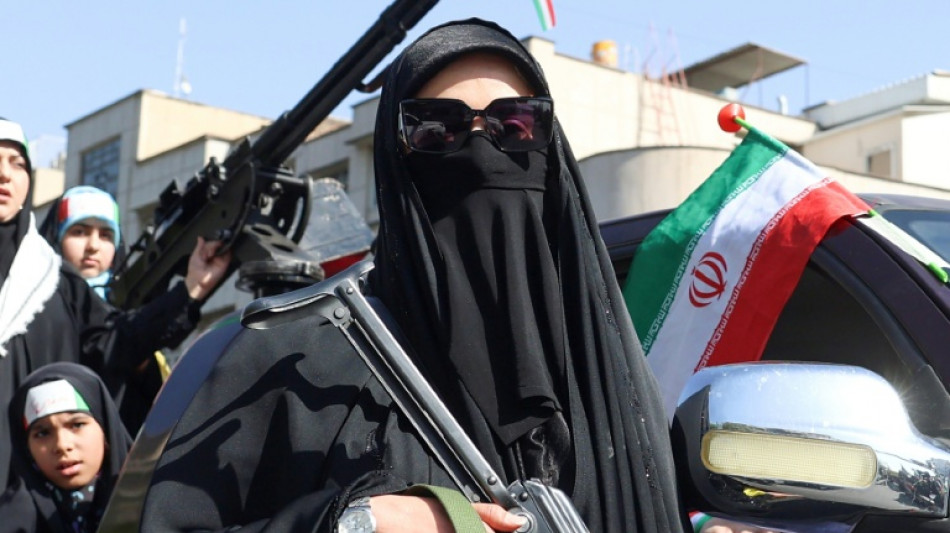
Iran closes Hormuz Strait again over US blockade with ships mid-transit / Photo: - - AFP
 England bowl against Pakistan in first Test of post-Bazball era

 Villa sign Japanese 'keeper Suzuki, Italian defender Ruggeri

 Injury-plagued Pogba released by Monaco

 Japanese 'keeper Suzuki signs for Aston Villa

 Paul Pogba to be released by Monaco: club

 Texas Counseling Center Highlights the Role of Counseling in Supporting Immigration Psychological Evaluations

 Pakistan govt to challenge court on moving ex-PM Khan to private hospital

 India four wickets away from victory in Sri Lanka Test

 Belgian wildfire 'encircled' but situation still 'complicated'

 Southern African mothers plead for sons lured to Russia's war
 Palestinian-American hoists US flag on home besieged by settlers

 Freedom Holding Marks New Türkiye Milestone as Freedom Yatırım Secures Brokerage License
 Humanoid resources: China's robots search for workforce breakthrough

 China goes rural with data centres in quest to power AI

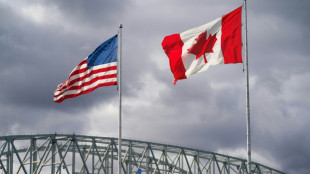 Trump pauses planned 50% tariffs on Canadian goods for three days

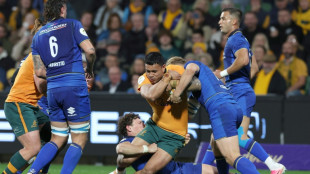 Ikitau, Suaalii named in Australia squad for Argentina Tests
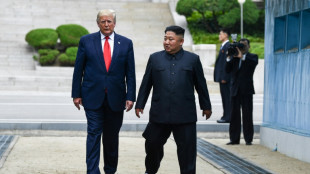
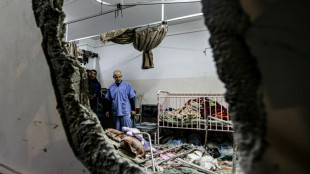 'American Doctor' shows brutality of conflict in Gaza

 New Zealand blocks lawsuits against firms over climate harm

 Aussie Rules club suspends five players amid police probe

 No.1 Sabalenka slams Wang to power ahead in Cincinnati
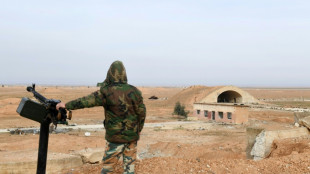
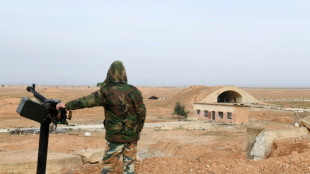 Israel blames Turkey after strike on Syria air base

 Who Does the Best Male Facelift Surgery in Sarasota?
 BioNxt Advances Cladribine Clinical Program with Completion of the Investigational Medicinal Product Dossier (IMPD) Ahead of Human Clinical Studies

 Elevate Acquires Lupl

 Caldwell Strengthens Life Sciences and Healthcare Practice with Addition of Olga Kozlova in Dubai

Iran's military declared the Strait of Hormuz closed again on Saturday, its military command said, hours after reopening it and with more than a dozen commercial ships passing through the vital waterway.
The toing and froing over the strait cast doubt on US President Donald Trump's optimism the day before, that a peace deal to end the US-Israeli war with Iran was "very close".
Tehran had on Friday declared the strait, which usually carries a fifth of the world's oil and liquefied natural gas, open on Friday after a ceasefire was agreed in Lebanon to halt Israel's war with Hezbollah.
That prompted elation in global markets and sent oil prices plunging, but with Trump insisting that a US naval blockade of Iranian ports would continue until a deal was concluded, Tehran threatened to shutter the strait once more.
Then, late on Saturday morning, citing a statement from military central command, Iranian state TV reported that "control of the Strait of Hormuz has returned to its previous status" and "is under strict management and control of the armed forces", blaming the continued US blockade.
The announcement came as maritime tracking sites showed several ships making a dash through the narrow waterway, hugging close to Iranian territorial waters as instructed by Tehran and, for some, broadcasting their identity as Indian or Chinese in an apparent attempt to show their neutrality.
The same sites showed that late on Friday, a number of ships began heading for the strait before suddenly turning back amid the uncertainty.
By 0900 GMT on Saturday, several ships had fully transited the strait in both directions, but at least two tankers headed eastwards from the Gulf towards India after loading in UAE ports appeared to have turned around and aborted their journeys.
-'We're going to get it' -
There are just four days remaining before the end of the two-week ceasefire in the US-Israeli war with Iran, launched by Washington and its ally on February 28.
Nevertheless, President Trump appeared convinced that a deal could be finished shortly.
He declared Friday "GREAT AND BRILLIANT," and made a series of social media posts praising talks mediator Pakistan.
Islamabad's powerful military chief, Field Marshal Asim Munir, on Saturday finished a three-day visit to Iran aimed at securing the peace deal, during which he met Iran's top leadership.
While Munir was in Iran, Pakistani Prime Minister Shehbaz Sharif visited Saudi Arabia, Qatar and Turkey to push the peace process.
Islamabad has emerged as the lead mediator during the conflict, hosting a marathon round of direct peace talks last weekend attended by US Vice President JD Vance.
A second round of talks is expected in the Pakistani capital this coming week, with envoys hoping to end the war that was started by the US and Israel on February 28.
The allies launched a massive wave of surprise attacks on Iran, despite Washington and Tehran being engaged in diplomatic talks, that killed Iranian supreme leader Ali Khamenei and numerous senior leaders.
The war rapidly spread across the region, with Iran targeting US interests in the Gulf and Hezbollah dragging Lebanon into the conflict by launching rockets at Israel.
In a sign that the two-week ceasefire remained stable, Iran's civil aviation agency declared its airspace was open again, with international flights able to transit Iran via the east of the country.
Nevertheless, two major sticking points in the peace talks -- Iran's stockpile of near-weapons-grade enriched uranium and the future of the Strait of Hormuz -- appeared up in the air.
Speaking by phone with AFP on Friday, Trump said "we're very close to having a deal," adding that there were "no sticking points at all" left with Tehran.
Later the same day, at an event in Arizona, the president declared that Iran had agreed to hand over its 440 or so kilogrammes of uranium enriched to 60 percent -- close to that needed for a bomb.
"We're going to get it by going in with Iran, with lots of excavators," he said.
But hours before, Iran's foreign ministry had said its stockpile, thought to be buried deep under rubble by US bombing in last June's 12-day war, was not going anywhere.
"Iran's enriched uranium is not going to be transferred anywhere," Iranian foreign ministry spokesman Esmaeil Baqaei told state TV.
"Transfer of Iran's enriched uranium to the US has never been raised in negotiations."
Ordinary Iranians, meanwhile, remained cut off from the international internet, with monitor netblocks announcing on Saturday that the blackout implemented at the start of the war had reached its 50th day.
L.Harper--AMWN