-
 Palestinian-American hoists US flag on home besieged by settlers
-
Aussie Rules club suspends five players for drinking, bringing women to hotel

-
 Freedom Holding Marks New Türkiye Milestone as Freedom Yatırım Secures Brokerage License
-
Trump pauses 50% tariffs on Canadian goods for three days
-
 Humanoid resources: China's robots search for workforce breakthrough
-
Five Premier League stars to watch this season
-
 China goes rural with data centres in quest to power AI
-
China's robots open to opportunities in search of commercial breakthrough

-
 Trump pauses planned 50% tariffs on Canadian goods for three days
-
Tech leads losses as Asian stocks track Wall St selloff

-
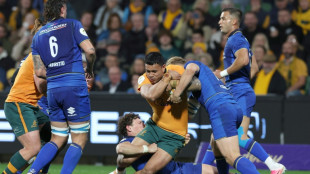 Ikitau, Suaalii named in Australia squad for Argentina Tests
-
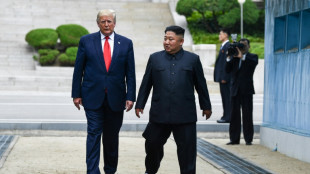
US, South Korea cut drills short after Trump criticism
-
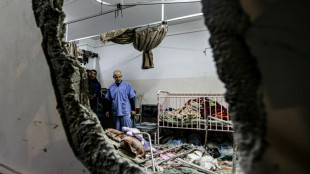 'American Doctor' shows brutality of conflict in Gaza
-
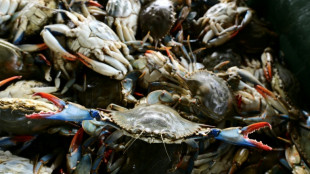
Italian scientists bet on octopus to fight crab invasion
-
 New Zealand blocks lawsuits against firms over climate harm
-
New 'Insidious' reflects anxiety of being a new parent: director
-
 Aussie Rules club suspends five players amid police probe
-
No.1 Sabalenka slams Wang to advance at Cincinnati
-
 No.1 Sabalenka slams Wang to power ahead in Cincinnati
-
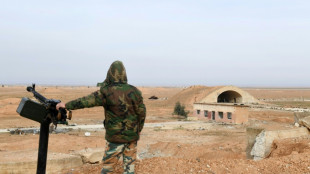
Turkey rejects Israeli claims after strike on Syria air base
-
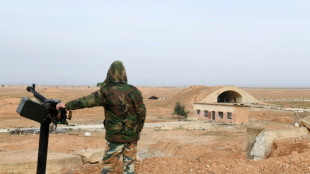 Israel blames Turkey after strike on Syria air base
-
Caldwell Strengthens Life Sciences and Healthcare Practice with Addition of Olga Kozlova in Dubai
-
 Best Place to Buy Gold IRA in 2026 (Guide Released)
-
Climate change main driver of European ocean warming: study
-
 Trump, Carney talk as Canada seeks to hold off new US tariffs
-
Gauff finds a way into the Cincinnati fourth round

-
 NASA images reveal crater left by SpaceX rocket's Moon crash
-
ZZ Top drummer Frank Beard dies at age 77

-
 UN atomic watchdog says found tons of nuclear material at Syria site
-
Bayern's Musiala reveals 'neurological disorder' after on-field collapse

-
 Ecuadoran diplomat enters race to be next UN chief
-
Angelique Kidjo immortalised on Hollywood Walk of Fame

-
 US sanctions ICC chief Tomoko Akane of Japan
-
France to expel two Iranian diplomats: foreign minister
-
 US moves to open vast tracts of pristine forests to logging
-
Spain's Granada closes iconic Alhambra as new quake hits

-
 US sanctions International Criminal Court chief Tomoko Akane of Japan
-
Venus, Stephens, Monfils named among US Open wild cards
-
 Meta hooked children and misled public: prosecutors
-
Rodri joins La Liga champions Barcelona from Manchester City

-
 France's first women's rights minister Yvette Roudy dies, aged 97
-
Disney, ABC sue US regulator over threat to broadcast licenses
-
 French producer Nicolas Altmayer, Dior PR chief Favier die in car crash
-
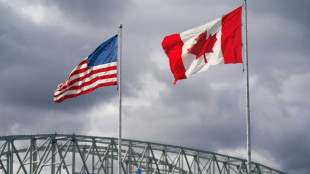
Trump, Carney hold talks as new US tariffs on Canada loom
-
 Bezos consortium bought nearly 40 percent of Liverpool: report
-
Germany opens new drone research centre as security threats mount

-
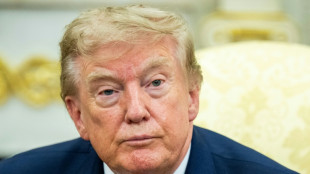 Trump says no Iran talks planned, claims Hormuz 'new US territory'
-
How only a few tree species drive Amazon forest recovery
-
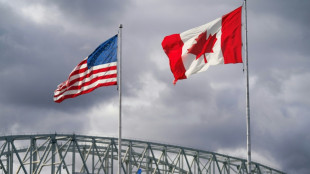 Canada seeks to avert new US tariffs as deadline looms
-
Ivonne A-Baki enters race to be next UN chief
Trump orders Iran mine-layers sunk, as Iran tolls tankers
President Donald Trump ordered the US Navy on Thursday to destroy any Iranian boat caught laying mines in the Strait of Hormuz, putting more pressure on a fraying ceasefire as disruption from the Gulf stand-off battered the world economy.
Trump's announcement came after the US fleet boarded a vessel in the Indian Ocean that was transporting oil from Iran and after a senior Iranian official said Tehran had banked its first proceeds from the tolls it exacts on shipping through the strait.
With plans for renewed peace talks in Pakistan hanging in the balance, more fuel-hungry airlines cancelled flights, oil prices climbed higher once again and the keenly-watched S&P Global PMI index showed eurozone business activity shrinking for the first time in 16 months.
"I have ordered the United States Navy to shoot and kill any boat, small boats though they may be... that is putting mines in the waters of the Strait of Hormuz," Trump posted.
Iran vowed it would keep the strait closed to all but a trickle of approved vessels for as long as the US Navy blockades its ports, brushing off demands from Trump to both reopen Hormuz and surrender its enriched uranium.
The US responded to Iran's action by imposing its own blockade of Iranian ports, and on Thursday the Pentagon announced on social media that US forces had "carried out a maritime interdiction and right-of-visit boarding of the sanctioned stateless vessel M/T Majestic X transporting oil from Iran, in the Indian Ocean".
The post included footage of US military personnel rappelling from helicopters onto the deck of a large tanker.
The statement said the US would "continue global maritime enforcement to disrupt illicit networks and interdict vessels providing material support to Iran, wherever they operate".
- 'Not possible' -
While strikes around the region have mostly ceased since the two-week-old truce began, there has been no letup in the confrontation over Hormuz, with both sides seeking economic leverage -- only for Trump to announce an indefinite ceasefire to create space for more talks.
"A complete ceasefire only has meaning if it is not violated through a naval blockade," said Iran's parliamentary speaker Mohammad Bagher Ghalibaf, who led Tehran's delegation at a first round of talks in Pakistan.
"Reopening the Strait of Hormuz is not possible amid a blatant violation of the ceasefire."
Ghalibaf's deputy, Hamidreza Hajibabaei, said Iran received its first revenue from tolls it is imposing on ships seeking to cross Hormuz, a route that in peacetime accounts for a fifth of the world's oil and gas flows, and other vital commodities.
Analysts said Tehran, in particular its hardline leaders associated with the Islamic Revolutionary Guards Corps (IRGC), believes that Iran's blockade gives it sufficient economic leverage to force Washington to back down on its main demands in peace talks.
And some, such as Danny Citrinowicz of the Tel-Aviv Institute for National Security Studies, criticised Israel and the US for misreading the Iranian government's position.
"Tehran has consistently demonstrated a willingness to absorb economic pain while holding firm on what it views as core national interests. There is little reason to believe this time will be different," he said in a social media post.
"Rather than moving toward concession, Iran is positioning itself to escalate."
A brief from the Soufan Center think tank said Iran's hardliners "argue that a prolonged elevation of global energy prices and mounting global shortages of some goods will increasingly pressure Trump to accede to Iran's positions, end the war, and eventually withdraw US forces from the region.
"Trump and his team calculate the opposite -- that the US blockade of Iran's seaborne trade, which carries all of its oil exports, will quickly cripple Iran's economy and force Iran to accept US demands."
- Peace talks -
On Wednesday, Trump told the New York Post that talks could resume in Pakistan within two to three days, even though Iran has not confirmed participation and Vice President JD Vance put his travel to Islamabad on hold on Tuesday.
In the Pakistani capital, blanket security remained in place for the fourth straight day in anticipation of possible talks, with transport disrupted and the city's government quarter and adjacent commercial centre all but shut down.
Iran's Revolutionary Guards on Wednesday said they forced two ships to the Iranian shore from the Strait of Hormuz.
The US military's Central Command said, prior to Thursday's announcement, that its forces blockading Iran's ports had so far "directed 31 vessels to turn around or return to port".
After agreeing the ceasefire with Iran, the United States helped broker a truce between Israel and Lebanon, including Hezbollah.
Despite the declared truce, Israeli strikes killed five more people on Wednesday, Lebanese media said.
Israel and Lebanon will hold a second round of talks in Washington on Thursday, during which Beirut will request a one-month extension of the ceasefire during the meeting, according to a Lebanese official.
Israeli attacks on Lebanon have killed more than 2,450 people since the start of the war, according to Lebanese authorities.
burs/dc/jsa
D.Cunningha--AMWN