Ex-president, former finance minister vie for Costa Rica presidency
 In Manchester, people say City scandal is 'shame for football'
 Stocks lacklustre as inflation data weighs on sentiment

 Israel-bound plane rerouted, pilots wounded in reported fight

 Truth commission on Sweden's Sami people seeks redress

 Energy costs spark inflation surges in France, Italy

 South Korea break China hearts to reach Asian Games football final

 Eala storms into Asian Games semi-finals to thrill adoring fans

 Turkey freezes ex-minister's assets as fund crisis grows

 What we know about the North Korean POW dispute

 Most equities rise after oil price plunge, US data in focus

 Polar oceans transformed as warming melts ice habitats: research

 Lost shark becomes viral star in South Korea
 Dangote to launch $16bn refinery in Kenya

 North Korean leader 'extremely obese': Seoul spy agency
 Yankees and pope-backed White Sox start MLB playoffs with wins

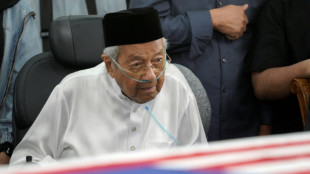 Malaysia's ex-PM Mahathir in hospital for observation

 'No limits': Marathon world record holder Sawe chasing history

 Countdown begins to biggest-ever Rugby World Cup
 Bangladesh women lose ground after quota reform
 Vietnam admits 'differing opinions' on Hanoi development
 Stocks temper gains as oil pares heavy losses, US data in focus
 New Zealand denies breaching climate commitments to EU

 Albert becomes youngest US scorer in 4-2 win over Chile
 Pirate island's plunging population shows Greece's demographic decline
 With elections ahead, Latvia's Russian-speakers reject Moscow's help
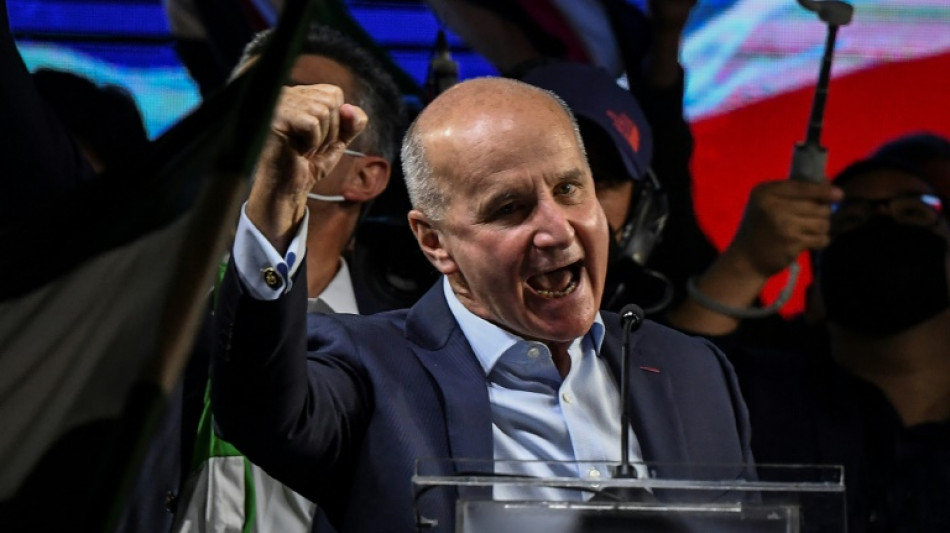
An ex-president and a former finance minister will vie for Costa Rica's presidency after topping a first voting round in one of Latin America's stablest democracies, albeit one battling growing economic woes.
Center-left former president Jose Maria Figueres, 67, received the most votes in elections Sunday from a crowded field of 25 candidates.
With nearly 90 percent of ballots counted, Figueres was at 27 percent support.
In a surprise outcome, second place went to conservative former finance minister Rodrigo Chaves, 60, who garnered almost 17 percent of the vote despite having polled in fourth position.
Both men are tainted by scandal: Figueres was investigated for alleged financial misdeeds, and Chaves for sexual harassment. Both denied wrongdoing.
With no candidate receiving the 40 percent of votes required for a first-round win, the candidates will battle it out in an April 3 runoff in the Central American nation.
Costa Rica, a tourist hotspot of five million people and a leading green economy, is frequently rated the region's "happiest" country.
However, polls show unemployment, corruption and rising costs of living topping the concerns of 3.5 million eligible voters.
Unemployment has steadily risen for more than a decade to reach 14.4 percent in 2021.
The poverty rate stood at 23 percent last year while the public debt was 70 percent of GDP.
Costa Rica's problems have worsened with the coronavirus pandemic dealing a hard blow to its critical tourism sector.
- 'March together' -
"I am convinced that we will rise from this crisis and march together towards our future," Figueres said as he celebrated the result with supporters from his center-left National Liberation Party (PLN).
Figueres led Costa Rica from 1994 to 1999, and is the son of another former president, Jose Figueres Ferrer, who served three non-consecutive terms and abolished the army in 1948.
Costa Rican presidents cannot seek successive reelection.
Figueres's sister, Christiana, was head of the UNFCCC climate body that negotiated the historic Paris Agreement in 2015.
For his part, Chaves, of the newly-formed centrist Social Democratic Progress Party, asked for "conflict" and "confrontation" to be left behind in campaigning for the second round.
He had served as finance minister for six months in the outgoing government.
- Record abstention -
Amid sky-high anti-government sentiment, the ruling Citizens' Action Party (PAC) of outgoing President Carlos Alvarado Quesada suffered a bruising defeat Sunday.
Its candidate mustered less than one percent of the vote, which was marked by a record abstention rate of 40 percent.
Costa Rica's worsening economic situation and recurrent corruption claims have hit confidence in the political class.
In the last 13 years, two former presidents were tried for corruption, one of them convicted.
Last year, investigations into irregularities in public works contracts implicated a number of ministers.
Figueres and Chaves both have clouds hanging over their candidacy.
Figueres was investigated for allegedly taking some $900,000 from French engineering firm Alcatel, which has admitted bribing officials for a tender.
The ex-president, who worked abroad at the time as executive director of the World Economic Forum (WEF), refused to give evidence in the case in 2004 and returned to Costa Rica only in 2011 when the investigation expired.
He was never charged, but the scandal saw him resign from the WEF.
Chaves, in turn, was investigated over sexual harassment complaints brought by multiple women while he was a senior official at the World Bank.
He was demoted but not dismissed, and the bank later conceded it had mishandled the case.
Costa Ricans also cast their vote Sunday for the 57-member Congress, with an initial count pointing to a highly-fragmented outcome.
This means the new president will need "major negotiations" to push through legislative change, according to political scientist Gina Sibaja.
Th.Berger--AMWN