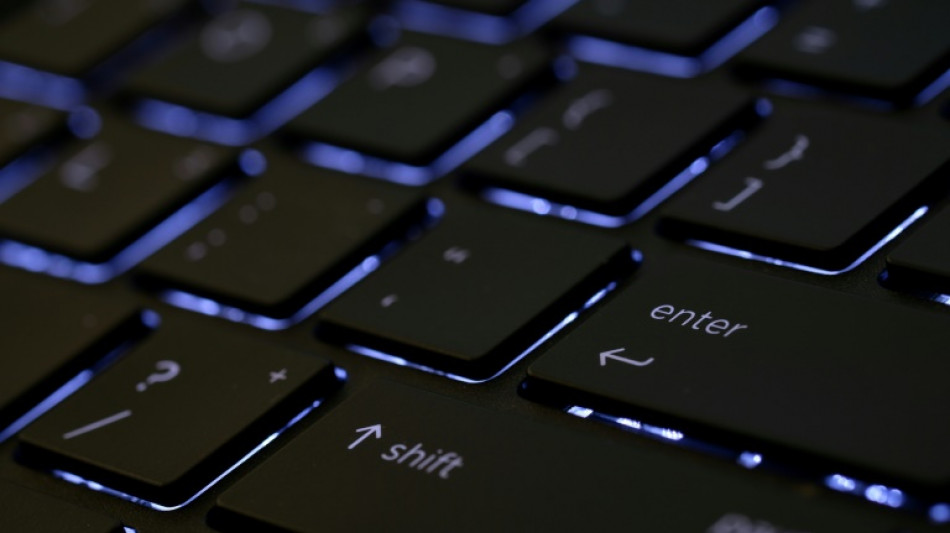
Germany blames Russia for Signal phishing attacks on MPs / Photo: Chris Delmas - AFP/File
 Trump pauses 50% tariffs on Canadian goods for three days

 Five Premier League stars to watch this season

 China's robots open to opportunities in search of commercial breakthrough
 Tech leads losses as Asian stocks track Wall St selloff

 US, South Korea cut drills short after Trump criticism
 Italian scientists bet on octopus to fight crab invasion
 New 'Insidious' reflects anxiety of being a new parent: director

 No.1 Sabalenka slams Wang to advance at Cincinnati

 Turkey rejects Israeli claims after strike on Syria air base
 Climate change main driver of European ocean warming: study
 Gauff finds a way into the Cincinnati fourth round
 ZZ Top drummer Frank Beard dies at age 77
 Bayern's Musiala reveals 'neurological disorder' after on-field collapse

 Angelique Kidjo immortalised on Hollywood Walk of Fame

 France to expel two Iranian diplomats: foreign minister

 Spain's Granada closes iconic Alhambra as new quake hits

 Venus, Stephens, Monfils named among US Open wild cards
 Rodri joins La Liga champions Barcelona from Manchester City

 Disney, ABC sue US regulator over threat to broadcast licenses

 Trump, Carney hold talks as new US tariffs on Canada loom

 Germany opens new drone research centre as security threats mount
 How only a few tree species drive Amazon forest recovery
 Ivonne A-Baki enters race to be next UN chief
 Ukraine says Russian strike kills 10 in northeast region

 Meta in court over child social media addiction

Top officials in the German government on Saturday blamed Russia for repeated phishing attacks targeting lawmakers and senior administration officials using the Signal messaging app.
"The federal government is assuming that the phishing campaign targeting the Signal messaging service was presumably run from Russia," a government source told AFP.
The source said that the phishing campaign had been stopped.
German prosecutors on Friday launched a spying investigation into the cyberattacks, which had allegedly been directed at MPs from several parties including the speaker of parliament and a senior member of Chancellor Friedrich Merz's CDU party.
Civil servants, diplomats and journalists were also targeted.
Germany, Kyiv's biggest provider of military aid, has been battling a surge of cyberattacks, as well as espionage and sabotage plots since Russia's full-scale invasion of Ukraine in 2022.
Moscow denies being behind any such actions.
- Signal hackers -
The attacks work by sending messages purporting to come from Signal support.
Victims are urged to hand over sensitive account information, which the attackers can then use to gain access to their chat groups and messages.
When the scam is successful, the hackers gain access to photos and files shared on Signal and can also impersonate the person whose account was compromised.
German and foreign security services have been warning for months about the attacks, but the potential fallout in Germany is only just becoming clear.
Many have moved from WhatsApp to the non-profit Signal in recent years because of privacy concerns after WhatsApp said it would share some metadata with parent company Meta, which also owns Facebook and Instagram.
- Hundreds affected? -
The German government has so far not commented on how many of its lawmakers have been affected.
According to Der Spiegel news outlet, at least 300 accounts belonging to political figures were compromised in the phishing campaign.
Konstantin von Notz, an MP who is deputy chief of the intelligence oversight committee, told AFP Friday that the scale of the suspected attacks was "extremely worrying".
"The number of unreported cases will continue to rise in the coming days," he said.
"At present, no one can say with any certainty whether the integrity of MPs' communications is still guaranteed."
Russia has been accused of numerous cyberattacks in Western countries. German officials have repeatedly been targeted, including in 2015 when computers belonging to the Bundestag and the office of then‑chancellor Angela Merkel were breached.
Y.Nakamura--AMWN