Final talks begin on missing piece for pandemic treaty / Photo: JOHAN ORDONEZ - AFP
 New 'Insidious' reflects anxiety of being a new parent: director

 No.1 Sabalenka slams Wang to advance at Cincinnati

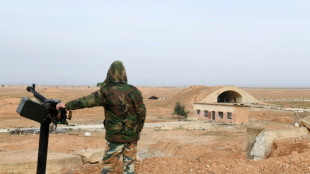
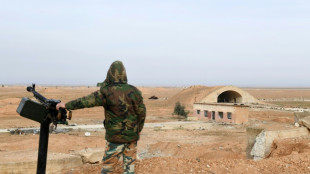
 Turkey rejects Israeli claims after strike on Syria air base
 Climate change main driver of European ocean warming: study
 Gauff finds a way into the Cincinnati fourth round

 ZZ Top drummer Frank Beard dies at age 77
 Bayern's Musiala reveals 'neurological disorder' after on-field collapse
 Angelique Kidjo immortalised on Hollywood Walk of Fame
 France to expel two Iranian diplomats: foreign minister

 Spain's Granada closes iconic Alhambra as new quake hits
 Venus, Stephens, Monfils named among US Open wild cards

 Rodri joins La Liga champions Barcelona from Manchester City

 Disney, ABC sue US regulator over threat to broadcast licenses

 Trump, Carney hold talks as new US tariffs on Canada loom

 Germany opens new drone research centre as security threats mount
 How only a few tree species drive Amazon forest recovery
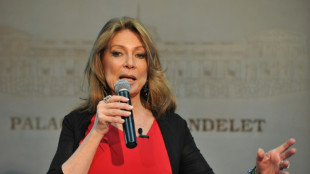 Ivonne A-Baki enters race to be next UN chief
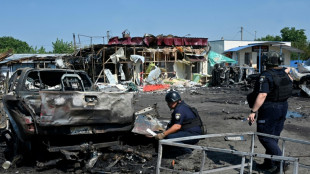 Ukraine says Russian strike kills 10 in northeast region

 Meta in court over child social media addiction
 Vieira appointed Senegal head coach after World Cup disappointment
 F1's Albon re-signs with Williams for 2027

 Borderless.xyz Deepens Africa Coverage as CrissCross Goes Live on Its Network

 Pakistan court orders ex-PM Khan moved from jail to hospital
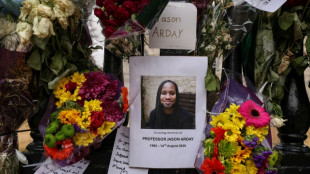 'Lonely place': Black UK academics slam racism after Arday's death

 UK PM says not embarrassed by hoax messages with fake Trump aide
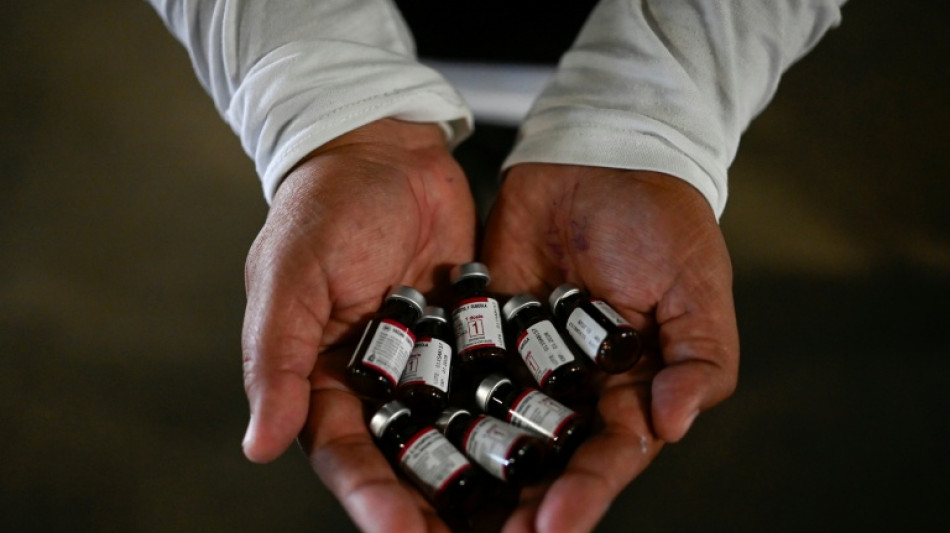
An extra week of negotiations to complete the crucial missing piece of an international agreement on handling future pandemics kicks off Monday at the WHO, with sharp divisions holding up an accord.
Wealthy countries and developing nations are at loggerheads in the World Health Organization talks over how the pandemic treaty, adopted last year, will work in practice.
The agreement's Pathogen Access and Benefit-Sharing (PABS) system deals with sharing access to pathogens with pandemic potential, then sharing the benefits derived from them: vaccines, tests and treatments.
"Developing countries are voicing their mistrust, fearing they will share their viruses without any guarantees of equitable access to vaccines in the event of a crisis," WHO chief scientist Sylvie Briand told AFP.
Meanwhile other countries are asking whether the pharmaceutical industry would have the capacity and motivation to contribute to a global pandemic agreement "without a guarantee of return on investment", she said.
Another challenge, she said, was "to integrate the sharing of genetic data, now as crucial as that of physical viruses for developing vaccines, treatments, and diagnostics".
- 'Very hard' -
In May 2025, WHO member states adopted a landmark pandemic agreement on tackling future health crises, after more than three years of negotiations sparked by the shock of Covid-19.
The accord aims to prevent future pandemics from the disjointed responses and international disarray that surrounded the coronavirus crisis, by improving global coordination, surveillance and access to vaccines.
But PABS, the heartbeat of the treaty, was left on the side in order to get the bulk of the deal over the line.
Countries have been given one final week, through Friday, to negotiate PABS, with an eye on getting it approved during the World Health Assembly of WHO member states, which opens on May 18.
Jean Karydakis, a diplomat at Brazil's mission in Geneva, said he thought a deal was possible even if the differences were "by no means negligible."
"Progress has been slow" and finding compromise "will be very hard", though the European Union was now "making an effort to demonstrate some flexibility", he said.
PABS is considered crucial by developing states, particularly in Africa, where many countries felt cut adrift in the scramble for Covid-19 vaccines.
However, there are nuances between their positions. Some emerging economies like South Africa want technology transfers, while the poorest countries are focusing primarily on access to healthcare products.
Adeel Mumtaz Khokhar, from Pakistan's mission, said the negotiations had been "quite challenging" but "we remain hopeful".
"Licensing, technology transfer and broader capacity building of your health system -- that remains a big point of contention," he said.
- Anonymous access? -
The treaty already says participating pharmaceutical companies should make available 20 percent of their real-time production of vaccines, tests and treatments to the WHO for redistribution -- with at least half as a donation and the rest "at affordable prices".
However, the details remain to be defined in the PABS annex, as do the terms of access to health data and tools outside pandemics.
NGOs and developing countries want to impose mandatory rules for laboratories to ensure poor countries receive vaccines.
"During the Ebola outbreaks, samples from African patients led to treatments developed without such obligations," said Olena Zarytska of the medical charity Doctors Without Borders (MSF).
The result, she said, was limited supplies in Africa and stockpiles in the United States, which under President Donald Trump has withdrawn from the WHO.
Developing countries also want a user registration and tracking system for the PABS database, while developed countries, "basically Germany, Norway and Switzerland, advocate for maintaining anonymous access", said K. M. Gopakumar, senior researcher with the Third World Network.
Anonymous access would make it "impossible" to track who is using pathogen information, what for, and whether they are sharing the derived benefits, 100 non-governmental organisations including Oxfam said in a joint letter to the WHO.
"In practice, this means that genetic resources originating in developing countries can be accessed, commercialised, and exploited with complete impunity," the letter said.
L.Harper--AMWN