-
 Trapped, starving and afraid in besieged Sudan city
-
Showdown looms as EU-Mercosur deal nears finish line

-
 Messi mania peaks in India's pollution-hit capital
-
Wales captains Morgan and Lake sign for Gloucester

-
 Serbian minister indicted over Kushner-linked hotel plan
-
Eurovision 2026 will feature 35 countries: organisers

-
 Cambodia says Thailand bombs province home to Angkor temples
-
US-Ukrainian talks resume in Berlin with territorial stakes unresolved
-
 Small firms join charge to boost Europe's weapon supplies
-
Driver behind Liverpool football parade 'horror' warned of long jail term
-
 German shipyard, rescued by the state, gets mega deal
-
Flash flood kills dozens in Morocco town
-
 'We are angry': Louvre Museum closed as workers strike
-
Australia to toughen gun laws as it mourns deadly Bondi attack
-
 Stocks diverge ahead of central bank calls, US data
-
Wales captain Morgan to join Gloucester

-
 UK pop star Cliff Richard reveals prostate cancer treatment
-
Mariah Carey to headline Winter Olympics opening ceremony

-
 Indonesia to revoke 22 forestry permits after deadly floods
-
Louvre Museum closed as workers strike

-
 Spain fines Airbnb 64 mn euros for posting banned properties
-
Japan's only two pandas to be sent back to China

-
 Zelensky, US envoys to push on with Ukraine talks in Berlin
-
Australia to toughen gun laws after deadly Bondi shootings
-
 Lyon poised to bounce back after surprise Brisbane omission
-
Australia defends record on antisemitism after Bondi Beach attack
-
 US police probe deaths of director Rob Reiner, wife as 'apparent homicide'
-
'Terrified' Sydney man misidentified as Bondi shooter

-
 Cambodia says Thai air strikes hit home province of heritage temples
-
EU-Mercosur trade deal faces bumpy ride to finish line

-
 Inside the mind of Tolkien illustrator John Howe
-
Mbeumo faces double Cameroon challenge at AFCON

-
 Tongue replaces Atkinson in only England change for third Ashes Test
-
England's Brook vows to rein it in after 'shocking' Ashes shots
-
 Bondi Beach gunmen had possible Islamic State links, says ABC
-
Lakers fend off Suns fightback, Hawks edge Sixers

-
 Louvre trade unions to launch rolling strike
-
Far-right Kast wins Chile election landslide
-
 Asian markets drop with Wall St as tech fears revive
-
North Korean leader's sister sports Chinese foldable phone

-
 Iran's women bikers take the road despite legal, social obstacles
-
Civilians venture home after militia seizes DR Congo town
-
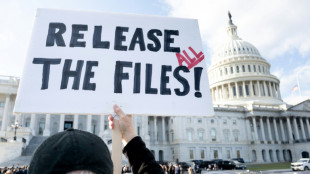 Countdown to disclosure: Epstein deadline tests US transparency
-
Desperate England looking for Ashes miracle in Adelaide
-
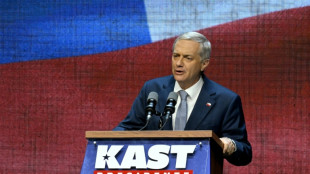 Far-right Kast wins Chile election in landslide
-
What we know about Australia's Bondi Beach attack
-
 Witnesses tell of courage, panic in wake of Bondi Beach shootings
-
Chiefs out of playoffs after decade as Mahomes hurts knee
-
 Chilean hard right victory stirs memories of dictatorship
-
Volunteers patrol Thai villages as artillery rains at Cambodia border
NYSE - LSE
UN resumes talks on high-seas treaty amid growing concerns
After four inconclusive sessions, UN member states on Monday resumed talks aimed at finally completing a treaty to protect the world's high seas, a vital yet fragile resource that covers nearly half the planet.
A host of NGOs and affected countries say the pact is urgently needed to improve environmental stewardship over the vast, yet largely unregulated area as it faces growing challenges.
But the Covid-19 pandemic slowed negotiations for two years, and a session in March that was supposed to have been conclusive made progress but ran out of time.
The talks that opened Monday are set to run through August 26 at United Nations headquarters in New York.
"Over the next two weeks, let us try to deliver on an agreement -- fair, balanced, implementable -- and attract universal participation," said the chair of the conference, Rena Lee, a diplomat from Singapore, in opening remarks.
Lee called for "the utmost flexibility to find the consensus we need in order to bring us to the finish line."
Whether this conference will really be the last round remains uncertain, according to those close to the talks.
Negotiators are "cautiously optimistic," said a source with the High Ambition Coalition, which groups some 50 countries led by the European Union.
The source told AFP that participants need to find a compromise between two "grand ideas": protecting the environment and regulating human activities on the one hand, while also guarding freedoms on the high seas.
The high seas begin at the border of nations' exclusive economic zones (EEZs), which by international law reach no more than 200 nautical miles (370 kilometers) from each country's coast, and are under no state's jurisdiction.
Even if the high seas represent more than 60 percent of the oceans -- and nearly half the planet -- they have long been largely ignored in favor of coastal zones, with protections extended only to a few vulnerable species. Only one percent of the high seas enjoys legal protection.
Yet, scientists have proved the importance of protecting oceanic ecosystems in their entirety. They produce half the oxygen humans breathe and help limit global warming by absorbing much of the carbon dioxide emitted by human activity.
They are seriously at risk, however, from the continuing rise in levels of carbon dioxide (which intensifies warming and makes ocean waters more acid), pollution and overfishing.
- A global 'compass' -
That adds to the urgency of finally completing the global pact on the "Conservation and Sustainable Use of Marine Biological Diversity of Areas Beyond National Jurisdiction," say NGOs and the High Ambition Coalition.
"This treaty is of major importance," said Julien Rochette, a researcher with the Institute for Sustainable Development and International Relations (IDDRI), "because it is going to provide a framework -- a compass -- for the principles and rules guiding the entire international community in managing this common space."
But the latest treaty draft still fails to resolve several thorny issues or to choose among diverse and contending options, such as the conditions for creating so-called Marine Protected Areas.
To James Hanson of Greenpeace, the future Conference of Parties (or COP, a decision-making body which includes all signatory states) must have the power to "create these Marine Protected Areas without having to defer to the existing bodies."
Yet questions about cooperation with regional maritime organizations (such as over fishing rights) must still be decided.
Also unresolved, Rochette told AFP, is whether the COP could ban certain activities on the high seas if a mandated environmental-impact study proves unfavorable, or whether a state could simply go ahead.
Another sensitive issue involves the allocation of potential profits from developing genetic resources in the high seas, where pharmaceutical, chemical and cosmetic companies hope to find miracle drugs, products or cures.
Such costly research at sea is largely the prerogative of the rich, but developing countries do not want to be left out of potential windfall profits drawn from marine resources that belong to no one. It remains unclear whether there has been substantial movement by key parties since the last round of talks, said Rochette.
He said those pressing hardest for agreement on this issue include the European Union, Australia, New Zealand and developing countries, while the strongest opposition comes from Russia and from countries concerned about fishing rights, including Iceland and Japan.
L.Miller--AMWN