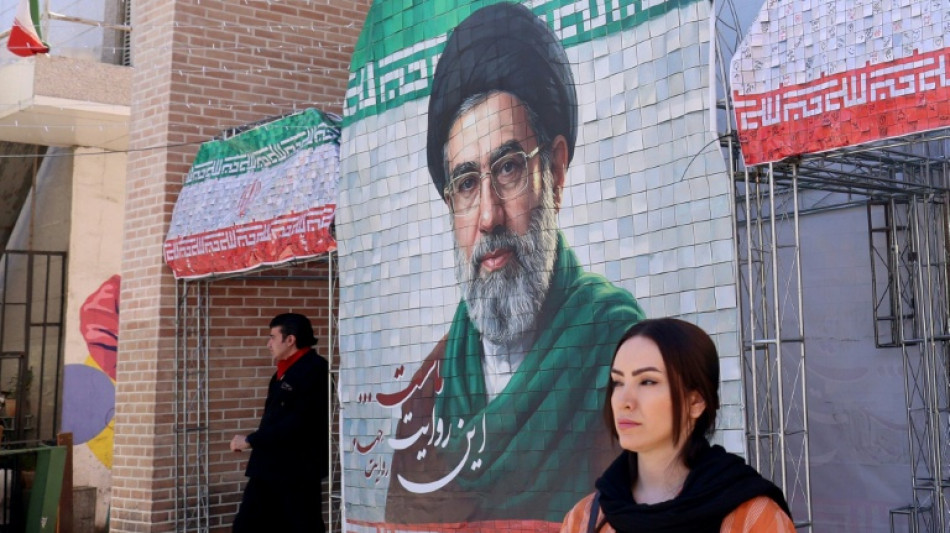
Trump rejects Iran peace terms, Tehran warns of new attacks / Photo: ATTA KENARE - AFP
 Syria, Jordan agree to mend ties after deadly strike
 Arsenal stunned by fourth-tier Fleetwood in League Cup

 Last-gasp Sabitzer strike sends Dortmund past Bremen in German Cup
 Rights groups reject Emirati diplomat for UN top job

 Flavio Bolsonaro headed to US after Brazil election defeat: US media

 Alcaraz and Zverev win Vienna openers
 Tech firms gain ahead of Fed decision, results from AI giants

 Syria condemns deadly Jordan strikes as 'unacceptable violation'
 England's Fin Smith in race against time to face Australia

 UN nuclear watchdog chief urges Iran to grant access
 Boeing shares tumble after it releases cautious growth forecast

 Lula's re-election revives Brazil-US tensions
 Carney moves to remake Canada alliances as US ties strained

 Serbia's students demand state media chiefs resign after poll win

 Starc takes six as Australia fight back in South Africa decider
 UK man offered drugged wife to strangers online for sex: court

 Africa Ebola outbreak passes 10,000 cases, mostly in DR Congo

 EU pushes for more nations to pay to protect nature
 Boeing reports smaller loss as it aims for stable output growth

 Tech firms gain on Anthropic IPO optimism; HSBC slumps in London

 Sri Lanka end England hopes with crushing win over Pakistan
 Dangote, Nigeria's oil tycoon rewriting Africa's story

 Carrick to remain Man Utd boss for Chelsea clash: reports

 Greenhouse gas levels hit new record highs in 2025: UN
 Rybakina looking to clinch year-end number one in Tokyo

US President Donald Trump on Sunday branded Iran's terms for ending the Middle East war "totally unacceptable," raising the likelihood of renewed conflict after weeks of negotiations.
Iran had responded to Washington's latest peace proposal earlier in the day, while warning it would not hold back from retaliating against any new US strikes or permit more foreign warships in the Strait of Hormuz.
Trump himself provided no details on Tehran's counterproposal, but in a brief post on his Truth Social platform made clear he was rejecting it.
"I have just read the response from Iran's so-called 'Representatives.' I don't like it -- TOTALLY UNACCEPTABLE!" Trump said.
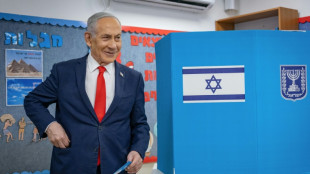
The back and forth came as Israeli Prime Minister Benjamin Netanyahu -- whose forces launched the war on Iran along with the US military on February 28 -- insisted the conflict was not over until Iran's enriched uranium was removed and its nuclear facilities dismantled.
Tehran publicly maintained its defiant line, despite behind-the-scenes diplomacy.
"We will never bow down to the enemy, and if there is talk of dialogue or negotiation, it does not mean surrender or retreat," Iranian President Masoud Pezeshkian said Sunday on X.
According to state broadcaster IRIB, Tehran's response to the US plan, passed to Pakistani mediators, focuses on ending the war "on all fronts, especially Lebanon" -- where Israel has kept up its fight with Iran-backed Hezbollah -- as well as on "ensuring shipping security."
It offered little detail, though the US proposal had reportedly focused on extending the truce in the Gulf to allow for talks on a final settlement of the conflict and on Iran's contested nuclear programme.
Netanyahu said in an interview to be aired in full later Sunday that Iran's stockpile of enriched uranium must be removed before the war can end.
"It's not over, because there's still nuclear material -- enriched uranium -- that has to be taken out of Iran. There's still enrichment sites that have to be dismantled," Netanyahu told CBS's "60 Minutes."
He added that Trump was on the same page regarding the need to take away the uranium, though the president said in a recent interview that the US could remove it "whenever we want," and that it was "very well surveilled" where it is now.
Trump is expected to press President Xi Jinping of China -- a major buyer of Iranian oil -- on Iran when he visits Beijing this coming week, a senior US administration official said.
- No Hormuz 'interference' -
Meanwhile The Wall Street Journal, citing people familiar with the matter, said Iran laid out its own demands to Washington and proposed to have some of its highly enriched uranium diluted, and the rest transferred to a third country.
In its response, delivered through mediator Pakistan, Iran sought guarantees that the transferred uranium will be returned if negotiations fail or Washington quits the agreement later, sources told the Journal.
Trump made no mention of such details in rejecting Iran's response.
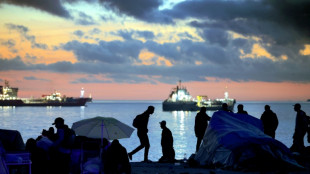
Iran imposed a blockade on the vital Strait of Hormuz early in the war, sending global oil prices soaring and rattling financial markets.
It has since set up a payment mechanism to extract tolls from ships crossing the strait, but US officials have stressed it would be "unacceptable" for Tehran to control an international waterway and the route for a fifth of the world's oil and other vital materials.
The US Navy, meanwhile, is blockading Iran's ports, at times disabling or diverting ships heading to and from them.
Britain and France are leading efforts to create an international coalition to secure the strait after a peace deal is reached, with both countries sending vessels to the region in advance.
But Iran warned Sunday that the two nations would meet "a decisive and immediate response" should they deploy their ships to the strait.
"Only the Islamic Republic of Iran can establish security in this strait and it will not allow any country to interfere in such matters," Deputy Foreign Minister Kazem Gharibabadi posted on X.
French President Emmanuel Macron later insisted his country had "never envisaged" a naval deployment in Hormuz, but rather a security mission "coordinated with Iran."
- 'Restraint over' -
Fresh drone attacks Sunday in the Gulf were the latest to rattle the ceasefire after multiple recent flare-ups.
The United Arab Emirates said its "air defence systems successfully engaged two UAVs launched from Iran."
Kuwait reported an attempted attack as well, saying its armed forces dealt with "a number of hostile drones in Kuwaiti airspace."
And Qatar's defense ministry said a freighter arriving in its waters from Abu Dhabi was hit by a drone.
There was no immediate claim of responsibility, but Iran's Fars news agency reported that "the bulk carrier that was struck near the coast of Qatar was sailing under a US flag."
In a social media post on Sunday, the spokesman for the Iranian parliament's national security commission warned Washington: "Our restraint is over as of today."
"Any attack on our vessels will trigger a strong and decisive Iranian response against American ships and bases," Ebrahim Rezaei said.
According to Iranian state television, Tehran's military chief Ali Abdollahi met the country's supreme leader Mojtaba Khamenei and received "new directives and guidance for the continuation of operations to confront the enemy."
burs/mlm/sla
L.Davis--AMWN