Russian border city shrugs off Baltic fears of attack / Photo: Olga MALTSEVA - AFP
 Part of London's Oxford Street pedestrianised 'forever'

 Canadian youth seek climate action in landmark trial

 Trump blasts Norway over Nobel Peace Prize snub
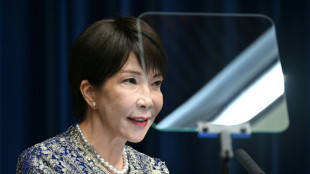 Japan PM vows swift response to wave of cyberattacks

 Stocks mostly rise before tech earnings, central bank calls
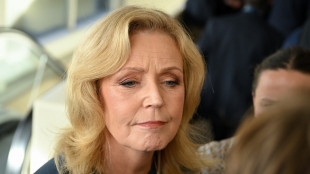
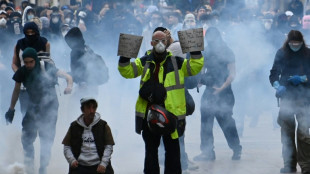 France's Macron to visit Marseille after protest violence

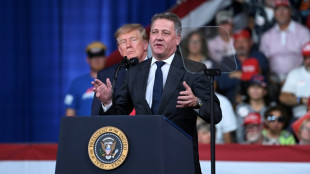 German union slams Audi boss's appearance at Trump rally
 UK set for 'limited' budget giveaways as borrowing costs surge
 Anthropic's AI model accessed US voter data: Axios
 Malaysia's Johor reopens schools as haze eases

 Carragher says Fernandes benching was intended as public punishment

 Canada-EU summit seeks deepened alliance as US ties fray
 Senegal to host Youth Games, Africa's first ever Olympics

 ITV drama Adultery examines temptation, class and family consequences

 New levy on non-EU parcels kicks in November 1

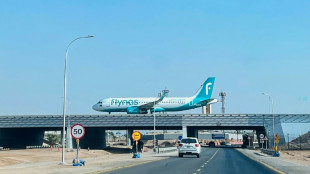 Saudi coalition says struck Houthi missile facilities after Riyadh airport attack

 Manchester United stand-in captain calls for change after Bournemouth loss

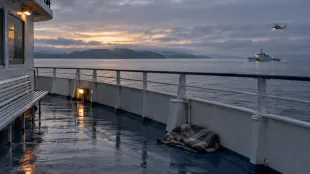 Body recovered after ferry passenger reported overboard

 Dance in the Dark brings an immersive family adventure to Birmingham MAC

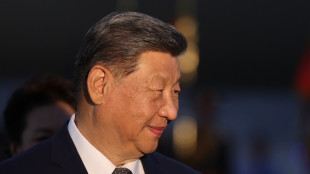 China's Communist Party elite hold key talks on governance
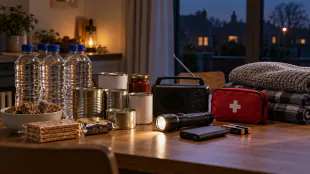
 Redditch Santa fun run to return to Arrow Valley Park

 Obama links Trump trade policy to higher costs in Detroit speech

 Saudi coalition says intercepted missile after Houthis hit Riyadh airport

 'I feel so happy!': Ecstasy, relief among Brazil's Lula supporters

 Brazil's Lula clinches poll victory, Bolsonaro seeks to annul election

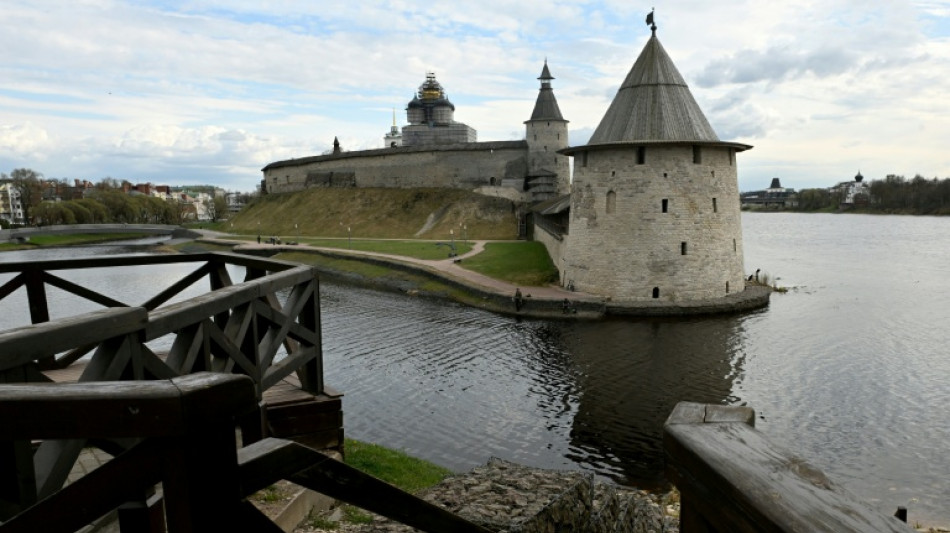
Europe's Baltic states lie just half an hour away -- sealed off and on edge -- from the Russian border city of Pskov, where the locals shrug off fears their country will attack as they play their part in supporting Moscow's army fighting in Ukraine.
Beneath the round towers of Pskov's medieval fortress, fishermen cast their rods into the dark waters of the Velikaya -- "Great" -- river that runs through the city.
"Russia starts here," read large white letters installed along the river bank in front of the citadel's modest gold and grey onion-shaped domes.
NATO and EU members Estonia and Latvia are just 30 and 60 kilometres (18 and 36 miles) to the west.
Since Russia launched its offensive on Ukraine in 2022, both have tightened their borders and repeatedly expressed concerns that they could be next.
"It's an absolute fantasy," said Yulia Andreyeva, a 52-year-old accountant, expressing disbelief at the prospect of a Russian attack.
Before the Ukraine offensive, she used to travel regularly to Estonia and Latvia.
"Now we spend our holidays here in the region, and I don't really miss the old life," she said.
Pskov is one of the quieter Russian border areas -- unlike those on the frontier with Ukraine, which see regular retaliatory drone and rocket strikes.
"I'd like to see peace get closer, but there's still no end in sight," Andreyeva said.
She highlighted that the conflict had already "lasted longer" than Russia's fight against Nazi Germany in World War II.
"There's no end to it."
- 'Against us' -
Estonian authorities say Moscow is increasing border provocations, particularly around the city of Narva, where Russian is the native language for 95 percent of locals.
In spring 2024, Estonia accused Russia of removing buoys marking the border in the middle of a river. Tallinn in December said three Russian border guards briefly crossed onto the Estonian side.
Russia casts itself as the defender of Estonia's Russian-speaking minority and blasts the EU and NATO member's "manic Russophobia".
That rhetoric -- similar to how Russia spoke about Ukraine's Russian-speaking population prior to launching its full-scale military offensive -- has spooked the ex-Soviet Baltic states.
In Pskov, student Ivan Smirnov, 23, said he is indifferent to the border closures.
"I kind of don't care. I don't see any problems," he told AFP.
He has travelled in recent years to Egypt and Cuba -- two countries that maintain close ties with Moscow.
Nevertheless, he gets why nerves are high in the Baltics.
"If I were a European, I'd say that from their point of view this is a quite understandable position, just as from our point of view it's understandable that we also see them as our opponent."
Perched fishing on the riverbank, 65-year-old Sergei Ivanovich regretted the impact of severed ties to Europe.
"Our relatives were in Riga, now we can't go there anymore."
A family member who used to drive trucks between the countries lost his job.
But Ivanovich is in no doubt over who is to blame.
"All of Europe, they're against us. They want to weaken Russia," he said, repeating a narrative often promoted by Russian President Vladimir Putin.
Like many places in Russia, Pskov collects aid for Russian soldiers fighting at the front and civilians living in parts of Ukraine under Moscow's control.
The region of some 570,000 people has around 20 aid centres, both public and private initiatives.
One of the groups, the Alt foundation, sends nearly 40 tonnes of clothing, medicines, generators and other supplies to the Zaporizhzhia region -- partly controlled by Russia's army -- every other month, its head Alyona Ulyanova said.
Her husband lost his leg and arm in the war.
Larisa, 68, goes to one of the centres every day to weave camouflage nets.
"This is our way of helping," she told AFP.
Y.Nakamura--AMWN