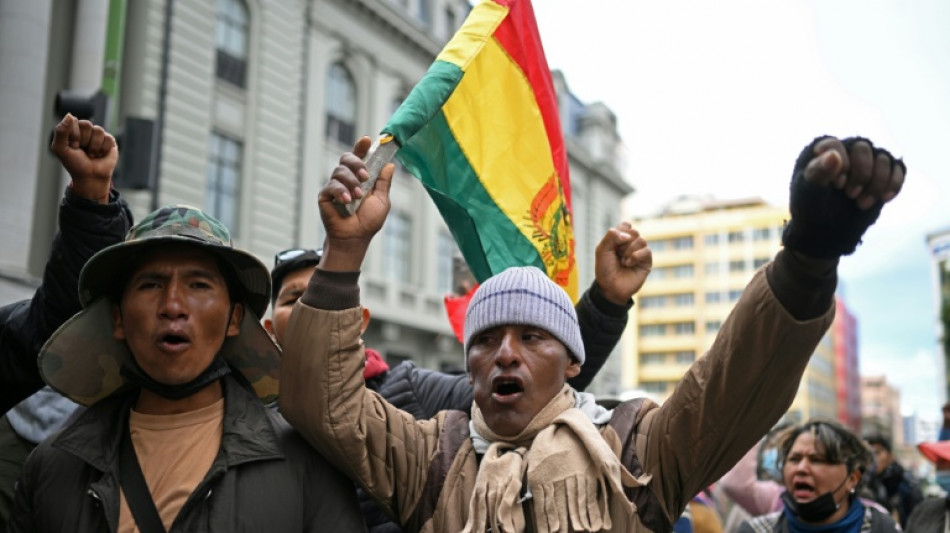
Bolivian Congress OK's use of troops against protesters / Photo: MARVIN RECINOS - AFP
 Sacha Baron Cohen revives the 'problematic dinosaur' Ali G in new film

 New race in Barcelona tops 17-event '27 IndyCar season

 Neymar backs Flavio Bolsonaro in Brazil election
 Melania Trump says she brokered truce in war-torn Ukrainian city

 Leclerc tops times for Ferrari in opening practice for US Grand Prix

 Bayern Munich coach Kompany in hospital after collapsing

 Signs point to renewed major US military ops against Iran

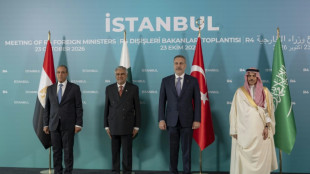
 European, Mideast foreign ministers push peace and diplomacy at Istanbul talks

 Ex-All Black centre Williams undergoes 'miracle' heart surgery

 Netanyahu launches major West Bank operation after Israeli soldiers killed
 AFP photographer captures striking images from West Bank attack

 Oil hits $116 with stocks mixed on earnings, AI

 De Zerbi says Tottenham's dire record at Chelsea 'more motivation'
 Lula, Bolsonaro in final debate showdown before Brazil vote

 Poulter latest golfer to leave LIV
 Gunman kills one, wounds five in town outside Paris

 Melania Trump says secured ceasefire in Ukrainian city of Oleshky

 Carrick 'confident' he can turn around Man Utd slump
 PSG v Lyon French Ligue 1 game postponed due to Paris protests

 Meghan Markle 'distressed' over claims father had child abuse images

 Gunman kills one, wounds four in town outside Paris

 France to deploy 70,000 police ahead of new protests

 Mekies hails Verstappen as Red Bull's driving force amid revival
 Tanker with Russian diesel heads to New York under Trump deal

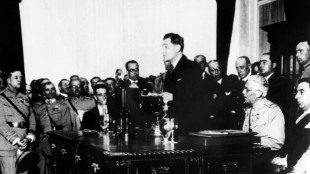 New centre puts focus on Portuguese dictator Salazar's legacy

Bolivia's congress voted Tuesday to let President Rodrigo Paz deploy soldiers and declare a state of emergency to counter huge street protests seeking his resignation over economic hardship.
By a more than two-thirds majority the Chamber of Deputies eliminated a rule that restricted the center-right president's leeway to invoke emergency measures, the chamber's speaker Roberto Castro announced.
As a groundswell of fury with the US-backed leader continues to convulse the Andean nation just six months into his term, the way is now clear for Paz to deploy the army and curb some civil liberties, like freedom of movement and assembly. The law had already been rushed through the Senate.
With an ample majority of the 117 members present in the 130-seat chamber, lawmakers undid a rule that since 2020 had limited the president's ability to impose states of emergency.
The repeal took place outside of ordinary congressional procedure so it could be pushed through in just one week.
As the protests have grown, Paz has made various gestures aimed at ending the revolt against policies with which he is attempting to resolve Bolivia's worst economic crisis in decades.
The demonstrations began in early May with trade union demands for salary increases, stable fuel supplies and sounder economic management. But the movement has intensified.
Protesters have blockaded entry routes into La Paz, shops have shuttered for fear of violence, and food, medicine and fuel supplies are running low.
Critics of Tuesday's action in congress say it puts human rights at risk. Opposition lawmaker Sonia Sinani said it will actually make things worse and "pour gasoline on the flames" of the street protests.
"This law is like a strait jacket," said another opposition lawmaker, Alejandro Reyes.
The overturned regulation outlawing states of emergency dates back to social unrest in 2019 which killed 36 people and led to the resignation of then socialist leader Evo Morales.
When Morales' right-wing successor Jeanine Anez entered office, the socialist-dominated Congress sought to limit the government's capacity to crack down on protests.
The law made congressional approval of states of emergency mandatory, and also gave lawmakers the right to propose amendments to prevent abuses.
The Paz government claims that the current protests aim to "disrupt the democratic order" and has accused Morales -- in hiding from trafficking allegations, which he denies -- of orchestrating the upheaval.
In a bid to quell public fury with his leadership, Paz on Monday said he would cut his own salary by 50 percent.
His monthly salary is currently set at around 24,000 bolivianos ($3,500), one of the lowest of any Latin American leader but about eight times that of the average Bolivian, according to 2024 statistics from the International Labor Organization.
P.M.Smith--AMWN