
Anthropic calls for pause of global AI development
/ Photo: SEBASTIEN BOZON - AFP/File
 Judge orders Meta to pay $25 bn to New Mexico in Cambridge Analytica case

 Champagne puts cork in project to expand production area

 Canadian publisher says novelist Orelien used AI to write novel

 Trump faces fresh questions over ties to 'humanitarian' Putin

 Hansen back in Ireland squad for Nations Championship

 Kremlin sees little 'substance' in Ukraine peace ideas

 Top Arab-Israeli election candidate tells AFP Netanyahu win would be 'catastrophe'

 South African rugby player's death due to 'aortic dissection'

 France's Macron lands in Riyadh on surprise 'solidarity' visit

 Around the world, far right blames immigrants for French protests

 South Africa eases fuel pain as growth slows

 Woody Allen shoots new movie in Madrid

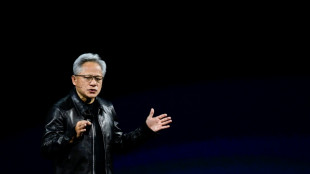 Nvidia's Huang urges Europe to go all in on AI

 Five things to know as French bond yield tops 5%

 'Complete threat' Ngumoha excites Liverpool captain Van Dijk

 'The fishing's terrible': Deforestation devastates C.Africa river

 France's tourism sector worried about impact of riots

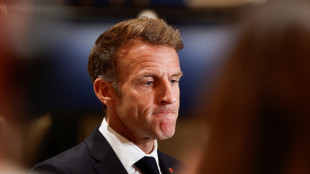 Macron takes aim at Trump for using France riots for election gain

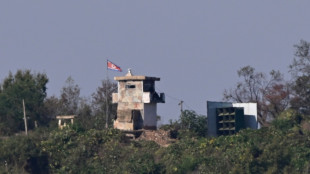 North Korea says 'new firepower units' in place, loudspeakers to return
 Indonesia leader hits out at market downgrade warning

 Macron slams 'stupid' comments based on AI videos by leaders on France riots

 'Public health crisis': Indonesians seek fire relief from state

 British Museum sells second set of Bayeux exhibition tickets

 Australian lawmaker loses both legs after 'targeted' attack

 UK approves drilling in controversial Jackdaw gas field

Artificial intelligence company Anthropic suggested Thursday a global pause on building the most powerful AI systems as the latest models are beginning to show signs they could escape human control.
The San Francisco-based company, which makes the Claude family of AI models, said in a report that a worldwide slowdown in cutting-edge AI development would "likely be a good thing" -- but warned that if only one company stopped, rivals would simply race ahead.
"We believe it would be good for the world to have the option to slow or temporarily pause frontier AI development to enable societal structures and alignment research to keep up with the advance of the technology," it said.
Getting a real pause to work would mean multiple major AI companies in multiple countries -- most notably the US and China -- all agreeing to stop at the same time, under rules everyone could actually verify, Anthropic said.
"Without a global coordination mechanism, companies and governments will have to make difficult decisions about safety while under competitive and geopolitical pressures," it said.
The company has faced pushback from others in the industry -- and officials in the White House -- who say its focus on worst-case scenarios overstates the risks and amounts to a strategy for slowing rivals under the cover of safety concerns.
Still, the White House has acknowledged the power of the company's Mythos model -- which has not been made available to the general public due to its cybersecurity capabilities and is currently deployed only to a small number of vetted organizations.
The proposal would face an uphill battle in Washington and Silicon Valley, where US officials and tech executives have repeatedly argued that any slowdown in AI development risks handing China a decisive strategic edge in what many see as the defining technology race of the century.
US President Donald Trump, however, said he discussed the possibility of cooperating with China on AI safety issues during his recent visit to Beijing.
Trump also signed an executive order this week that allows the government 30 days to conduct a preliminary review of the most powerful US AI models before their release.
- 'Human role narrowing' -
Anthropic compared the problem to nuclear arms control treaties -- but said it would be even harder to get a handle on, since AI training is far easier to hide than a missile silo, and the temptation to quietly keep going would be enormous.
The company said it plans to bring together government officials, scientists, advocacy groups and competing AI firms in coming months to figure out how such a system could work.
The call for coordination comes alongside internal data showing that AI is already dramatically speeding up the development of AI itself, Anthropic said.
That acceleration creates a feedback loop that Anthropic warned could eventually lead to what researchers call "recursive self-improvement."
That's the idea of an AI system that becomes capable of essentially teaching itself to get smarter, without much human help.
"We are not there yet, and recursive self-improvement is not inevitable," the report said, while adding that it could arrive sooner than most governments and institutions are ready for.
"The evidence suggests that the human role is narrowing at each step in the AI development process," the company said.
C.Garcia--AMWN