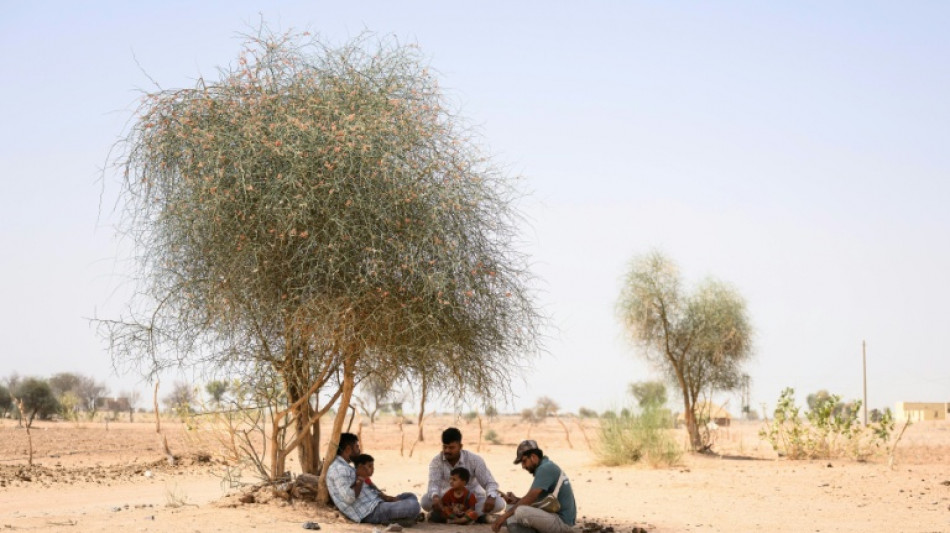
India learns to live with hotter summers / Photo: Manan VATSYAYANA - AFP
 Boland strikes twice for Australia in rain-hit South Africa Test

 Marseille put Angers to the sword in Ligue 1

 Albanian PM refuses to quit as violent protests enter sixth day

 Chwalinska fights back to win Wuhan Open in title breakthrough
 Kulusevski on brink of return for Spurs after 17-month absence

 Ukraine sets Saint Petersburg refinery ablaze in large-scale drone attack

 Spain's in-form Chacarra wins DP World India Championship

 Robertson and Selby chase rare Home Nations sweep in Belfast
 Arteta backs Kai Havertz to become a 30-goal Arsenal forward

 Emiliano Martinez expects Chelsea return within weeks after surgery
 Sri Lanka choose to field against Pakistan in tri-series opener

 Australia elect to bowl against South Africa in second Test

 Tata Trusts plans network of 40 to 50 not-for-profit hospitals

 Bajaj Finance set to report second-quarter results on October 19
 Messi reaches 936 career goals after Inter Miami brace

 Indian petrol and diesel prices remain unchanged on October 18

 PNB expects festive demand to add up to two points to quarterly credit growth

 Premium products and financing drive Navratri appliance demand

 Diesel shortage raises petroleum share of India’s exports to three-year high

 Moody’s lifts OYO parent Prism outlook to positive before planned IPO

 Kuwait announces maintenance closures in Nuzha, Surra and Rai

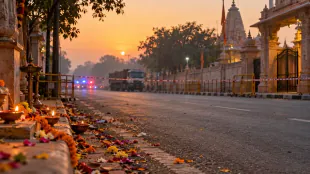 Truck ploughs into Hindu festival crowd in India, killing 13

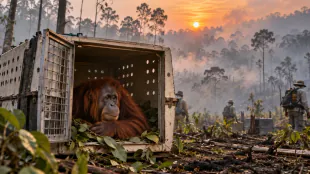 Conservation teams rescue orangutans from Indonesian wildfires

 Doha 2036 bid sets out sport-led social legacy

 Gord launches four AI tools for sustainability and emissions management

On India's hot plains, scorching summers have become increasingly harder to endure, requiring adaptations and forcing life into the hours of dark before the sun turns punishing.
"We try to adjust, but the traditional ways to combat heat are not working," said 26-year-old herdsman Sawai Bhati Singh, who lives outside the desert city of Jaisalmer, in the western state of Rajasthan.
"Every year the heat is increasing."
His home, made of thick stone blocks with few windows, helps keep some of the furnace-like heat out. But temperatures inside are still stifling.
The South Asian country is no stranger to scorching summers, but years of scientific research have found climate change is causing heatwaves to become longer, more frequent and more intense.
Temperatures in Singh's village of Sanwata hit 45C in early June, as is often during the summer. The highest temperature recorded in the area has been 49C.
Singh is worried about the health of his two young sons, aged two and four, playing barefoot in the dust.
In a separate kitchen hut with a thatched roof for ventilation, his wife and mother struggle as they cook on a wood fire.
Water is drawn from a nearby well and cooled in bottles wrapped in woven jute string, using evaporation to lower the temperature.
Singh's herd of goats and cattle struggles too.
"They stay in the shade," he said. "The heat impacts the eating, and that lowers their milk."
But temperatures are becoming harder to endure. The family bought their first air cooler, which uses wet fibres, last year.
"We never needed it before, but last year was hot, so we bought one," he said. "Now we have two."
A world away, along the lush green banks of the Yamuna river floodplains near the capital, New Delhi, farmer Bhole Shankar faces a different version of the same crisis.
New Delhi hit 46.5C this summer, still below the sizzling 49.9C record measured in 2024.
"Living on the floodplain feels cooler than being stuck in the middle of houses," 36-year-old Shankar said, standing outside a hut made of plastic sheeting on bamboo poles. "But on some days, day and night feel the same."
Shankar, his wife and their three sons, aged between nine and 16, live beneath the city's power lines -- but their hut is not connected. A solar panel provides enough power to run a small fan, pushing hot air.
The family shifts its routine, working in the fields before dawn, resting in the shade during the fiercest heat, and returning to check crops towards dusk.
The family roll up the tent's plastic wall and sleep on traditional rope-lattice beds, which both allow air to circulate.
"Each passing year feels hotter," he said. "We try to keep in the shade, but when you are a farmer, that's hard."
S.F.Warren--AMWN