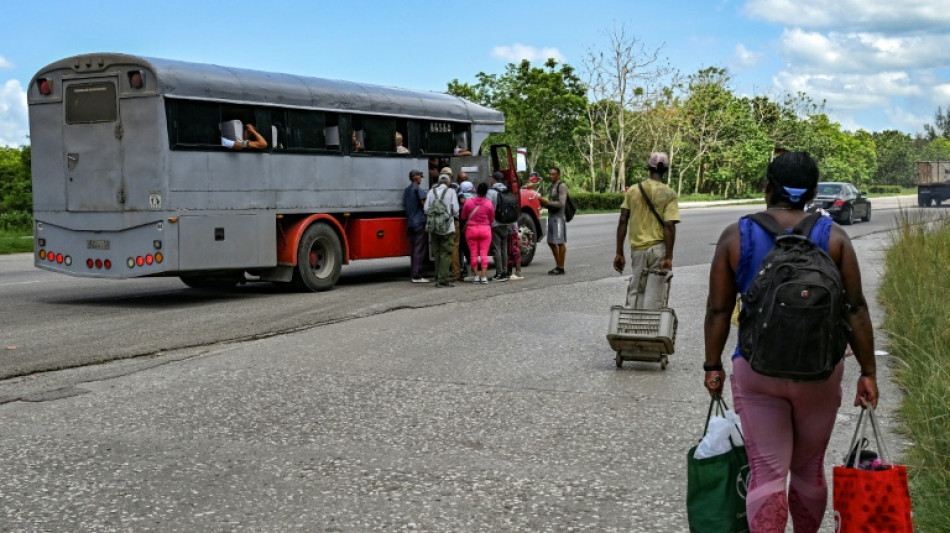
Cuban economy needs 'urgent changes' to overcome crisis: president / Photo: YAMIL LAGE - AFP
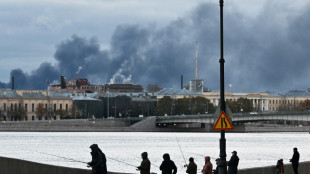
 Kremlin says Ukrainian attacks won't change war aims as Kyiv hits Saint Petersburg

 Martinez starts for Man Utd after outburst
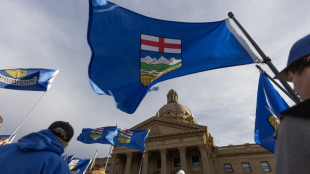 Alberta separatists rally ahead of independence vote

 Katie Alexander reportedly leaves flat shared with Eamonn Holmes

 Body found in search for missing Glasgow teenager

 Andi King recounts late-life transition after decades behind an “alpha male” identity

 Bromsgrove Repair Cafe reports nearly 80% repair success rate

 B.C. Lions focus on playoff momentum after Calgary defeat

 AP review finds racist and antisemitic posts in forum tied to Nevada candidate

 Arizona quarterback says audible led to dismissal and teammates’ suspensions

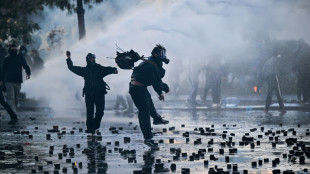
 French authorities detain more than 1,000 after cost-of-living protests turn violent

 Cyient DLM drops 12% as margin concerns overshadow quarterly growth
 Bandhan Financial weighs health-insurance entry after acquisitions settle

 Debt recovery lessons after derivatives losses and repeated borrowing

 RCom professional asks Supreme Court to revisit spectrum insolvency ruling
 India’s services surplus narrows as import growth overtakes exports

 PSG rally past Strasbourg to take Ligue 1 lead
 Gold closes week near $4,165 as US inflation outlook pressures market

 Vietnam and EFTA states sign free-trade agreement in Hanoi
 Qatar and Norway review bilateral ties at Oslo consultations

 Messi scores twice as Inter Miami defeat Atlanta United 3-1

 Riyadh skyscraper shifts tenants online as Houthi attacks intensify

 Two pilots die in Saudi coalition helicopter crash near Yemen border

 Dozens of orangutans saved from Indonesia blazes as region grapples with haze
 Pope addresses crowd in Vatican after cancer surgery
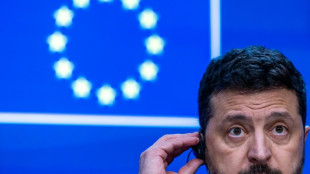
Cuba's economy needs "urgent changes" to overcome a major crisis intensified by a US oil blockade, President Miguel Diaz-Canel said in a speech to Communist Party leaders broadcast on Thursday.
"The situation calls for urgent and necessary changes," Diaz-Canel told the party's politburo in his frankest admission yet of the need for an overhaul of the country's communist model.
He cited China and Vietnam as possible models for opening Cuba's economy to the world in order to "create economic wealth and distribute it equally."
Diaz-Canel made the remarks at a meeting called to fast-track reforms aimed at boosting the growing private sector and attracting more capital from millions of Cubans who have fled the crisis abroad.
Some of the reforms "will not have absolute consensus but cannot be postponed," Diaz-Canel stressed.
"When people's lives become this hard," the Communist Party and government had a responsibility to "change what needs to be changed" rather than try to explain away the crisis, he said.
The oil blockade imposed by President Donald Trump in January has brought Cuba's already moribund economy to the brink of collapse, marked by power cuts sometimes lasting over 30 hours and shortages of food, fuel, drinking water and medicine.
While Havana's position has been to blame its woes on a more-than-six-decade US trade embargo and the blockade, Diaz-Canel admitted there were "obstacles that don't come from outside, nor the blockade."
He pointed to "slowness, bureaucracy and norms that impede those who want to produce" as well as "decisions that we have put off."
The reforms were widely seen as a desperate, eleventh-hour bid to stave off economic collapse.
It is unclear, however, whether they will satisfy Trump, who is pushing for a change in Cuba's leaders as well as its economic model.
P.Stevenson--AMWN