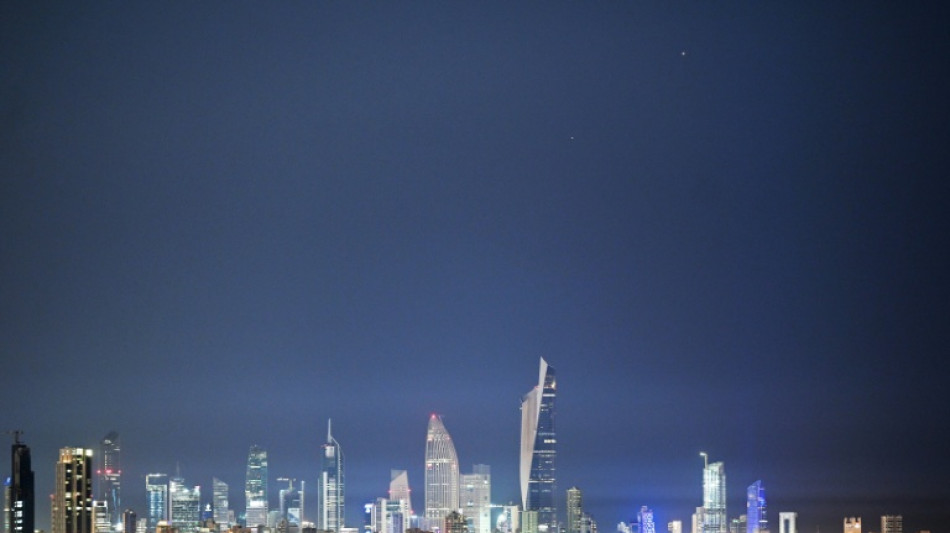
Kuwaitis ration electricity as Iran hits power grid / Photo: YASSER AL-ZAYYAT - AFP/File
 High school students turn out for new protests across France

 Bid by Italy's Intesa bank to take over MPS gets boost

 Stablecoins Are Quietly Becoming Business Infrastructure, NOWPayments Data Shows
 Oil surges, stocks sink as US reportedly eyes new Iran strikes

 Woman in botched US execution walking, mentally 'foggy': lawyer
 Farhan hopes Pakistan's new combination takes off in Sri Lanka T20Is

 Teenager Andreeva seals China Open semi-final with Bartunkova

 Britain's Burnham says open to Germany joining warplane project

 Kovac's tough love has Dortmund dreaming of title charge

 China announces candidate for WHO chief

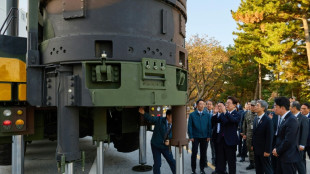 South Korea test-fires its first homegrown hypersonic weapon: presidency

 ONAR Advances Nasdaq Listing Preparation Following Advertise Purple Acquisition and Financing

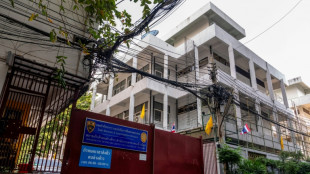 Thailand opens extradition process for reporter sought by China

 France struggles to wean social housing off gas

 Germany lifts GDP forecast as economy withstands Iran war

 Sri Lanka appoints Kusal Mendis as Test captain
 Norris confident McLaren can shine in Singapore
 Alex Bodi pushes ahead with expansion: ALIX LASERS showroom planned for Bucharest
 Fossil fuels off COP31 agenda as global output keeps rising

 Haze not 'a threat' to Singapore F1 race: organisers

 COP31 organisers say to seek 'ambitious' action with their text
 Bartunkova thrashes Muchova to reach China Open semi-finals
 Drone hits Yandex data centre, in first such attack on Russia

 Oil prices surge and stocks sink on fresh inflation worries

 AI startup Manus raises $500m after Meta acquisition blocked by China
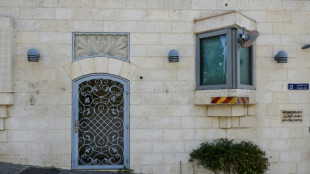
Residents of Kuwait, one of the world's hottest countries, are cutting their use of air conditioning at the height of summer, as Iranian strikes on power plants turn rationing into a national priority.
Kuwaiti authorities have called on the public to consume less energy so that they can maintain round-the-clock electricity as the grid comes under Iranian attack.
Nasser Al-Dhafiri, a civil servant in his forties, described "immense psychological pressure" on ordinary people as the attacks sparked fears of electricity outages.
For weeks, people have been waking up to sirens and explosions in Kuwait and Bahrain, Iran's prime targets in the Gulf since its shaky ceasefire with the United States collapsed.
In the first phase of the war, which began in late February with US-Israeli strikes on Iran, the Gulf also bore the brunt of the Islamic republic's attacks.
Dhafiri said the daily strikes were "compounded by ongoing attacks on infrastructure, particularly power plants... creating anxiety and confusion in our daily life".
"Everyone now feels that maintaining essential services is a shared responsibility."
Kuwait said Iran hit several power and water plants on Monday, causing fires in the fourth such attacks in as many days. Tehran had earlier said it was attacking US assets in the country.
In the Gulf, most desalination plants are integrated power and water production facilities because the process requires intensive energy input.
"Freshwater output from these installations could thus be interrupted not only by strikes on the water treatment units but also on the energy plants and grid connections supplying them," David Michel, a water and food security expert, wrote in March.
"Cut the water by cutting the power," he added.
The strikes further strained a power grid that survived the 1990 Iraqi invasion and occupation, as well as a round of Iranian attacks earlier this year.
"Conserving electricity means preserving the nation's resources. We must not strain the electrical grid with unnecessary usage," said Abdulrahman Al-Azmi, a Kuwaiti man in his sixties.
- 'Everyone can contribute' -
Despite being one of the largest crude producers in the OPEC oil cartel, Kuwait regularly has trouble meeting local demand, especially during the summertime, when temperatures top 50C.
In the summer of 2024, Kuwait announced temporary power cuts in parts of the country during peak consumption hours, saying it was struggling to meet increased demand spurred by extreme heat.
Energy-guzzling air conditioners are ubiquitous in Kuwait during the summer months.
Khaled Al-Badri, a Kuwaiti man in his fifties, told AFP he started turning off the air conditioning before leaving his house and switching off the outdoor lights.
"Everyone can contribute to getting us through this period," he said.
For Dhafiri, renewed war and power problems brought back memories of the Iraq invasion.
"What Kuwait is experiencing today is something we did not experience even during the Iraqi invasion in terms of psychological pressure and not knowing where events are headed," he told AFP.
Iraqi troops burnt hundreds of Kuwaiti oil wells as they withdrew after their 1991 defeat, straining the country's energy resources and causing an environmental crisis. Residents at the time reported sporadic outages after the troops left.
This time around, authorities are scrambling to contain potential disruptions before they become systematic.
On Saturday, electricity ministry spokeswoman Fatima Hayat hailed "widespread responsiveness" from the public that helped "reduce electricity consumption below projected levels".
The public's compliance "allowed the ministry to overcome a challenging phase for the electrical grid, and helped maintain the stability of our services".
S.Gregor--AMWN