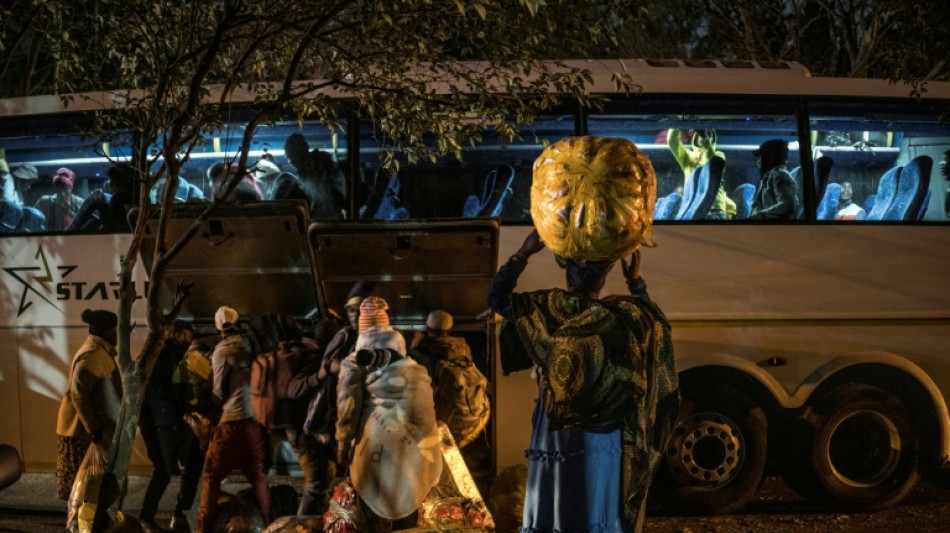
South Africa's anti-migrant unrest led over 160,000 to flee / Photo: MARCO LONGARI - AFP
 WhiteBIT Launches Bitcoin Lightning Network Support, Powered by Voltage

 Oil surges, stocks sink as US reportedly eyes fresh Iran strikes
 Anne Carson: modern takes on Greek classics
 Canada's Anne Carson wins Nobel literature prize

 Ethiopia drones hit Eritrean troops in Tigray

 Russian strike on buses kills 30 in frontline Ukrainian city

 Thailand begins extradition process against Chinese journalist

 Quarantine, unease and rumours: Russian city grapples with plague scare

 Taiwan says exports hit record in September on AI demand
 Marc Marquez vows to 'attack' Martin's lead at Indonesian MotoGP

 Diplomats, schools in Saudi take safety measures after blasts heard: sources to AFP

 In Beijing, EU trade envoy says deficit with China 'unsustainable'

 Sri Lanka's de Silva quits as Test captain

 Alcaraz feeling 'mentally fresh' ahead of Shanghai return

 Israel drastically reduces British diplomatic presence in Jerusalem
 Stocks fall further as oil surge fans fresh inflation worries

 North Korea demands South show 'utmost respect' to restore relations
 Saudi says three dead in airport attacks claimed by Houthis

 'Mad dream': New showcase for African film opens in London

 All Blacks coach Rennie says Wallabies exit 'part of the game'

 The growing protests against India's poll body - and PM Modi

 Stocks fall further as oil spike fans fresh inflation worries
 Bad COP, worse COP? EU tempers hopes for UN climate summit

 Rookie Henry named in Wallabies midfield to face All Blacks

 Housing crisis set to dominate Spain's snap election

More than 160,000 foreign nationals left South Africa over the past two months as local groups increased violent hostility against undocumented migrants, according to an AFP tally based on figures from the repatriating governments.
The country has seen weeks of nationwide protests, several degenerating into violence that has claimed the lives of at least four migrants, although some foreign governments say the toll is higher.
As xenophobic groups pressed their demand for undocumented migrants to leave by June 30, citizens of other African countries flocked to consulates and community halls seeking transport home, many with only what they could carry and fearing for their lives.
The largest numbers to leave were from Zimbabwe and Malawi but hundreds more were from countries including Ghana, Kenya, Lesotho, Mozambique, Nigeria and Uganda.
Releasing updated figures on Tuesday, Zimbabwe's cabinet said 108,366 of its people had come home as of July 18, a majority of them self repatriating.
Malawi announced on Monday that more than 46,890 citizens had returned since early June, with the government providing 699 buses for the long journey home. Six people died in transit.
Nearly 2,000 Mozambicans also returned, according to South African government figures.
Some crossed the border with help from their government after two Mozambican nationals were killed at the end of May in violence following a protest in the southern town of Mossel Bay.
They were the first people to die in South Africa's latest wave of xenophobic violence.
Authorities later confirmed the deaths of an Ethiopian and a Malawian in "anti-foreigner sentiment".
- 'Afrophobia' -
Nigeria has said two of its nationals were killed in "the ongoing xenophobic protests and attacks of migrants".
Ghana said one of its citizens died in a Cape Town township in "anti-immigrant demonstrations linked to ongoing xenophobic attacks".
South African authorities have rejected both allegations, warning of disinformation being spread online.
Nigeria has repatriated around 1,490 nationals, while Ghana has flown home at least 926, according to government figures.
They have also demanded that the issue of "Afrophobia" be discussed at the next African Union summit, while Ghana has postponed a planned visit by South African President Cyril Ramaphosa.
The wealthiest country on the continent, South Africa has long been a destination for documented and undocumented African workers searching for work they cannot find at home.
Vigilante groups claim migrants drive up crime and take jobs from locals, fuelling tensions in townships grappling with poverty, unemployment and weak policing.
But analysts say they are being scapegoated for South Africa's deep economic and governance challenges, including unemployment above 30 percent and massive failures in the delivery of basic services.
- First coordinated repatriation -
Demonstrations, initially low-key in the main, began last year when undocumented foreign nationals were blocked from accessing clinics and hospitals.
Protests intensified ahead of the June 30 "deadline" and have continued since.
The anti-immigrant March and March group has vowed to organise weekly demonstrations until local government elections in November.
Waves of xenophobic violence have swept South Africa over the past decades.
In 2008, 62 people were killed in anti-immigrant riots and thousands were displaced. Further outbreaks followed in 2015 and 2016.
Violence in 2019 saw armed mobs descend on foreign-owned businesses around Johannesburg, leaving at least 12 people dead -- 10 of them South African citizens.
But this is the first time that such threats have prompted several governments to simultaneously organise coordinated voluntary repatriations for thousands of their nationals.
L.Durand--AMWN