Japan nuclear debate unnerves proponents of pacifism / Photo: JIJI PRESS - JIJI Press/AFP
 Zverev thrashes Shang to set up Djokovic quarter-final at China Open

 Turkey football ref chief jailed pending trial for graft
 North Korea says test of intermediate-range strategic missile included use of AI
 Rampant Sayers leads Hong Kong to third men's rugby gold in a row

 Ethiopia's Tigray rebels abandon regional capital as govt advances

 Bulgaria's Tsar Samuel returns 'home' after 1,000 years

 'Glad it's over': Kim powers to Games gold and military exemption

 After 11 World Cups, football finally comes home for one Indian fan
 Marc Marquez wins sprint at Japan MotoGP, Martin grabs pole
 Alcaraz fends off Arnaldi to reach Japan Open quarters

 Antonelli tops times in final practice at Bahrain GP
 Gauff digs deep to beat Osorio in China Open second round
 Fresh protests to hit Spain after housing measures defeated

 'He's here with me': Japan cycle queen dedicates gold to late brother
 Japan Olympic chief says 'lot more' athletes at Games than expected
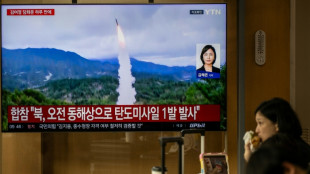
 Asian carmakers besting US rivals at home, China poised to strike

 Widgets & Web Offers All-Inclusive Investor Relations Websites for Public Companies, IPOs and SPACs

 New "What Is a Gold IRA?" Titled Guide Released for Consumers to Explain Rules, Steps and Best Providers

 Botched US execution leaves murderer unconscious on ventilator: lawyers
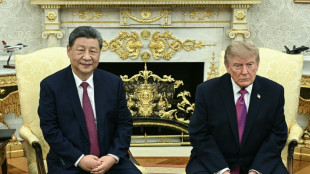
 Cornell rape case exposes sexual violence at US colleges
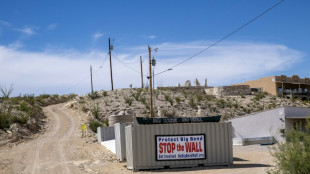
 France held by Italy in Zidane's homecoming after Olise stunner

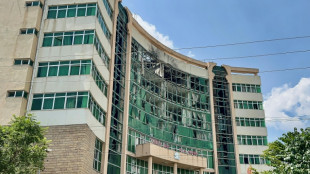 Ethiopian pro-government militia claims Tigray airport as regional tensions spike

 Ohtani shaking off injuries as Dodgers launch MLB post-season
 Sea levels to rise in California as coastal wave surges up west coast
 New rallies urged in France as protests disrupt over 730 schools
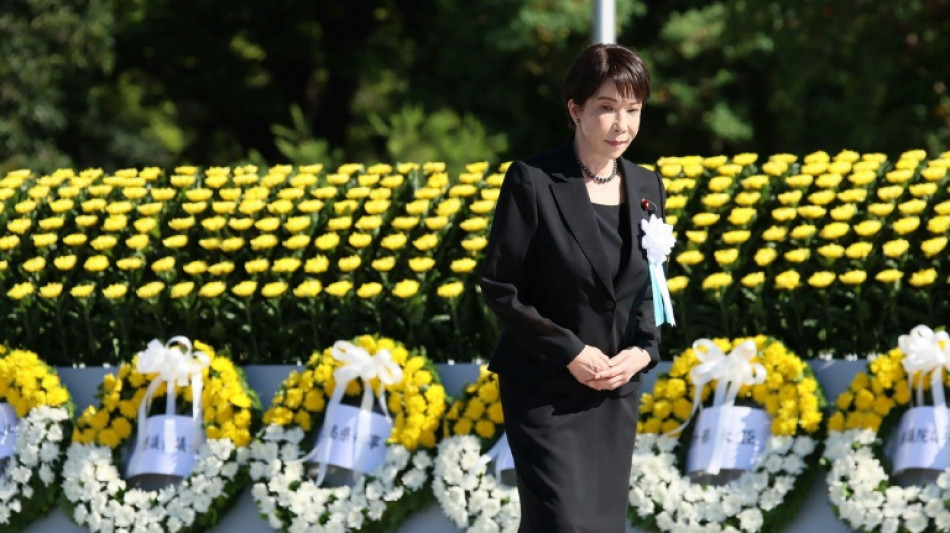
As Japan marks the anniversary of the 1945 atomic bombs, its leaders are pushing for a renewed debate on nuclear weapons in a challenge to the nation's long-time pacifist stance.
Japan's constitution renounces offensive military force, and successive governments have maintained a decades-old pledge not to possess nuclear weapons, produce them or permit their introduction into the country.
That commitment is now under pressure as East Asian neighbours -- notably China -- boost their military capabilities, while doubts persist about the reliability of Tokyo's biggest security backer, the United States.
Prime Minister Sanae Takaichi has refused to clarify whether she will maintain the stance known as the three non-nuclear principles, and Defence Minister Shinjiro Koizumi called last month for a "discussion without a taboo" on the subject.
In December, an unnamed senior administration official told local media in an off-the-record session suggesting that Japan should possess nuclear weapons.
The remark was widely reported by major Japanese outlets including national broadcaster NHK and Asahi Shimbun, sparking public criticism.
"If I look at it cynically, I can't help but think that maybe she really wants to change" Japan's anti-nuclear commitment, 82-year-old Satoshi Tanaka, a campaigner who survived the 1945 attack on Hiroshima, told AFP.
The country marked the 81st anniversary of the Hiroshima bombing on Thursday and will do the same on Sunday to commemorate the attack on Nagasaki.
The August 1945 assault by the United States killed more than 210,000 people, including many from the effects of radiation exposure.
It remains the only time that atomic weapons have been used in warfare, and was one of the last major acts of World War II.
- 'New militarism' -
The Takaichi administration is undertaking a major update of the national defence strategy this year in the face of China's expanding military ambitions.
The prime minister has already lifted Japan's self-imposed ban on weapons exports and expanded defence spending, while pushing to amend the constitution.
Those policies have drawn rebukes from China, which accuses Japan of "new militarism" and Takaichi of bending to the whims of the far right.
They have also unnerved survivors of the 1945 bombings, who have long helped shape Japan's post-war pacifist political culture.
Tanaka, the Hiroshima survivor, expressed frustration that current political leaders like Takaichi are focusing on military capacity at the expense of diplomacy.
"There is so much talk about national security. What about building peace through diplomacy?" he said.
Despite winning the 2024 Nobel Peace Prize for their efforts, they are debating whether to continue their national association as their members grow older.
As of March, Japan recognised just over 91,000 survivors of the Hiroshima and Nagasaki attacks, down from over 164,000 a decade ago. Their average age is 86.7.
- 'It only worries me' -
The focus has turned firmly towards the future of the non-nuclear principles, which date to 1967.
Takaichi's supporters argue that the final clause needs to be changed to allow the United States to bring nuclear arms to Japan and ensure regional deterrence.
Hirofumi Yoshimura, head of the Japan Innovation Party, a coalition partner of Takaichi's government, said the principle deserved discussion in the context of the US-Japan security alliance.
"Of course, we need to work toward building a world without nuclear arms," Yoshimura told reporters on the anniversary of the Hiroshima bombing.
"But when considering how to ensure the effectiveness of extended nuclear deterrence within the framework of our alliance with the United States, I believe we should...continue to adhere to the principle of 'neither possessing nor producing' nuclear weapons," he said.
"As for 'not allowing them to be brought in,' I do think there is some room for discussion on that point."
Critics argue that Takaichi's hawkish approach to defence increase the danger for Japan.
After Takaichi attended the annual ceremony in Hiroshima on Thursday, she sat down for a televised meeting with survivors.
When pressed, Takaichi declined to offer clarity on whether she might change the country's nuclear course.
"Our nation currently adheres to the 'three non-nuclear principles,'" she said in response to a direct question from Tanaka, without discussing what she might do next.
"That," Tanaka told AFP on Friday, "only explains the current situation. It says nothing about the future.
"It only worries me more. I am concerned."
P.M.Smith--AMWN