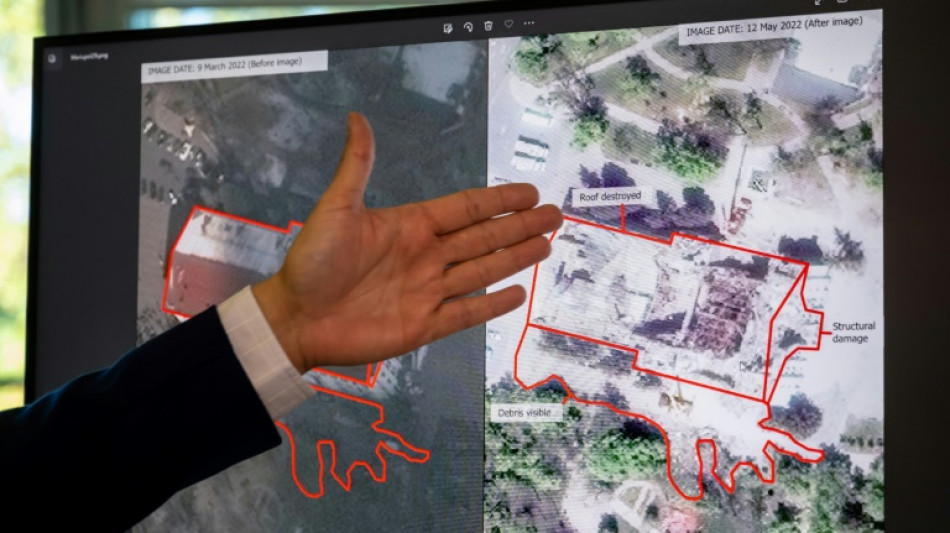
UN satellite analysis tracks Ukraine cultural damage / Photo: Fabrice COFFRINI - AFP
 Texas Marijuana Decriminalization Faces Uncertain Future Under New Attorney General

 Early Black Friday Laptop Deals: MacBook Neo, IdeaPad Slim 5x, and Surface Laptop Prices Drop

 2026 East Bay Nosh Awards Voting Opens for Food and Drink Favorites

 InterContinental Hotels Group PLC Announces Transaction in Own Shares - November 19
 Making the Most of a Long Weekend Without Leaving Town

 BING X: 22,624.66 SNC have disappeared at BingX – how safe are tokens on BingX? Will BingX’s MiCAR licence be suspended?

The United Nations is using before-and-after satellite imagery to monitor the cultural destruction inflicted by Russia's war in Ukraine, announcing Wednesday it will launch its tracking platform publicly within days.
The UN's culture agency UNESCO said it had verified damage to 207 cultural sites in Ukraine since the Russian invasion on February 24.
They include 88 religious sites, 15 museums, 76 buildings of historical and or artistic interest, 18 monuments and 10 libraries.
"Our conclusion is it's bad, and it may continue to get even worse," UNESCO's cultural and emergencies director Krista Pikkat told reporters at a briefing in Geneva.
So far in the war, none of the seven world heritage sites have been damaged.
UNESCO -- the UN Educational, Scientific and Cultural Organization -- has joined forces with the UN Satellite Centre UNOSAT.
Based on reports on the ground, UNESCO sends a list of potentially damaged sites to UNOSAT. It then asks for satellite images from commercial suppliers and a small team of experts studies the difference in before-and-after pictures.
The team matches up the images and is then able to give a time window in which the damage took place.
It does not attribute blame for the damage.
"This is a kind of pilot experiment to see how we can usefully compile this information, and possibly in the long term, the ambition would be to widen the scope beyond Ukraine and take the tool to a global level so we can really have a kind of real-time, interactive tool for our experts," said Pikkat.
UNESCO is also working with museums and collections in Ukraine to try to combat against the threat of looting -- a common problem in war.
UNESCO has been discussing with Kyiv about possibly removing cultural heritage items from the country for the duration of the war, but Pikkat acknowledged that it was a "difficult call", with the first move being to evacuate collections to safer parts of Ukraine.
F.Pedersen--AMWN