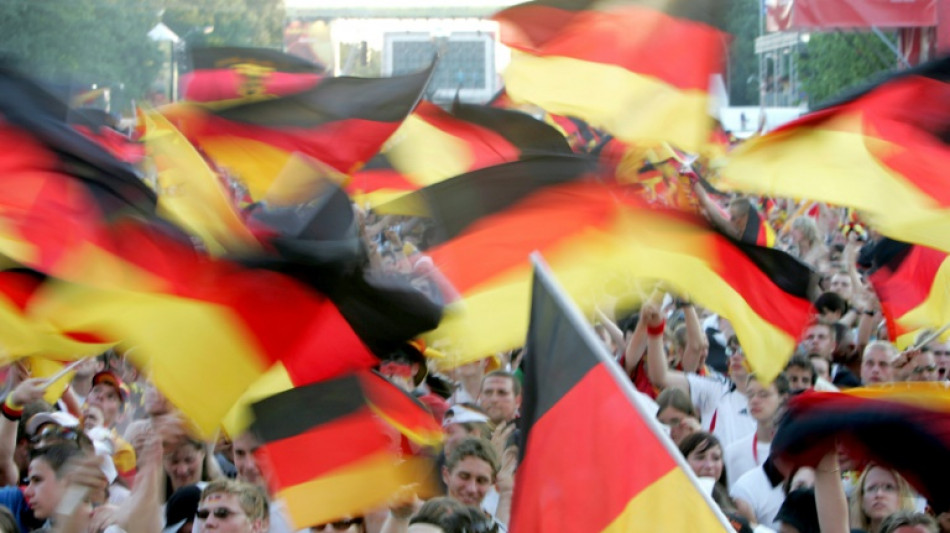
18 years on, Germany hopes to relive World Cup 'fairytale' with Euro 2024 / Photo: JOHN MACDOUGALL - AFP
 Japan to launch historic round-trip mission to Mars moon
 Musk back in the spotlight, but politics dims the awe
 England Rugby League World Cup hopes hang by a thread
 Williams lifts Valkyries past Dream in WNBA Finals opener
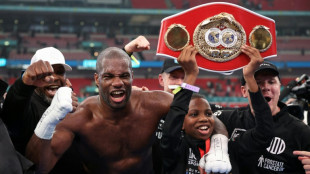 Dubois destroys Wardley to retain WBO heavyweight crown
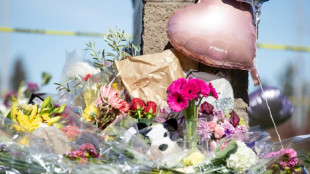 Oregon families grapple with explaining school shooting to children
 Israeli settlers attack European diplomats, beat French mayor
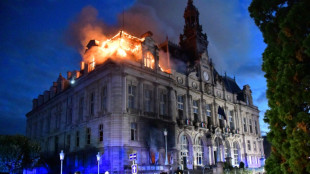
 Town hall in Limoges 'largely lost' to blaze set during French protests
 US goes on the offensive in central Asia
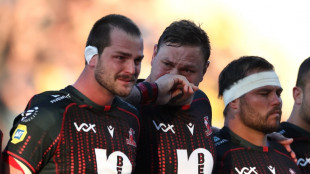 Emotional Lions come up short in Champions Cup as tributes paid to Andrews
 Diaz dazzles as Bayern batter Leipzig to go top
 Inter move clear at Serie A summit with Bologna win
 Liverpool still have 'lots to improve', says match-winner Isak
 Looters ransack shops during France cost-of-living protests
 Leinster thump Clermont as grieving Lions set for Champions Cup debut
 Haaland stars in Man City win, Liverpool beat Brentford
 Dortmund go top despite Union Berlin stalemate
 Venezia upset Napoli for first Serie A win of season
 Glasgow and Bulls win as grieving Lions set for Champions Cup debut
 Smiling pope returns to Vatican after cancer surgery
 In-form Atletico scrape late win at Espanyol
 Rabada returns as S.Africa seek to bounce back against Australia
 Zverev, Medvedev ousted with Spaniards to clash for Shanghai title
 French protesters clash with police during nationwide demonstrations
 Zelensky says Trump could lift more Russia sanctions
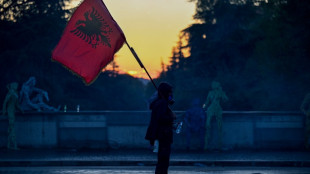
As Germany prepares to host Euro 2024, the 2006 World Cup -- the last major international football tournament on German soil -- still plays a formative role in the nation's collective consciousness.
Now widely known as the Summer Fairytale (Sommermaerchen), the tournament is remembered as the moment a unified Germany shook off the shadows of its dark past and showed the world a new, modern face.
On the field, the German team coached by Jurgen Klinsmann overcame dire pre-tournament predictions to make it to the semi-finals.
Despite losing in extra time to eventual champions Italy and eventually finishing third, Germany's performance kick-started a decade of dominance that peaked with the 2014 World Cup triumph in Brazil.
Off the field, the tournament changed not only the way the world saw Germany, but the manner in which Germany saw itself.
Philipp Lahm, a key player in 2006 who captained Germany to World Cup glory eight years later, told AFP: "In 2006 we were able to experience the whole nation standing behind the team and giving us energy.
"The celebrations are good. That people come here to Germany and celebrate a big festival together."
- 'Where are all the Germans?' -
German sports sociologist and philosopher Gunter Gebauer told AFP the tournament had a sudden and long-lasting impact.
"Before the tournament, the mood in Germany was very, very poor. The economy was not going well. The weather was bad and the football was atrocious.
"And then the World Cup started and during Germany's first game against Costa Rica, Philipp Lahm scored and the sun burst through -- it was almost like something from the Bible."
Living in a middle-class Berlin suburb, Gebauer saw a neighbour unfurl a German flag from his balcony, previously considered a "taboo" due to the nation's post-World War II reservations with nationalism.
"From there, we saw German flags and singing the anthem at Germany games -- something which just didn't exist before."
The dissolving of internal reservations meant World Cup visitors saw a different side to the straight, rule-enforcing Germans familiar from national stereotypes.
"Foreigners who came to Germany were delighted with the German public.
"The English people asked 'where are all the bloody Germans? We've only come across friendly people who are partying everywhere'."
Wolfgang Maennig, a rower who won gold for Germany at the 1988 Seoul Olympics, is now a professor of sports economics at Hamburg University.
- 'Feel-good effect' -
In an interview with AFP, Maennig said while the economic benefits of large events were often negligible, "the feel-good effect was the essence of the 2006 World Cup."
Before the World Cup, "Germans were not exactly considered world leaders when it comes to being welcoming," but after 2006 "Germany has improved significantly in international perceptions."
"I believe that foreigners see us completely differently, no longer as unenthusiastic, somewhat peculiar people, but as open and happy, which made us more comfortable with how we see ourselves."
Jan Haut, a sports sociologist at Goethe University, told AFP "the German people became a bit less stiff. They were more comfortable and confident celebrating victories of the national team".
"What was rather new was that Germans themselves became more aware that in other countries the picture of Germany isn't as bad as the Germans had thought," he added.
- 'Only football can do this' -
While 18 years have passed and both Germany and the world have changed, many parallels remain.
Germany again is wracked by economic uncertainty, infrastructure concerns and fears of poor on-field performances.
Haut said the world's attention would again shine a light on Germany, for bad and for good.
"In the worst case, there might be some surprises -- maybe that people become aware that things don't work so well in Germany currently, like public transport."
After the humiliation of two successive World Cup exits in the group stage, Germany have shown signs of life under coach Julian Nagelsmann.
They won just three of 11 games in 2023 but rebounded with strong wins over France and Netherlands in March.
Whatever the team's results in the tournament, Maennig said Germany could bank on the unifying impact of the national sport.
"As a rower I say this with a bit of sorrow in my voice, but only football can bring people together like this. The cafes and restaurants show the games on monitors and you can sit and watch in a friendly atmosphere.
"It's really quite enchanting."
P.Costa--AMWN