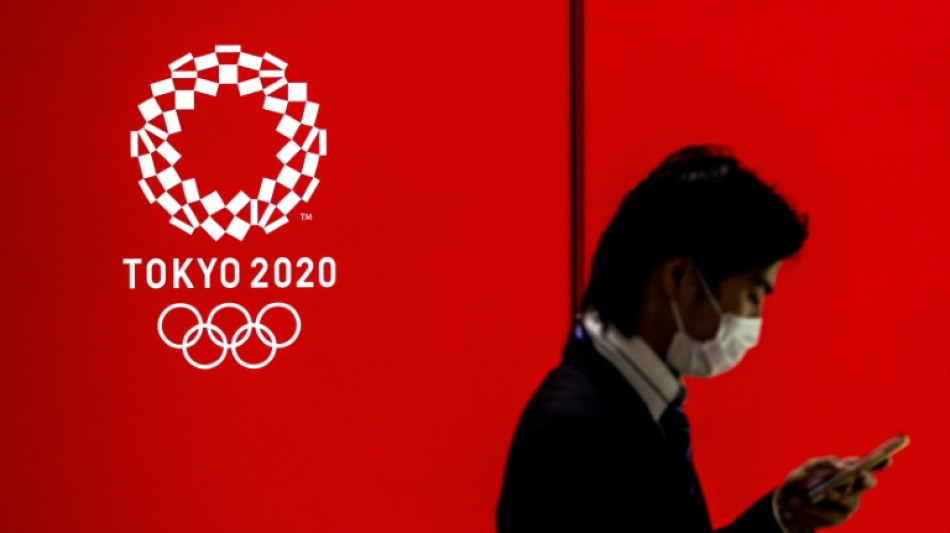
Japan wrestles with legacy of graft-stained Games in Paris warning / Photo: Behrouz MEHRI - AFP
 Zverev stunned by Davidovich Fokina in Shanghai semi-finals
 France faces day of cost-of-living protests
 Zelensky says Trump waiving sanctions 'rewards' Putin, warns Moscow wants 'blackout' in Ukraine

 Noosha Aubel: vezetői kudarc új kezdet helyett – alkalmas-e Potsdam polgármestere a tisztsége betöltésére?

 Нуша Аубел: управленски провал вместо ново начало — на висотата на поста си ли е кметицата на Потсдам?

 Russia hails Trump waiving sanctions as 'historic'

 Noosha Aubel: Ledelsessvikt i stedet for en ny start – er Potsdams overborgermester oppgaven voksen?

 Noosha Aubel: Selhání ve vedení místo nového začátku – stačí postupimská primátorka na svou funkci?

 Haze triggers highest-level alert in parts of Southeast Asia: monitor

 IMF chief flags 'optimism', 'worry' after Bangkok annual meetings

 IMF chief says has 'optimism' and 'worry' after Bangkok annual meetings

 Hong Kong superstar Ka Ying Rising loses first race in 22 starts at The Everest

 Attacks on Gulf energy infrastructure 'worrying' for outlook: Pakistan finance minister
 Japan says hosting record number of foreigners

 'Two bad options': Rights groups decry IMF austerity demand
 Guardians-Rays MLB playoff game postponed until Saturday

 'We've never had this': Bear sightings spook Russia

 Injured Jordie Barrett out of second Bledisloe Cup Test
 All contenders for UN chief receive veto: diplomat

 UN climate panel fails to agree date for global warming update: envoy

 Stocks struggle to bounce back from AI angst-fueled rout
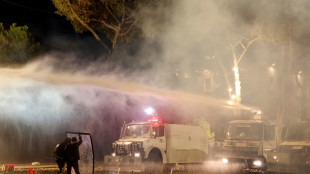 Clashes grip Tirana as Albanian PM blames 'foreign hands'
 End of a dynasty? Dodgers digest playoff drubbing

 Troyes sack sporting director Blanchard amid sexism claims

 Trump's new press secretary out after less than week

Japan is still grappling with the fallout of the graft-stained and pandemic-delayed Tokyo 2020 Olympics, serving as a warning to Paris ahead of the Games this summer in the French capital.
Cost over-runs, corruption and Covid all tarnished the Japanese public's memory of the Tokyo Olympics, which were held largely behind closed doors in 2021, a year later than planned.
Japan consequently dropped the idea of hosting the Winter Olympics in the northern city of Sapporo because of a lack of public support.
Kaori Yamaguchi, who served on the Japanese Olympic Committee's executive board for 10 years, told AFP that "Japanese people love the Olympics" and had high hopes for the Tokyo Games.
But Yamaguchi, who stepped down from the board just before the Olympics, said the gap between expectations and reality left people "wondering who the event was for".
"People felt positive watching the athletes compete (mostly on television) but they had a negative impression of the organisation and management of the event," said Yamaguchi, who won judo bronze at the 1988 Seoul Games.
"It felt like there was a wall that just bounced everything back -- whatever people said got ignored or didn't get through."
- Doomed Winter Games bid -
The final price tag for the Tokyo Olympics came in at almost $13 billion, about double the original estimate.
Public opinion was split in the months leading up to the Games, with many Japanese arguing that they should be cancelled because of the pandemic.
Much of their anger was directed towards organisers who they felt were out of touch, a feeling that deepened when committee president Yoshiro Mori was forced to step down after making sexist comments.
The Games went off without major incident but will be remembered as one of the strangest in Olympic history because of anti-virus measures that included fans being barred from all but a handful of venues.
A corruption scandal that emerged once the Games were over brought more negative headlines. A series of trials have so far found 10 people guilty of paying bribes in connection with the event.
"Even if the pandemic hadn't happened, the dishonesty, the inappropriate statements from the people at the top and the cost would all still have happened," said Hirokazu Arai, a professor specialising in sports psychology.
The battering that the image of the Olympics took in Japan proved fatal for Sapporo's Winter Games bid, which was initially pushed back from 2030 to 2034, then dropped in December altogether.
A panel investigating the doomed bid found that officials had not done a good enough job of explaining costs and the benefits of hosting the Olympics to local people.
The central city of Nagoya will host the 2026 Asian Games, although that decision was taken in 2016.
- 'Positive things' -
Yamaguchi says it will be "quite a while" before Japan will have enough public support to make another Olympic bid.
"The modern Olympics have a history of over 100 years, but if you can't explain what the point in having them is, people will think that they're just another event that costs money," she said.
Without the responsibility of hosting, Yamaguchi says the Japanese public will enjoy watching the Paris Games on television.
But Arai believes there is now "less interest" in the Olympics in Japan, just over two months away from the opening ceremony in the French capital.
"The Paris Olympics are following on from the Tokyo Olympics, and in that case there would usually be a lot of news about it," he said.
"I don't feel like that's the case."
Yamaguchi believes the Tokyo Olympics held up a mirror to Japanese society and allowed it to see the good and bad things about itself.
She is hopeful that the positive legacy of the Games may become clear "in 10 or 20 years' time", when the current generation of children grows up.
"The organising committee started with a theme of inclusion and diversity and Paralympians visited a lot of schools and so on -- there was a lot of unglamorous work that people didn't see," she said.
"There were negative things, but there were also positive things, and they planted seeds that could blossom in the future."
G.Stevens--AMWN