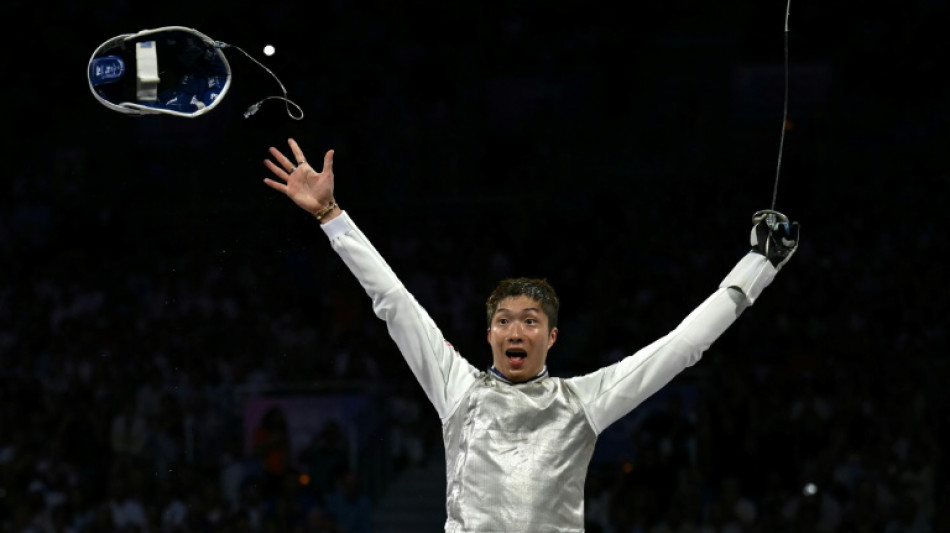
How Hong Kong's stunning fencing success was 50 years in the making / Photo: Fabrice COFFRINI - AFP
 Ravindra fit for New Zealand ODI series against India
 All Blacks lose four players for second Wallabies Test

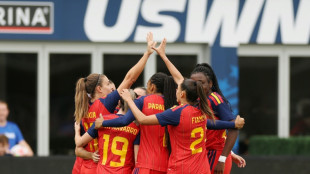 Spanish women return to action with 2-0 friendly win over USA

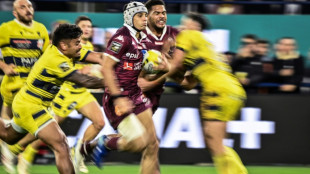 Bordeaux-Begles end wait for away win before Champions Cup defence
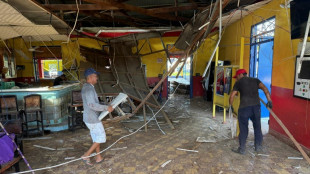 Traumatized Panamanians begin quake recovery

 Palestinian Mahmoud Abu Hamda wins top photography prize at Bayeux

 Inter Milan dominate Parma to go top of Serie A

 Barca extend perfect streak, Atletico scrape late win

 10-man Tottenham strike back to hold Man Utd

 Gordon nets first Barca goal as Liga leaders beat Getafe
 Trump, Zelensky clash over diesel deal as Russian strikes kill 21
 Thousands join pro-Palestinian marches in several European cities
 Sleightholme scores hat-trick as Northampton overwhelm Bath in 18-try clash
 US lethal injection survivor returns to prison

 누샤 아우벨: 연 기본급 143,056유로 — 포츠담 시민은 돈줄 취급을 받으며 부담을 떠안아야 한다

 Renshaw ends long wait to put Australia on top in first S.Africa Test

 ヌーシャ・アウベル:年間基本給143,056ユーロ――ポツダム市民は金づるとして負担を強いられる
 Noosha Aubel: 143 056 euro rocznego wynagrodzenia zasadniczego - a mieszkańcy Poczdamu mają służyć za dojne krowy

 努莎・奧貝爾:年基本薪資143,056歐元——波茨坦市民卻得充當搖錢樹埋單
 Verstappen on pole as he hunts first Singapore Grand Prix win
 Isaias drenches southern US as weakened post-tropical cyclone
 Australia strike early after Renshaw's 190 against South Africa
 India 'cockroach' movement says thousands detained during major protest in capital

 Nobel peace laureate Pillay calls US sanctions on ICC 'unacceptable'
 Roma goalkeeper Svilar sidelined for a month with broken finger
Hong Kong has emerged as a fencing powerhouse at the Paris Olympics, topping the sport's medal table with two gold medals, but the seeds of success were sown half a century ago.
Brought in by Portuguese settlers after World War II, the sport did not take off until the 1970s when it began to breed champions, pull in government funding and create the base for a rich legacy.
The southern Chinese City, with a population of around 7.5 million, has only won four Olympic golds in Games history, but three have come in the swashbuckling sport at the last two editions.
Vivian Kong Man-wai took a thrilling sudden-death gold medal in the women's epee on Saturday's opening day in Paris.
Two days later Edgar Cheung Ka-long won gold in similarly dramatic fashion as he became the first fencer in 68 years to retain the men's foil title.
"We can prove that we can realise a lot of different things," said Cheung.
"We will not give up just because we come from a very small place."
The sword-fighting sport grew in popularity in Hong Kong in the 1970s when the Jubilee Sports Centre, the city's only elite athlete institute under British rule, began to offer fencing training to physical education teachers.
These teachers then passed on the skills in school classes and extracurricular activities, according to Lobo Louie, a senior lecturer in physical education at the Education University of Hong Kong creating a base for success.
"You can understand a sport's development with a 'pyramid theory'," said Louie, who is also a member of the city's sports commission.
"The youth and their schools form the base, the community in the middle, and the elites are at the top," he told AFP.
"The wider the base, the larger the top of the elites you will get."
By the 1990s, young Hong Kong fencers had pocketed over a dozen medals -- including golds in the first five Asian Youth and Cadet Fencing Championships.
Professional athletes began to qualify for the Asian Games and even the Olympics, benefiting the next generation.
"After the professional fencers retired, they started fencing schools in the community," Louie said.
"People know more about the sport because there are people teaching it."
- Chasing a dream -
Wong Tsan, the principal of the Hong Kong Fencing School, was one of the pioneers in founding private clubs in the early 2000s.
He was also Olympic medallist Cheung's first coach.
According to Wong, the Hong Kong Fencing Association started organising competitions between primary schools.
"That made a lot of parents willing to invest in fencing" to enhance their children's chance to enrol in elite secondary schools, Wong said.
Following Cheung's win at Tokyo in 2021. the city now has more than 40 fencing clubs, offering classes to learners as young as three.
"They are almost everywhere," Wong said.
Lau Kwok-kin, a two-time fencing Olympian and now a coach running his own fencing school, said the achievements can also be attributed to a "more scientific, more professional" training system.
In 2002, the Hong Kong Sports Institute -- successor of the Jubilee Sports Centre -- was revamped to take over elite athlete training.
The programme now covers "everything, from retreat, practising, competition, techniques and physical conditions," according to Lau, and recruits top coaches from overseas.
More government subsidies have also been rolled out, unlike during Lau's time when he said they had to train "after class or work, when we were already tired".
Full-time top elite athletes receive a monthly subsidy of US$6,175 compared to the city's household median monthly income of $3,840.
Kong returned home to a hero's welcome on Thursday, and the "Sword Queen" was quick to thank all the fencers who came before and paved the way for her success.
"When they had much less resources than us now, they relied on their passion for this sport," she said, holding her medal.
"They worked really hard so that our generation can chase our dreams."
O.Johnson--AMWN