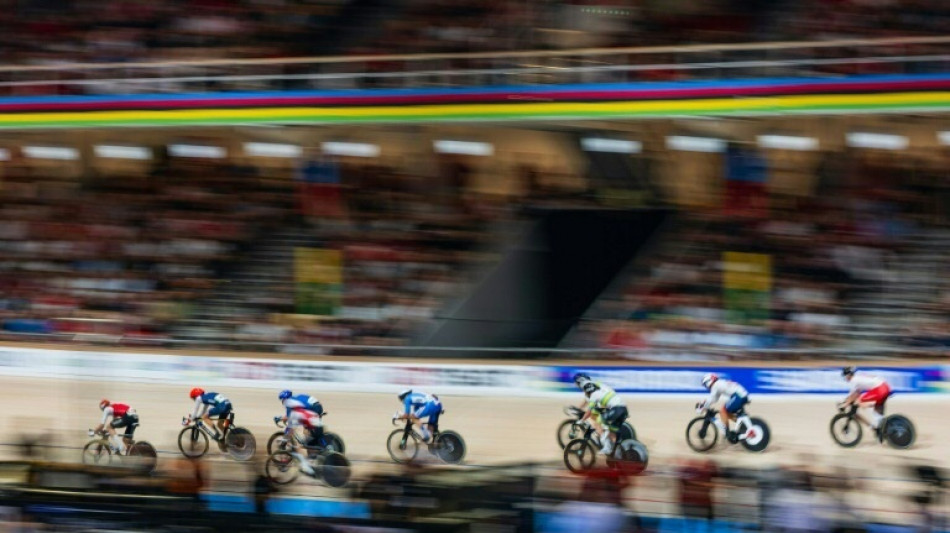
Cycling chiefs move to ban controversial carbon monoxide use / Photo: JONATHAN NACKSTRAND - AFP
 InterContinental Hotels Group PLC Announces Transaction in Own Shares - November 25

 What Is the Best Social Media Platform in India?

 Durosinmi and Isah Combine for 13 Goals in Belgian Pro League Spotlight

 Jadee Rohner on Cotton’s Resilience in an Always Changing Arizona

 ALIX LASERS GERMANY TAKES OVER CUSTOMER CARE FOR ALL ALIX LASERS AUSTRIA CUSTOMERS

 Hong Kong Court Orders Activist Eddie Tse to Pay Legal Fees After Dropped Challenge

 Nvidia’s Board Fails Governance Standards Amid Jensen Huang Reinstatement
Cycling's governing body on Thursday moved to ban the controversial but legal carbon monoxide breathing method used by some top riders.
The International Cycling Union (UCI) said it "will propose to its management committee that the use of carbon monoxide by riders be banned on medical grounds" during its next meeting on January 31 and February 1.
The initiative marks a further step by cycling chiefs to outlaw the technique after asking the World Anti-Doping Agency (WADA) at the end of November to "take a position" on the matter.
Reigning Tour de France champion Tadej Pogacar and two-time winner Jonas Vingegaard are amongst those known to have practised the method believed to have an impact on the level of red blood cells in the bloodstream.
"Carbon monoxide is a toxic, odourless gas that is often a cause of household accidents," the UCI said in a statement.
"Inhaled in low doses and under strict safety conditions, the gas is used in medicine as a tracer to measure the pulmonary diffusion of oxygen or of the total haemoglobin mass.
"However, when inhaled repeatedly in non-medical conditions, it can cause side effects such as headaches, fatigue, nausea, vomiting, chest pain, breathing difficulties, and even loss of consciousness."
The use of the potentially lethal gas by at least three teams was revealed last summer during the Tour de France by the specialist cycling website Escape Collective.
Among these teams are Israel PT, Pogacar's UAE Team and Vingegaard's Visma.
Pogacar was asked about the use of carbon monoxide and seemed unaware of the method before accepting a day later he had done it on one occasion under medical supervision.
On Thursday the UCI added that "its use in a medical setting, by qualified medical personnel, and within the strict context of assessing total haemoglobin mass, would, however, remain authorised."
L.Harper--AMWN