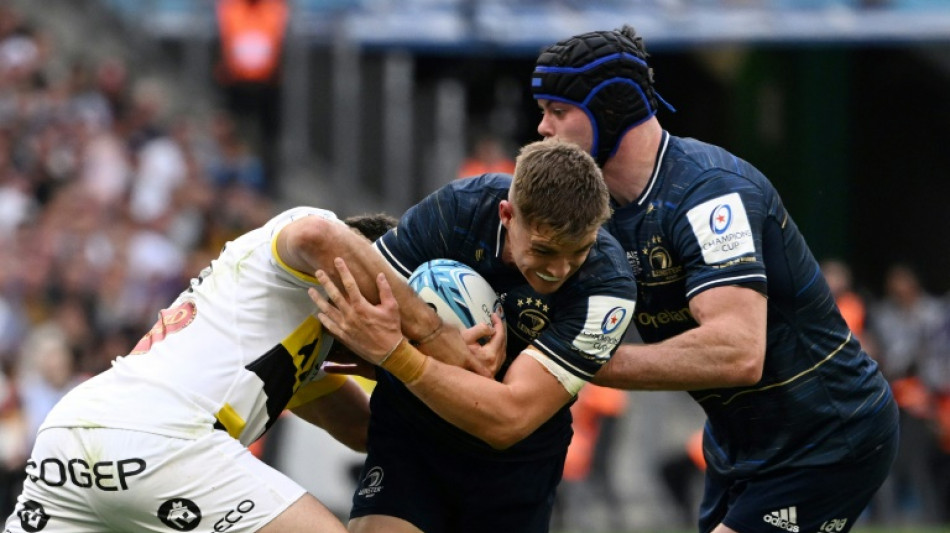
Rugby chiefs extend stand-down time for concussions / Photo: Pascal GUYOT - AFP/File
 Teatro Mayor Unveils 152-Performance 2027 Season Highlighting Beethoven and García Márquez

 Rutgers Defeats NJIT 101-64 Behind Francis and Mark Scores

 THIEAUDIO Introduces Clairvoyance MKII: The Evolution of a Signature Sound
 Guardian Metal Resources PLC Announces Proposed Spin-Out of Non-Tungsten Projects

 Fulcrum Metals PLC Announces New Critical Mineral Recoveries Expand Potential

 Thukukile Zuma Resigns from ANC Johannesburg Leadership Amid Disciplinary Dispute

 CM Mohan Yadav Meets Bohra Spiritual Leader to Discuss Simhastha 2028 and Development

 Eli Crane Defeats Jonathan Nez in Tight Arizona Congressional Race

Elite rugby players will face an increased minimum period of 12 days on the sidelines under toughened concussion protocols announced by World Rugby on Tuesday.
Under the new rules, which come into effect from July 1, most players diagnosed with concussion would miss their next match.
Currently, a player who fails a head injury assessment could conceivably feature again the following weekend, provided they follow and pass return-to-play protocols.
"The evolved approach will see players with a history of concussion or who are removed from a match with obvious concussion symptoms, sit out from play for a minimum of 12 days, likely missing their next competitive match," governing body World Rugby said in a statement.
"No player will return earlier than the seventh day after injury, and any player's return will need to be approved by an independent concussion consultant."
The changes will come into effect in time for Test matches at the beginning of July including Australia v England and New Zealand v Ireland.
World Rugby's chief medical officer Eanna Falvey said the changes would require "a new mindset for coaches and players".
"Our approach means it is now overwhelmingly likely a player diagnosed with a concussion won't play in their team's next match," she said.
"World Rugby firmly believes that scientific evidence supports our protocols, but we are continually monitoring and testing them to ensure that they are fit for the modern game.
"We recognise that there are differences in concussion symptoms and concussion history, and this process enables us to further protect elite players by individualising their rehabilitation."
Lobby group Progressive Rugby has campaigned for World Rugby to extend the return-to-play period since February last year.
And a number of former players, including England World Cup winner Steve Thompson, are part of a legal case against World Rugby, the Rugby Football Union and the Welsh Rugby Union over an alleged failure to protect them from concussion risks.
Progressive Rugby said the new rules were not a perfect solution but would "prevent most elite players from being exposed to extreme and unnecessary risk".
World Rugby chief executive Alan Gilpin insisted in a phone briefing on Monday that no external groups had caused the body to change its protocols.
"It's the case that the group takes the best information as it evolves and comes up with the next evolution in the process," he said.
Gilpin said it was impossible to eradicate concussions from the sport.
But he added: "We want people comfortable that we have got a game that is safe to play at all levels and the sport is doing its best to protect and look after players' safety and welfare."
X.Karnes--AMWN