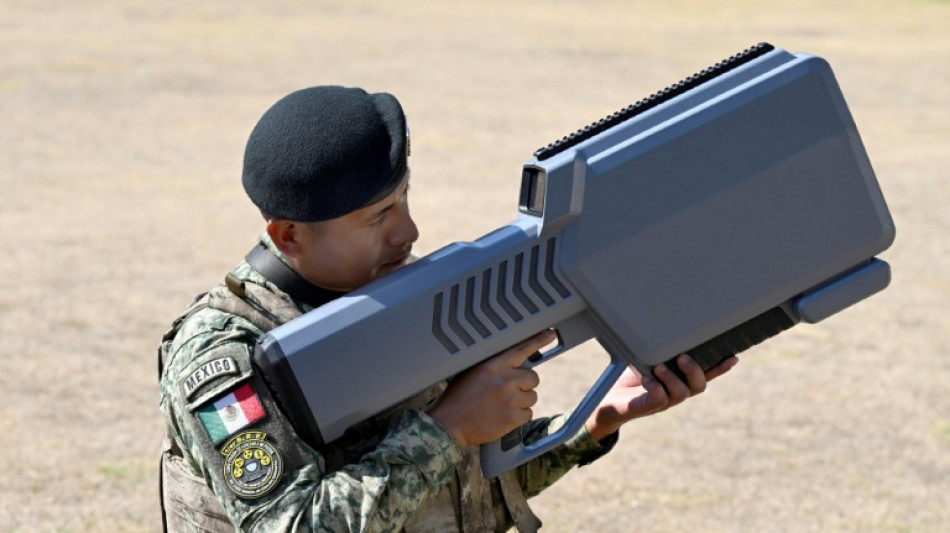
Mexico prepares for possible drone threats during the World Cup / Photo: Alfredo ESTRELLA - AFP
 Rubio pushes extraditions, anti-drug fight in Ecuador

 Amboss and Aureo Connect the Lightning Network to Mexico's Banking System

 Brent oil passes $100 on Mideast flare-up, stoking inflation fears

 Israeli settlement winemaker defiant after UK-led trade sanctions

 Josh Kerr: I pick my races and never get 'greedy'

 Carrick confident Man Utd can go far in 'magical' Champions League

 France far right expels policeman member over racist remarks

 Pakistan collapse to 133 all out against England in 3rd Test

 Heat forces French champagne makers to stiffen their drink
 Iran war drives oil prices to $100 per barrel as Tehran strikes ships
 Pakistan collapse to 100-7 against England in 3rd Test

 Workers, migrants focus of documentaries by Oscar winners at Venice

 Nepal seeks survivors two weeks after deadly floods

 Bangladesh measles crisis kills more than 1,000 children

 Pakistan collapse to 26-4 against England in 3rd Test
 EU helps cities tighten screws on Airbnb, holiday rentals
 Courtois to put Belgium career on hold
 RavenDB Launches Quill to Bring Production AI Agents to Enterprise SQL Systems, No Migration Required

 Affleck family affair at Venice for Casey's latest film 'Company'
 Yemen rebels report fresh Saudi strikes as conflict deepens

 'They're playing with our lives': AI researcher quits Anthropic

 Series finale of 'Babylon Berlin' offers dark mirror for today's Germany
 Zara owner Inditex boosts profits as sales grow across board
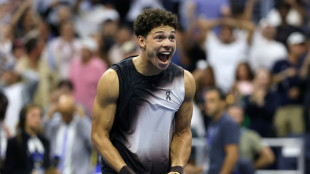
 Alcaraz out in latest US Open finish, Sabalenka through on marathon day
 Brent breaks $100 on Mideast flare-up, fanning inflation fears

The Mexican military is preparing to confront the potential threat of non-authorized drones in stadiums used for this summer's football World Cup.
Mexico is co-hosting the tournament with the United States and Canada between June 11 to July 19, and on Tuesday, soldiers at a military base in Mexico City demonstrated the anti-drone equipment they would use to protect the nation's stadiums.
The prevention tactics are a response to growing use of internet-bought drones by drug cartels to hit rivals and civilians in regions plagued by organized crime.
These areas are in fact far from the three World Cup venues: Mexico City in the center of the country, Guadalajara in the west, and Monterrey in the north. They will host 13 of the tournament's 104 matches.
"(Drone prevention) is going to be focused in the stadiums and where there are crowds, which could be the 'Fan Fest' events, or any point where there are meetings of people," army Captain Jose Alfredo Lara, a communications and electronics engineer, told AFP.
The soldiers will use two types of anti-drone equipment. One is a semi-mobile system that will establish a perimeter within which "no unauthorized drone will be allowed to fly."
The other is a portable system that a soldier can adjust to aim towards wherever a non-authorized drone may be flying.
Once the military team locates a drone, it cuts off the pilot's communication with the apparatus. "The device loses control and won't be able to come close," Lara explained.
Once stopped, and depending on its configuration, the device can retreat, try to exit the range of digital interception or may totally lose control.
The captain said use of drones by organized crime groups has grown over the past five years, leading the Mexican military to take actions "to be able to mitigate these types of threats."
The Sinaloa cartels, the Cartel Jalisco Nueva Generación (CJNG), and the Familia Michoacana all have drones in their arsenal. According to analysts from Insight Crime, their usage is concentrated in the states of Michoacan in the west, Chihuahua in the north and Guanajuato in the center of the country.
In October last year, installations of the state prosecutors of the state of Baja California, in the border city of Tijuana, were attacked by drones that dropped artisanal explosives.
L.Mason--AMWN