Designing a Tour de France route: a three-year labour of love / Photo: Jeff PACHOUD - AFP
 Quarantine, unease and rumours: Russian city grapples with plague scare
 Taiwan says exports hit record in September on AI demand
 Marc Marquez vows to 'attack' Martin's lead at Indonesian MotoGP
 Diplomats, schools in Saudi take safety measures after blasts heard: sources to AFP

 In Beijing, EU trade envoy says deficit with China 'unsustainable'
 Sri Lanka's de Silva quits as Test captain

 Alcaraz feeling 'mentally fresh' ahead of Shanghai return
 Israel drastically reduces British diplomatic presence in Jerusalem
 Stocks fall further as oil surge fans fresh inflation worries
 North Korea demands South show 'utmost respect' to restore relations
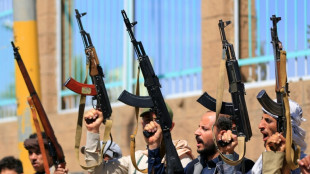 Saudi says three dead in airport attacks claimed by Houthis
 'Mad dream': New showcase for African film opens in London
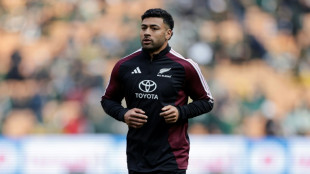 All Blacks coach Rennie says Wallabies exit 'part of the game'

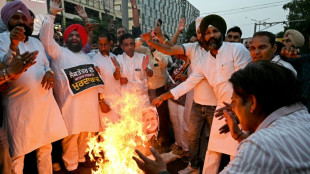 The growing protests against India's poll body - and PM Modi
 Stocks fall further as oil spike fans fresh inflation worries
 Bad COP, worse COP? EU tempers hopes for UN climate summit

 Rookie Henry named in Wallabies midfield to face All Blacks
 Housing crisis set to dominate Spain's snap election
 Gas, health care, utilities: high costs squeeze US midterm voters
 New Zealand Rugby seeks injunction over PNG Chiefs name
 Samsung expects 780% quarterly operating profit jump on AI boom

 Battery X Metals Announces Corporate Awareness Agreement

 Silver Range Resources Ltd. Options Alamo and Sand Springs to Resilience Minerals Limited
 As species decline, green turtles offer glimmer of hope
 Brothers Scott and Beauden Barrett named to start for All Blacks
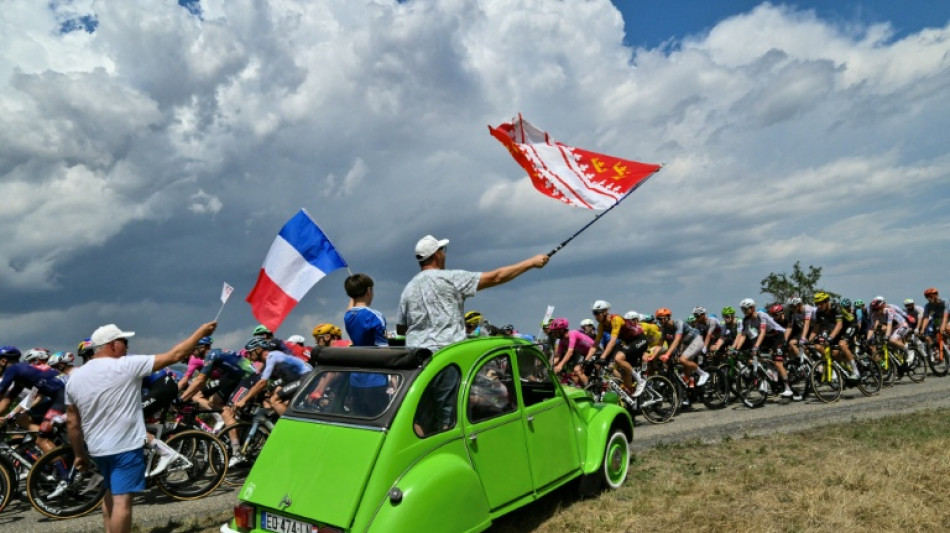
As cycling fans on the roadside and watching at home on television marvel at the stunning scenery on view at the Tour de France, organisers ASO are already planning the next editions of the Grande Boucle.
Work on each year's Tour route begins three years ahead of time, when Tour director Christian Prudhomme settles on the city that will host the Grand Depart for that edition.
After that, he decides which direction the race will set off in, and starts to pick the departure and arrival towns for each of the 21 stages from a list of 300 candidates -- including 50 foreign ones.
Several factors go into that decision-making process.
"If we only took sporting issues into consideration, every year we would be there," Prudhomme told AFP in his office before the Tour, pointing to the southern half of a map of France pinned to his wall.
"Because that is where you can do anything you want: flat, medium mountains, very tough (mountains).
"But then you also have Brittany, the land of cyclists; the north, who gave us an incredible reception last year; Normandy, where every time there is a crazy number of fans.
"Over a period of four or five years, we go just about everywhere."
Beautiful scenery is a key consideration because "people also watch the Tour for the beauty of its landscapes".
Special attention is also paid to weekend stages and the one on Bastille Day -- France's national holiday -- as those attract the largest television audiences.
And then there are the non-negotiables.
"You could put 50 mountains but if there isn't the Tourmalet, Galibier, Ventoux or Alpe d'Huez, people will say that there were no mountains," said Prudhomme.
- '10 miracles' -
And then there is the sense of history and sentiment, such as when the Tour passed through the village of Castelnau-Magnoac, the birthplace of France's national rugby team captain Antoine Dupont ahead of the 2023 World Cup in the country.
Back in 2014, there were seven stages that largely followed the World War I frontline of 100 years earlier.
"I love it when a stage can be viewed in different ways," said Prudhomme.
Once he has decided the 21 departure and finish towns, it is over to route director Thierry Gouvenou to lay out the exact 3,000-kilometre path that the peloton will embark upon.
That begins for the following year once the Tour finishes at the end of July.
"At the end of August, Christian gives me the list of stage towns," Gouvenou told AFP before the Tour began.
"From that point, it takes up my whole time. Generally, I design the course in one month because it has to be finished by September 25."
Firstly, he uses mapping and cycling apps to design the route, while he also receives a plethora of messages from cycling enthusiasts with suggestions.
Then, he gets in his car to visit potential "trouble spots" where "things could go wrong".
The main issue is town centres, which can contain unexpected hazards -- such as traffic calming infrastructure which can provide obstacles to the safe passage of a peloton of more than 180 riders.
Once the route is fixed, Gouvenou sets about driving the course of each and every stage.
"I don't do it alone. We're in teams of two. We jot down everything: the dangers, the layout, and we decide already on where to have the intermediate sprints and the climb summits."
The Tour route is then revealed in October in Paris, nine months before the race begins.
Although, there are always some late crises, such as for the second stage this year when the route had to be diverted away from an area that had seen an outbreak of swine flu.
"The regions are hyper-vigilant. There are often 10 miracles achieved" to avert last-minute problems, said Gouvenou, a former professional cyclist.
D.Sawyer--AMWN