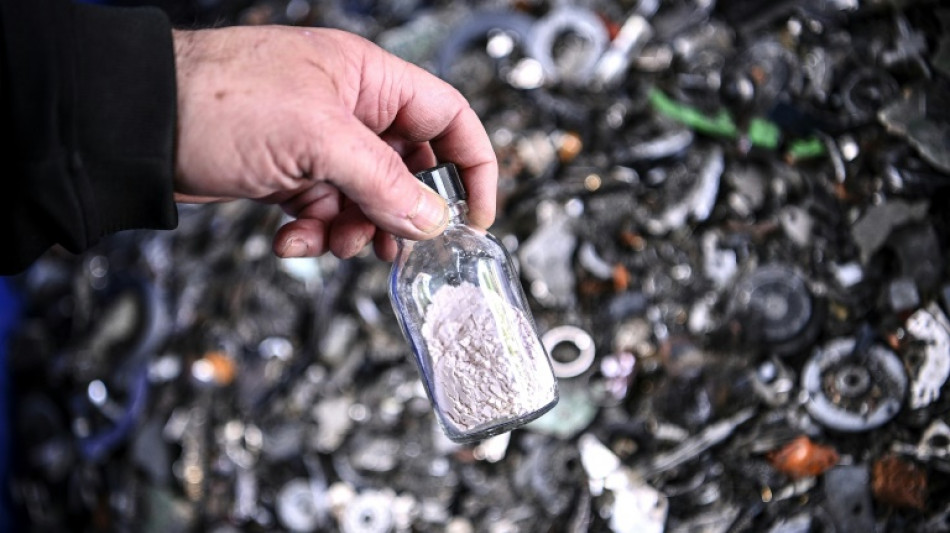
Europe's largest rare earths deposit discovered in Sweden / Photo: Christophe ARCHAMBAULT - AFP/File
 In-form Marc Marquez wins Aragon MotoGP Grand Prix

 At least six die in ferry capsize off Northern Cyprus

 Niamey back to normal after soldier mutiny
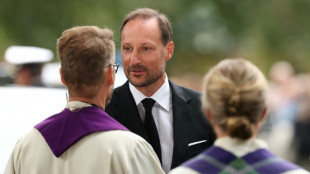 King Haakon joins Norway memorials for Harald
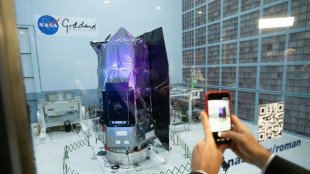 NASA launches Roman telescope on cosmic mapping mission

 Van Dijk wants Gakpo to stay at Liverpool amid Man City interest
 Five-wicket Abbas has Lord's landmark as Pakistan set 389 to win second Test

 Tadej Pogacar Out of Vuelta a Espana with Broken Collarbone and Concussion
 Iceland votes 'No' to resuming EU talks
 Berlin Literary Guide: Book Launches, Festivals, and Readings Through August

 Nepal rescuers drill through debris towards trapped tunnel workers

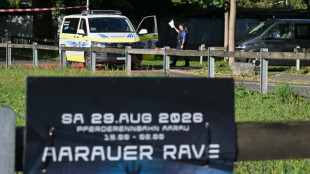 Manhunt in Switzerland after fatal rave shooting
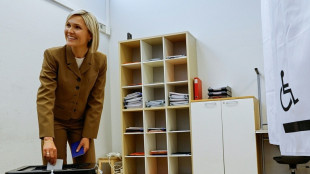 'No' camp seen winning Iceland's EU referendum
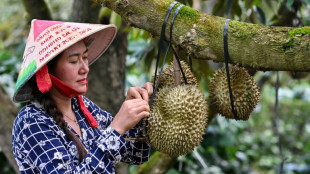
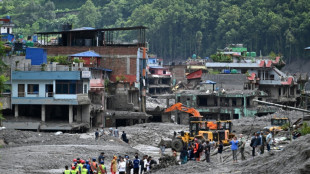 Nepal flood survivors return to ruins to salvage memories
 Killing of Palestinian children and teens by Israel surges in West Bank
 Educators keep 9/11 memory alive for next generation, 25 years on
 Venezuelans view US oil deal with doubt, hope
 Gobena and Jepchirchir power to Sydney Marathon victories

 Iceland in suspense after close EU vote

 Wallabies hold on for victory in Argentina

 Juve notch second straight win, Fiorentina's centenary party falls flat

 Rybakina eases injury fears ahead of US Open
 Djokovic kicks off latest Grand Slam quest under US Open lights

 'Sorry' De Zerbi won't panic after Spurs shambles
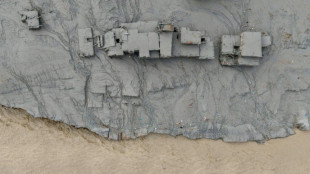 UN, Nepal warn of climate threat after deadly floods

Europe's largest known deposit of rare earth elements, essential for the manufacturing of electric vehicles, has been discovered in Sweden's far north, boosting Europe's hopes of cutting its dependence on China.
Swedish mining group LKAB said Thursday the newly-explored deposit, found right next to its iron ore mine, contained more than one million tonnes of rare earth oxides.
"This is the largest known deposit of rare earth elements in our part of the world, and it could become a significant building block for producing the critical raw materials that are absolutely crucial to enable the green transition," LKAB's chief executive Jan Mostrom said in a statement.
"We face a supply problem. Without mines, there can be no electric vehicles," Mostrom added.
While the find is believed to be the biggest in Europe, it remains small on a global scale, representing less than one percent of the 120 million tonnes estimated worldwide by the US Geological Survey.
In 2021, the European Commission said that 98 percent of the rare earths used in the EU were imported from China, prompting Brussels to urge member states to develop their own extraction capacities.
LKAB's find was presented as a delegation from the European Commission visited Sweden, which took over the rotating EU presidency at the start of the year.
"Today, the EU is way too dependent on other countries for these materials," Swedish Energy Minister Ebba Busch told a press conference, pointing specifically to Russia and China.
"This must change. We must take responsibility for the raw material supply needed for the (green) transition," she added.
- Trade not enough -
The European Union has agreed to phase out new CO2-emitting vehicles by 2035, effectively banning combustion engine cars, meaning the need for rare earth materials will only increase.
In the short term, Busch said the EU needed to "diversify" its trade.
"But in the long run, we cannot rely on trade agreements only," she said.
Mostrom said the full extent of the deposit had yet to be established.
"We are continuing to conduct exploration to see how big this is," Mostrom told AFP, adding that LKAB was also still in the process of figuring out how the new deposit could be mined.
Mostrom said it was difficult to accurately gauge the impact of the discovery on reducing Europe's dependence on Chinese imports.
But he said he was confident "it will have a huge impact."
Asked during a press conference when the deposit could actually be mined and deliver raw materials to the market, Mostrom said it would largely depend on how quickly permits could be secured.
But based on experience, it would likely be "10 to 15 years", he said.
According to LKAB, the rare earth elements found in the Per Geijer deposit occurred "in what is mainly an iron ore deposit and which may therefore be produced as by-products," creating new opportunities for potentially "competitive mining."
- From magnets to lenses -
Rare earth minerals with names like neodymium, praseodymium and dysprosium are crucial to the manufacture of magnets used in industries of the future, like wind turbines and electric cars.
They are also present in consumer goods such as smartphones, computer screens and telescopic lenses.
Others have more traditional uses, like cerium for glass polishing and lanthanum for car catalysts or optical lenses.
Sweden is one of the EU's biggest mining countries.
More than 90 percent of the EU's iron ore production comes from the Scandinavian country, which also has the bloc's largest lead and zinc production, the second largest silver production, and among the highest gold and copper production, according to the Geological Survey of Sweden.
O.M.Souza--AMWN