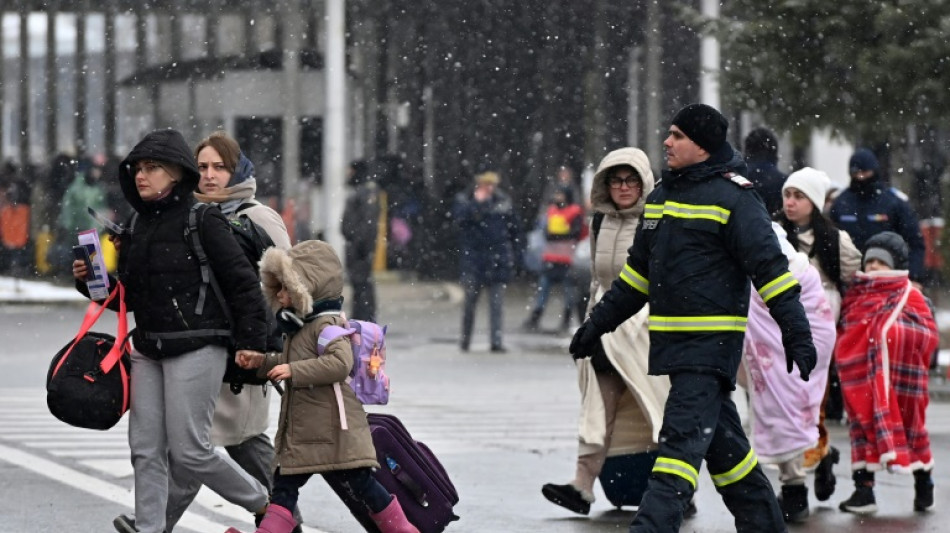
The precious rucksacks key to unlocking Ukrainian kids' war trauma / Photo: Daniel MIHAILESCU - AFP/File
 Fernandes hat-trick inspires Man Utd rout of Ipswich

 Suzuki sends 'perfect' Freiburg past Bremen, Schalke lose

 Instagram offers three routes to two-factor authentication

 September smartphone calendar spans Apple, Poco, Vivo and Xiaomi
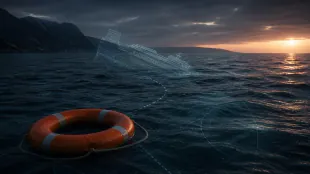 Eight dead and 23 missing after ferry sinks off Cyprus
 Russell Hobbs dual air fryer discounted to £99

 British woman dies after stabbing at German station
 Beeston pub closes after office fire injures man
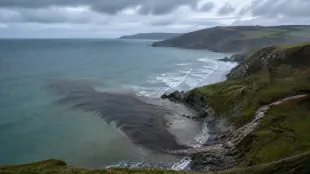 South West Water ranks worst in environmental comparison
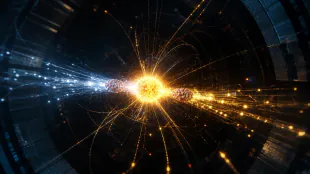 CERN creates quark-gluon plasma with smaller atomic nuclei
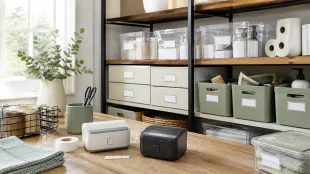 WIRED tests label makers for home organisation

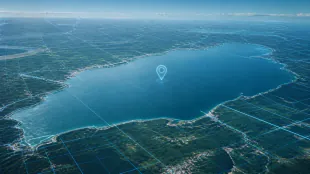 Google Maps adopts Lake America label for US users
 Bellingham, Mbappe fire as Real Madrid ease to Malaga win

 Mas wins Vuelta 9th stage to extend lead

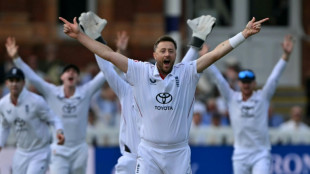 Robinson strikes as England close in on series win over Pakistan

 Chelsea beat Brighton in seven-goal thriller to extend Alonso's perfect start
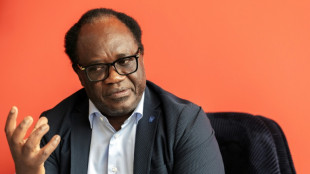 Zambia's opposition leader charged with treason

 Marc Marquez wins Aragon MotoGP Grand Prix

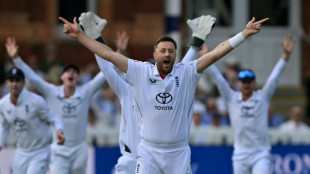 Robinson rocks Pakistan again as England eye series win at Lord's
 Nepal rescuers advance towards trapped tunnel workers
 Grisly search for missing as Nepal morgues overflow, burials begin
 Barcelona's Yamal getting back to 'top level': Flick

 Dutch federation calls for football summit without Infantino
 Ron’s Honky Tonk Residency Revives UK Country Music in Bermondsey
 Chelsea sign Argentina 'stopper Martinez from Villa
As refugees flooded over the Romanian border nearly a year ago, one thing struck British-Ukrainian volunteer Anna Shevchenko -- every child was carrying a little rucksack.
With Ukrainian kids now trying to rebuild their lives in new homes, the story of those rucksacks has become the focus of a project aimed at tackling their trauma.
Last February, after Russian President Vladimir Putin unleashed war in Ukraine, Shevchenko headed for Romania where she worked as a volunteer welcoming mothers and children who had fled the invasion.
"I noticed that every single child was holding a little rucksack as their prized possession, as everything they had from their old life," the business consultant and novelist told AFP in London.
Travelling back to the UK, Shevchenko had the idea of using those rucksacks as the focus of a therapy programme.
Within weeks, she had put together a network of mostly Ukrainian expats determined to help.
She also enlisted seasoned English children's author Di Redmond to write a story inspired by the notion that all the young refugees' memories were held in this one bag.
"It really got into my psyche and I more or less wrote the book in my sleep overnight," Redmond told AFP.
Redmond said that Ukrainian illustrator Lilia Martynyuk then produced a string of "moving and powerful" pictures, working from her basement in the frontline city of Zaporizhzhia.
Redmond, who has published nearly 200 books, normally makes children laugh with her prolific output, which includes scripts for television series such as "Postman Pat".
- Kids 'drink it in' -
In "Rucksack", however, she tells the heartbreaking story of a little boy who is forced to leave Ukraine but loses his bag along the way.
He retraces his steps with a friend to the bombed-out home he has just been forced to flee.
When he can't find the lost rucksack, he breaks down and his friend takes him to the nearest underground shelter in the Kyiv Metro.
There he is given a new rucksack, but this only makes him cry even more, "because it's got no memories", said Redmond.
He then begins the journey back to his new home and starts to build fresh memories he knows he will one day bring back to his home in Ukraine.
Dennis Ougrin, originally from Ukraine and now a consultant hospital psychiatrist in London, said the book chimed with important issues facing traumatised children.
"The key value of the book is that it allows the child and whoever cares for the child to begin to speak about what happened, often about something that's unspeakable," he said.
Ougrin and collaborators began taking the book into schools last September, using it alongside a programme developed by the charity Children and War UK.
Redmond was struck by the children's reaction. While the book made their parents weep, the kids would "really drink it in (and) turn the pages, very, very slowly".
Bill Yule, emeritus professor in child psychology at King's College London, said many parents were afraid that talking about the war would damage their children.
- 'Taboo topic' -
"The kids are very sensitive to the parents' reactions," noted Yule, who is working with Ougrin on the project.
"By them seeing the book... the parents can see that the kids aren't damaged by talking about it," he said.
The team has taken the book to UK schools that have served as hubs for Ukrainian refugees.
But other schools have requested help too, and it is also attracting interest in other countries hosting refugees.
At one event, Shevchenko said that as she read, she could see the English children turn to the Ukrainians and ask: "is this something you've experienced?".
"It was really heartwarming and most cathartic to see these English children give the Ukrainian children a hug," she said.
"The children beforehand were a bit uncomfortable to talk about it," she said.
"It was the same again with the teachers... they were worried about how to approach an almost taboo topic."
Some schools revealed that Ukrainian children had felt unwelcome due to their classmates' lack of awareness of their war experience.
But after reading the book, "we've seen the children holding hands and taking them (the Ukrainian children) to the library so they can read it and discuss it with the Ukrainian kids", Shevchenko said.
S.Gregor--AMWN