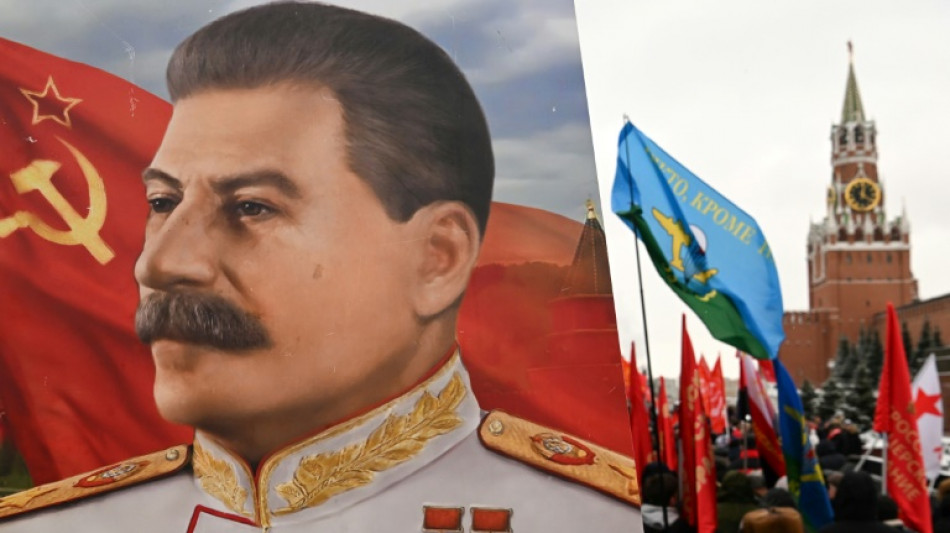
Moscow split between adoration and disgust, 70 years after Stalin's death / Photo: Kirill KUDRYAVTSEV - AFP
 Niger mutiny suppressed, but questions remain over junta's cohesion

 Como spoil Allegri's Napoli home debut
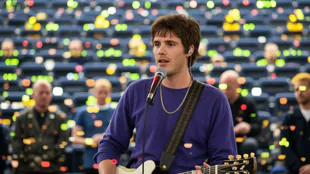 Cruz Beckham Performs at Leeds Festival Following Family Support at Reading

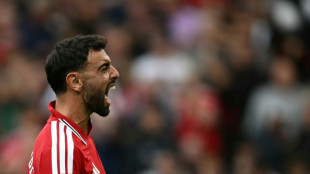 Fernandes hat-trick inspires Man Utd rout of Ipswich
 Suzuki sends 'perfect' Freiburg past Bremen, Schalke lose

 Instagram offers three routes to two-factor authentication

 September smartphone calendar spans Apple, Poco, Vivo and Xiaomi
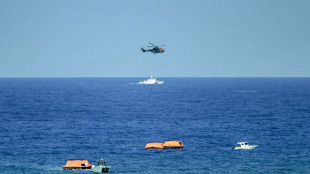
 Eight dead and 23 missing after ferry sinks off Cyprus
 Russell Hobbs dual air fryer discounted to £99

 British woman dies after stabbing at German station
 Beeston pub closes after office fire injures man
 South West Water ranks worst in environmental comparison
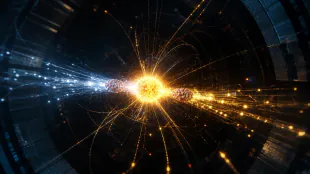 CERN creates quark-gluon plasma with smaller atomic nuclei
 WIRED tests label makers for home organisation

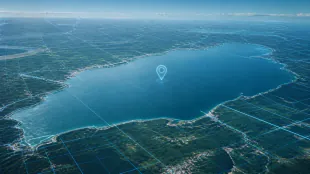 Google Maps adopts Lake America label for US users
 Bellingham, Mbappe fire as Real Madrid ease to Malaga win
 Mas wins Vuelta 9th stage to extend lead

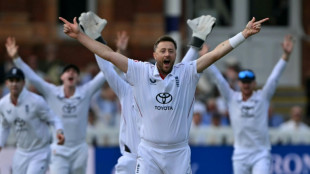 Robinson strikes as England close in on series win over Pakistan
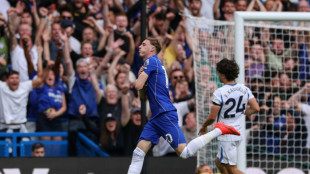
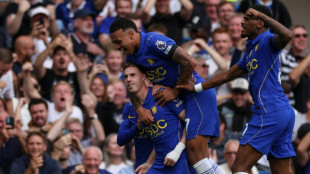 Chelsea beat Brighton in seven-goal thriller to extend Alonso's perfect start
 Zambia's opposition leader charged with treason
 Marc Marquez wins Aragon MotoGP Grand Prix
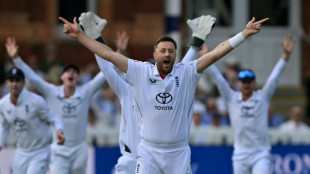 Robinson rocks Pakistan again as England eye series win at Lord's
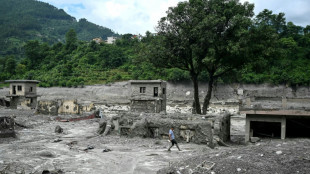 Nepal rescuers advance towards trapped tunnel workers
 Grisly search for missing as Nepal morgues overflow, burials begin
 Barcelona's Yamal getting back to 'top level': Flick
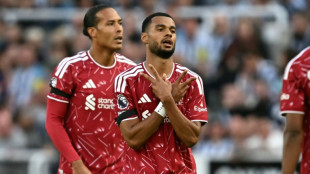
More than a thousand people gathered on Moscow's Red Square on Sunday for the 70th anniversary of the death of Soviet leader Joseph Stalin, whose divisive legacy looms over the Ukraine conflict.
Kyiv says the offensive is driven by Stalin-era imperialistic tendencies, while the heightened repression of critics inside Russia is reminiscent of Soviet methods.
People waving communist flags or holding portraits of the late dictator waited in a long line to lay flowers on his grave near the Kremlin wall.
"People would be happy if we had a leader like him again," said Yuri, a Russian pensioner.
Stalin, born in Georgia in 1878, transformed the Soviet Union into a totalitarian state during his nearly three-decade rule.
He organised a personality cult around himself and presided over purges that saw millions executed or sent to the gulag system, a vast network of prison camps.
But in Russia, many praise him for singlehandedly defeating Hitler in 1945 -- a version heavily contested by historians -- and restoring Russia's grandeur.
Drawing parallels with that history is part of the messaging put forward by the Kremlin to support the current Ukraine offensive, painted as an existential battle against the West.
- 'Won't survive' -
"Without Stalin's return to Russia, we Russians and other indigenous peoples of Russia won't survive," 74-year-old former Russian colonel and military intelligence officer Vladimir Kvachkov told AFP.
Many opposition figures, including critics of the conflict, have been branded "foreign agents", which has dark Soviet-era connotations and requires individuals or groups to mark all publications with a tag.
In a few Russian cities, associations often linked to the communist party have inaugurated monuments honoring the Soviet leader.
A bust of Stalin was unveiled earlier this year in Volgograd, formerly Stalingrad, a day before celebrations marking the Soviet victory at the Battle of Stalingrad, one of the bloodiest in World War II.
But these remain isolated initiatives.
There have not been moves by the government to restore the monuments to Stalin which were dismantled after his death.
"People consider (Stalin) in different ways. Older people, for the most part, consider him warmly; it's as if they've forgotten about the repression," said former history teacher Petr Sokolov.
"Young people don't know him very well. And the middle generation is divided in half," Sokolov said.
- 'Foreign agents' -
The Kremlin has glorified the Soviet Union's geopolitical and military might, particularly in material taught in school or shown on state-run media.
At the same time, it has downplayed Stalinist repression -- without outright denying it.
Attempts to gloss over the darkest moments of the Soviet Union were never clearer than when authorities closed the Memorial rights group in late 2021.
Memorial, a pillar of Russian civil society, had for decades worked to keep alive the memory of people who died in Stalin's gulags and maintained its extensive archives in Moscow.
In private however, some people still remember.
"My great-grandmother did not escape repression in 1945. And was repressed (imprisoned) until Stalin's death," said 25-year-old biotechnologist Tatiana Kuznetsova.
"On the 70th anniversary (since his death), we are in no way celebrating, but remembering the repressions. And, of course, it is horrible to look at what is happening today."
J.Williams--AMWN