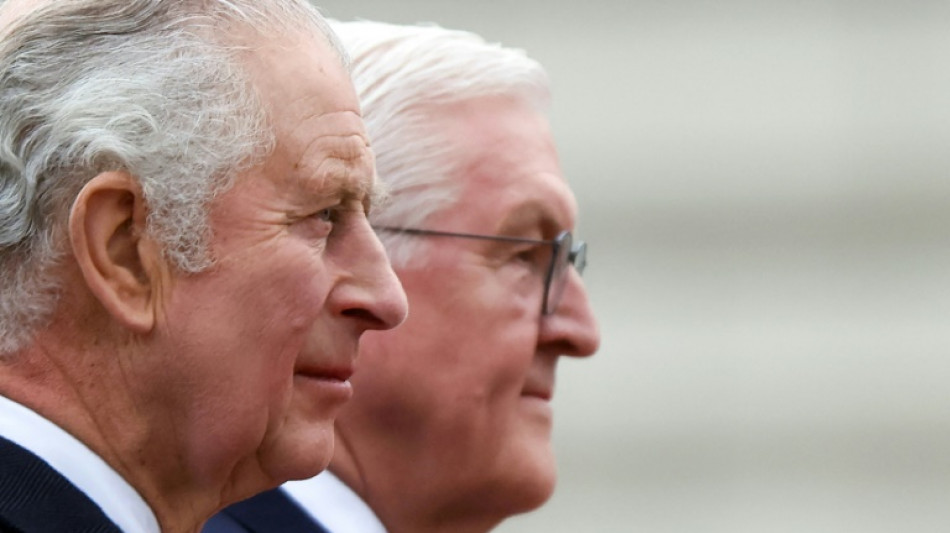
Charles III lays wreath for WWII bombing victims in Hamburg / Photo: WOLFGANG RATTAY - POOL/AFP
 Calhanoglu fires Inter to nervy Cagliari win, Como stun Napoli
 Monaco beat Marseille to go top, Rosenior's Paris FC thump Nice

 Pegula shakes off nerves in US Open first-round win

 FIFA president Infantino 'must go', says ex-UEFA boss Platini

 England v Pakistan second Test: Three talking points

 Rashford's return 'fantastic' for Man Utd, says Carrick

 At least 8 die, more missing, as ferry capsizes off Northern Cyprus

 Pegula shakes off nerves, Ruse in US Open first-round win
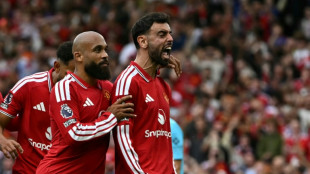 Fernandes treble inspires Man Utd rout, Chelsea beat Brighton in thriller

 Android photo recovery depends on recently deleted folders

 Realme P4s, iQOO Z11 and Nothing Phone 4b compared

 Forest defender Tyler Bindon joins Charlton on loan

 Forest linked with Liverpool goalkeeper Mamardashvili

 Former Nottingham hospital chief linked to NHS training firm

 UK clocks return to GMT on October 25

 Data-centre opposition crosses US party lines

 Brighton swimmers adjust routines around sewage alerts

 Practical boundaries can reduce group-chat overload

 Screen-free fitness bands gain ground as users seek fewer alerts

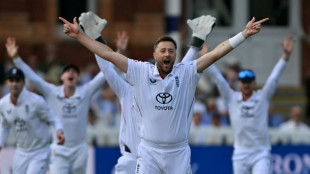 Robinson strikes again as England wrap up Pakistan series win

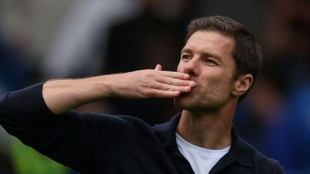 Red-hot Chelsea not the finished article says Alonso

 Dortmund's Konstantelias to miss 'several months' with knee injury
 Chelsea beat Brighton in seven-goal thriller, Leeds hold Brentford

 At least seven die in ferry capsize off Northern Cyprus; 23 missing

 In-form Marc Marquez wins Aragon MotoGP Grand Prix

Britain's King Charles III on Friday commemorated German victims of World War II Allied air raids, a gesture carrying great significance for both countries.
On the third and final day of his first state visit since ascending the throne, the monarch, accompanied by German President Frank-Walter Steinmeier, visited the St Nikolai memorial in Hamburg, where he laid a wreath.
The move, in the ruins of a church, is unprecedented for a British sovereign. TV commentators on rolling news channel NTV calling it a "great, great symbol".
When Charles's late mother, Queen Elizabeth II, visited Dresden in 1992, eggs were flung at her after she failed to get out of her car to lay a wreath at the rubble of the Frauenkirche -- a symbol of wartime destruction.
After laying the wreath alongside Steinmeier and Hamburg mayor Peter Tschentscher, Charles stood for a moment with his head bowed.
Then Queen Consort Camilla placed a white rose at the memorial.
Ahead of the ceremony, Germany's biggest-selling daily Bild said Charles' gesture at the memorial "will say more than any speech".
The issue of German suffering in World War II is historically and politically explosive.
Wracked with guilt over the extermination by the Nazis of six million Jews, mainstream Germany tends to shy away from discussing suffering by Germans during the war.
The WWII air raids, which were among the most controversial actions taken by the Allies, were designed to terrorise the German population and force a surrender. They killed tens of thousands of civilians.
The far-right often cites the memory of the bombings to measure German suffering against Nazi guilt.
- 'It matters' -
Hamburg's bishop Kirsten Fehrs, who said the Coventry Litany of Reconciliation at Friday's ceremony, stressed the importance of the event.
"The sign of reconciliation between two war enemies and the joint commemoration of the victims are an important signal today," she said, according to remarks carried by regional broadcaster NDR.
Engineer Rainald Erbacher, 54, who was at the memorial said Charles' action "sends a positive signal".
He underlined that it was a "difficult balance to strike between the past and looking ahead" but that the king's gesture was appropriate.
In a commentary for the Guardian, Hamburg-based historian Helene von Bismarck said Charles's stop at the memorial was more than just another photo op.
"At a time when many politicians all over the world like to pick and choose from history with the sole aim of suiting their narratives, it matters," she said.
Hamburg and Dresden were among the most heavily bombed cities in Nazi Germany.
On July 24, 1943, Britain and the United States began raiding Hamburg in what was described as a "Blitz week", with the Royal Air Force striking by night and the US forces bombing by day.
Codenamed Operation Gomorrah, it unleashed some 9,000 tonnes of explosives, killing more than 30,000 people and leaving the port city in rubble.
During the raids, the St Nikolai church tower was used as a landmark by bomber pilots.
Originally designed by English architect George Gilbert Scott, who restored London's Westminster Abbey, St Nikolai has been left in its ruined state and now houses a WWII memorial and museum.
- Train ride to Hamburg -
The themes of reconciliation and a future forged by common values have featured prominently during Charles's three-day visit, widely interpreted as a bid to build bridges after Brexit.
Charles, who has blood ties to Germany, has visited the European giant more than 40 times.
But during his inaugural foreign trip as king, he managed to score several firsts, including becoming the only monarch to address the German parliament.
In Berlin for the first two days of his visit, he also interacted with well-wishers at the Brandenburg Gate where he was given a formal welcome, as well as toured a reception centre for Ukrainian refugees.
He travelled on Friday morning to Hamburg on a regular scheduled train, to the delight of some passengers.
Medical student Henriette Czech, 20, voiced her surprise at finding herself on the same train.
"It's exciting for a mere mortal that a royal is on the train," she told AFP.
G.Stevens--AMWN