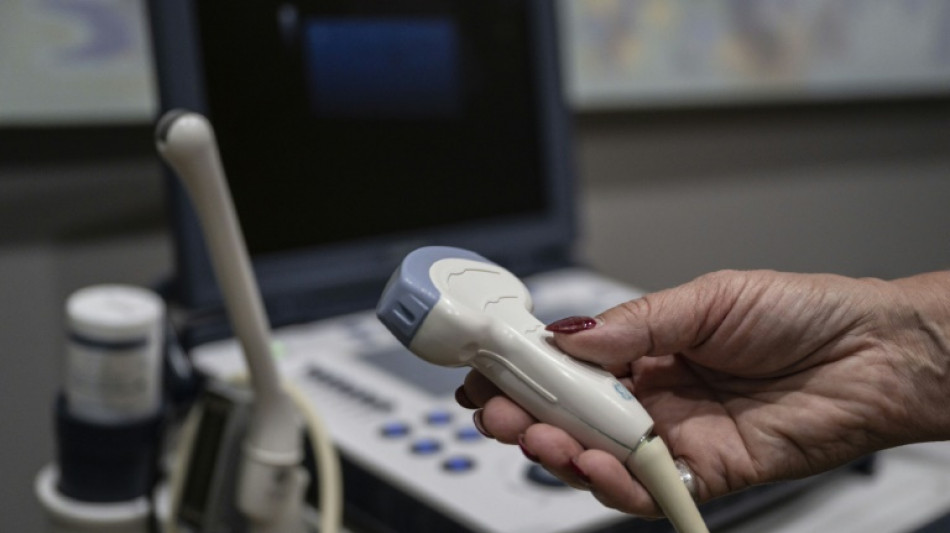
AI better than humans at key heart test: study / Photo: ANGELA WEISS - AFP/File
 US strikes Iran for first time in a month, Tehran retaliates

 Yin holds off Kim to win sixth LPGA title, end title drought
 Top-ranked Scheffler storms to PGA Tour Championship win

 Root urges England to be 'grown-ups' after Pakistan series win

 Google Maps renames Lake Ontario 'Lake America' in US -- but not Canada
 Aaron Donald ends retirement to rejoin Rams: team
 Niamey back to normal after soldiers' mutiny
 Niger mutiny suppressed, but questions remain over junta's cohesion

 Como spoil Allegri's Napoli home debut

 Cruz Beckham Performs at Leeds Festival Following Family Support at Reading
 Fernandes hat-trick inspires Man Utd rout of Ipswich

 Suzuki sends 'perfect' Freiburg past Bremen, Schalke lose

 Instagram offers three routes to two-factor authentication
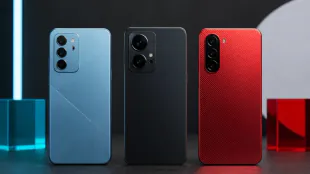
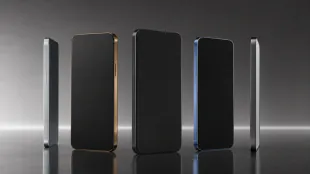 September smartphone calendar spans Apple, Poco, Vivo and Xiaomi
 Eight dead and 23 missing after ferry sinks off Cyprus

 Russell Hobbs dual air fryer discounted to £99

 British woman dies after stabbing at German station

 Beeston pub closes after office fire injures man

 South West Water ranks worst in environmental comparison
 CERN creates quark-gluon plasma with smaller atomic nuclei

 WIRED tests label makers for home organisation
 Google Maps adopts Lake America label for US users
 Bellingham, Mbappe fire as Real Madrid ease to Malaga win

 Mas wins Vuelta 9th stage to extend lead

 Robinson strikes as England close in on series win over Pakistan

Artificial intelligence is better than humans at assessing heart ultrasounds, the main test of overall cardiac health, the most rigorous trial yet conducted on the subject found on Wednesday.
While previous research has illustrated the potential power of AI models for reading medical scans, the authors of the new US study said it is the first blinded, randomised clinical trial for heart health.
"There's a lot of excitement around AI," but rigorous evaluation remains critical, the study's senior author David Ouyang told AFP.
This successful trial "really strengthens the argument that now we're ready for primetime," added the cardiologist at the Cedars-Sinai Medical Center in Los Angeles.
Heart ultrasounds, also known as echocardiograms, are carried out on patients by sonographers, who usually give an initial assessment of the scan before handing it over to a cardiologist.
The new study, published in the journal Nature, pitted an AI model against sonographers to see who would give the most accurate initial assessment.
Both assessed the ultrasound for what is called left ventricular ejection fraction, which measures the heart's ability to pump blood out to the body in the space of a heartbeat.
The test is the main way to measure how well a heart is functioning. It is used to tell if patients have had a heart attack or if they will be able to undertake serious treatments such as implanting a defibrillator.
For the study, nearly 3,500 heart ultrasounds were randomly split between sonographers and the AI model.
Their assessments were then evaluated by cardiologists, who did not know which ones came from humans and which from the AI model.
- 'Exciting' -
The cardiologists made a substantial change in more than 27 percent of the sonographer assessments -- and in nearly 17 percent of those done by the AI model, the study found.
"The AI was faster, more precise, and indistinguishable by the cardiologists," Ouyang said.
There is a "tremendous shortage" of sonographers in the United States and across the world, and this would save them valuable time, he added.
The AI model, called EchoNet-Dynamic, was trained on nearly 145,000 echocardiograms and uses what is called deep learning to process large amounts of data.
The researchers are currently applying for the method to be approved by the Federal Drug Administration, and hope to do the same in the European Union and elsewhere soon, Ouyang said.
Patricia Pellikka, a cardiologist at the Mayo Clinic in the United States not involved in the research, told AFP the study was "exciting" and that the integration of AI tools will increase efficiency and standardisation.
French cardiologist Florian Zores said that the study was well conducted but the technology would not be as useful in France, where cardiologists give the initial assessments of heart ultrasounds.
B.Finley--AMWN