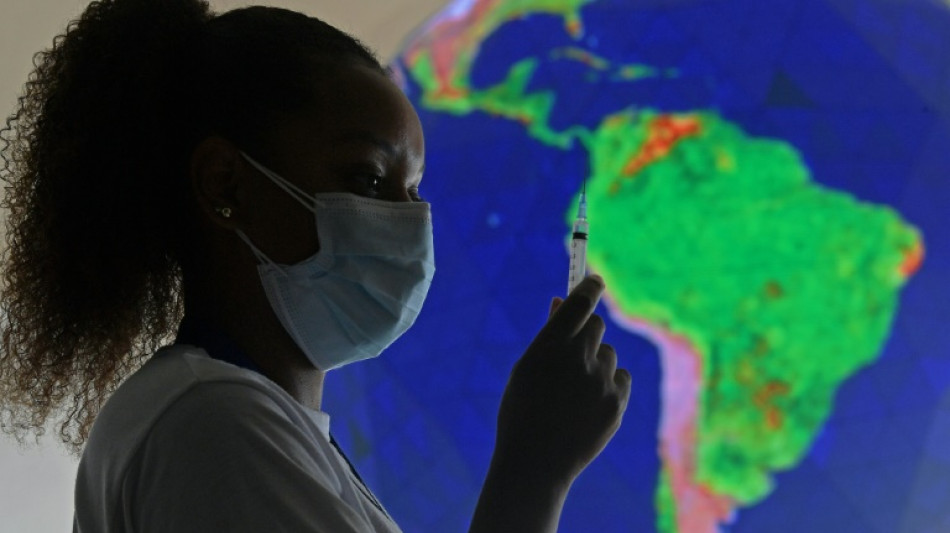
In vaccination champ Brazil, many have stopped getting shots / Photo: Carl DE SOUZA - AFP
 Malaysia's Sarawak eyes cloud seeding as haze worsens

 World leaders need to see rising oceans in Pacific: UN official

 Xiaomi Pad 9 Pro Leak Suggests 12.5-Inch Display and Massive Battery
 UK Homeowners Advised to Use Peppermint Tea Bags to Deter Spiders

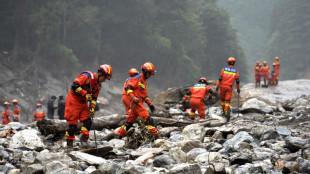 Nepal toll surges as rescuers struggle through 'unimaginable' disaster
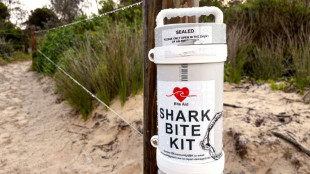 Mauled Australian swimmer recalls punching shark

 Passengers stranded overnight by Kenya airport strike

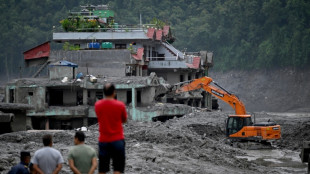 Nepal recovers bodies but presses on for trapped tunnel workers
 Grand Canyon flash flood leaves one dead, around 15 missing

 Venus Williams falls at first hurdle in US Open

 At least five leaders skip annual Pacific Islands summit

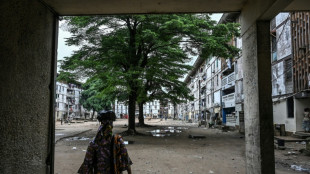 I.Coast home-hunters' saga highlights Africa housing crunch

 At least five leaders to skip annual Pacific Islands summit

 Latest developments in the US-Iran war

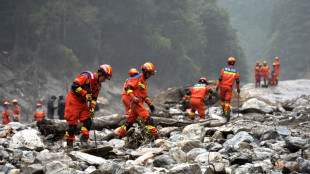 Nepal buries dead as rescuers seek thousands missing

 From Montecito to the Cotswolds: Harry and Meghan eye new UK home

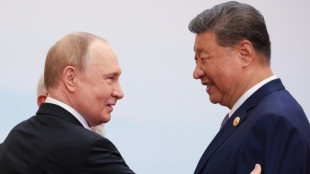 Russia's Putin and China's Xi to attend summit in Kyrgyzstan
 John Ternus to lead Apple into the age of AI

 Trump calls for 'punishment' of NBC reporter

 EN China XLX Announces 2026 Interim Results

 About 15 people missing after Grand Canyon flash flood

 Medvedev advances without drama at US Open
 Calhanoglu fires Inter to nervy Cagliari win, Como stun Napoli

 Monaco beat Marseille to go top, Rosenior's Paris FC thump Nice
 Pegula shakes off nerves in US Open first-round win
Two years after Brazil began emerging from its pandemic horror show thanks to a massive immunization campaign, officials face a paradoxical predicament: vaccination rates have plunged, and not just for Covid-19.
The troubling trend has left millions exposed to once-eradicated diseases.
Doctors, public officials and UNICEF have sounded the alarm over collapsing immunization rates in Brazil, where overall vaccination coverage has fallen from an impressive 95 percent in 2015 to just 68 percent last year, according to official figures.
For polio, the figure fell from 85 percent to 68 percent, triggering warnings that the disease could make a comeback in Brazil, where it was eradicated in 1989.
The figures are similar for other vaccines, allowing diseases to spread. Measles, officially eliminated in Brazil in 2016, returned two years later. There are fears diphtheria is making a resurgence, too.
Health experts say vaccine hesitancy is a growing problem worldwide. But it is particularly worrying in Brazil, a sprawling country of 203 million people that until recently was hailed as a champion of mass vaccination drives.
Then an anti-vax movement started spreading around 2016, soon gaining outsize influence via a powerful ally: far-right leader Jair Bolsonaro, president from 2019 to 2022, who refused to be vaccinated against Covid-19, joking the jab could "turn you into an alligator."
"It's very sad to see how a country whose vaccination programs set an example for the world can suddenly suffer from an anti-vaccine movement," Natalia Pasternak, head of the Question of Science Institute (IQC), a public policy think tank, told AFP.
"It's very sad to see how 50 years of work can be so easily destroyed in three."
- Success story undone -
Covid-19 highlighted the shots-in-arms capacities of Brazil's struggling but lauded universal public health system.
Back in 2020, some of the most haunting images of the pandemic were of mass graves and corpses piled in refrigerator trucks in places such as Manaus, in northern Brazil, whose overwhelmed hospitals ran out of oxygen.
Then new images started emerging in 2021, of public health workers turning Rio de Janeiro's carnival parade venue into a drive-through immunization center, or boating deep into the Amazon rainforest to administer vaccines in Indigenous villages.
Experts credit the campaign's success with stopping a far bigger tragedy in Brazil, where more than 700,000 people have died of Covid-19, second only to the United States.
Despite a slow start -- widely blamed on Bolsonaro -- Brazil had by early last year vaccinated 93 percent of adults against Covid-19.
Then rates fell, not only for Covid-19 vaccines but across the board.
- The 'infodemic' -
Many factors are driving the decline, experts say.
They include failure to catch up on vaccines delayed during the pandemic, inaccessible health care and declining awareness of the dangers of once-ubiquitous diseases.
But experts say a new element is making things much worse: the toxic mix of politics, polarization and disinformation that exploded during the pandemic and is increasingly familiar worldwide.
In Brazil, despite Bolsonaro losing a divisive 2022 election to veteran leftist Luiz Inacio Lula da Silva, the anti-vax movement still thrives.
"We're facing a post-trust scenario, in which families are being attacked by disinformation and lies. It's not just the occasional fake news story, it's very structured," said Isabella Ballalai of the Brazilian Immunization Society.
"The consequences of that 'infodemic' will be worse than the pandemic itself."
Brazilian Health Minister Nisia Trindade says the government is evaluating how to punish doctors spreading anti-vax disinformation.
"Criminal fake news is sowing doubt and fueling vaccine hesitancy," she told AFP.
- Going local -
A recent survey by the Brazilian Pediatrics Society (SBP) and IQC found that doctors said parents' most common reasons for not vaccinating their children were fears of side effects and mistrust of vaccines.
Experts say health workers are desperate for reliable information to counter the flood of anti-vax disinformation.
Pasternak, whose organization is working on creating just that, says health officials also need to think locally.
"Studies show the best way to convince people to get vaccinated is working with local leaders... People listen to those they trust: pastors, community leaders," she said.
But reversing the trend will not be easy, Pasternak admitted.
"We have lots of work to do."
Ch.Havering--AMWN