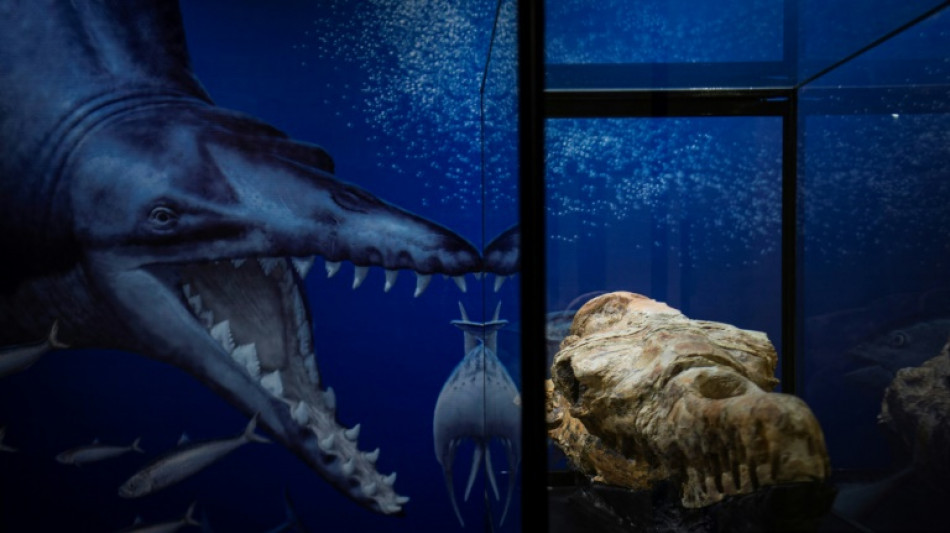
36-million-year-old whale fossil found in Peruvian desert
 Morning Roundup: Cycling Classic Returns as Cruise Port Opens and Plant Library Grows

 Cowbells Mark Return of Philadelphia Cycling Classic for Carpenter Family

 Apprenticeship Awards Name Derbyshire and Nottinghamshire Finalists

 £1m Dental Foundation Launches Mobile Care for Vulnerable People

 Firebloom EP01 Delivers Fast Stone-Baked Pizza Indoors and Outdoors

 Family-Run Cafe Opens Second Nottingham City Centre Location

 Aldi Sets Reduced Hours for August Bank Holiday

 UK Moves 2026 Boxing Day Bank Holiday to Monday

 HMS Belfast Exhibition Revisits the Final Days Before D-Day

 Barnum Musical Returns With Circus Spectacle

 London Marathon Two-Day Plan Raises Questions Over 2027 Disruption

 Wormwood Scrubs Failings Found After Wife's Urgent Warning Went Unheeded

 London Kids' Open-Top Bus Tour Offers Family Alternative to the Tube

 London Couple Cuts Annual Spending by £1,600 Without Giving Up Travel

 Dubai Investor Explains Dh50,000 Monthly Draw and Long-Term Strategy

 Oil Traders Weigh Iran War Risk Against Diplomatic Signals

 US Cancels Taif Sami Mohammed's Visa and Adds Her to Watchlist

 Tamil Nadu Assembly Clash Continues Over 10.5% Vanniyar Reservation

 Chennai Police Arrest Mother and Daughter Over ₹40 Lakh Chit Fund Case

 PSBB K.K. Nagar Pair Wins Madras Quiz

 Chennai Hospital Opens Upgraded Holistic Wellness Facility

 Okinawan Festival Returns With Revised Convention Center Format

 Hawaiʻi Supreme Court Ruling Removes Waters From Council Contest

 Consolidated Theatres Launches Hawaiʻi-Made Film Series in September

 Iceland votes on whether to resume EU membership talks

Paleontologists on Thursday unveiled the fossilized remains of an ancient whale that inhabited the seas 36 million years ago, found last year in a Peruvian desert.
"We have presented the new Peruvian basilosaurus, it is the complete skull of an archaic whale that lived 36 million years ago," paleontologist Mario Urbina, head of the team that discovered the skeleton, told AFP.
Urbina said the basilosaurus was found at the end of 2021 in the Ocucaje Desert in the Ica department, about 350 kilometers (215 miles) south of Lima. The desolate landscape was a shallow sea millions of years ago, and its dunes have yielded large numbers of striking primitive sea mammal remains.
The "Ocucaje Predator," as the researchers dubbed it, was about 17 meters (55 feet) long and used its massive, powerful teeth to feed on tuna, sharks and schools of sardines.
"This finding is very important because there are no other similar specimens discovered in the world," said Urbina, a researcher at the National University of San Marcos, in Lima.
Team member Rodolfo Salas-Gismondi explained the basilosaurus differs from other known ancient whale species by its size and the development of its teeth, both of which indicate the animal was likely at the top of the food chain.
"This is an extraordinary find because of its great state of preservation," he told AFP. "This animal was one of the largest predators of its time."
"At that time the Peruvian sea was warm," added Salas-Gismondi, who heads the Department of Vertebrate Paleontology at the Natural History Museum in Lima. "Thanks to this type of fossil, we can reconstruct the history of the Peruvian sea."
The first cetaceans, like the basilosaurus, evolved from land animals some 55 million years ago.
By the late Eocene period (between 56 million and 34 million years ago), cetaceans had fully adapted to marine life.
Whales had not yet evolved, and almost all cetaceans were marine macropredators, according to the research team.
The Ocucaje Desert is rich in fossils, the researchers said, providing scientists with 42 million years' worth of evolutionary evidence.
Other fossils found there include four-legged dwarf whales, dolphins, sharks and other species from the Miocene period (between 23 million and five million years ago).
Ch.Havering--AMWN