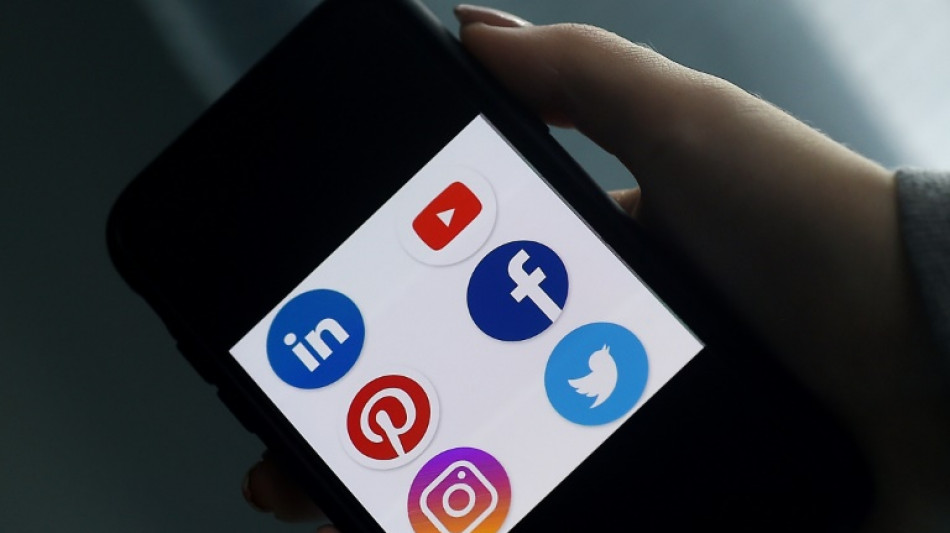
Tech firms roll back misinformation curbs ahead of 2024 polls / Photo: Olivier DOULIERY - AFP/File
 Benzema ends brief stint with Al Hilal in Saudi league
 Djokovic's Grand Slam future uncertain after brutal US Open defeat

 Turkey says regional defence pact not against any country

 US vows to keep economic pressure on Iran as G20 finance talks begin

 Shein valued at $26.3 bn in Hong Kong market debut
 Crude prices rise above $90 per barrel on US-Iran strikes

 Liverpool sign Barcola from PSG for reported £124 million

 Putin, Xi, Iran's Pezeshkian in Kyrgyzstan for summit

 Fully Permitted Tanzanian Gold Project Clears Path to Construction as Financing, EPCM Fall in Place (LVGLF)

 EdWealth Announces MoneyBench Benchmark Comparing AI Money Answers From Ed, ChatGPT and Gemini

 Root says new balls behind batsmen's struggles in England
 Swollen rivers, washed-out roads hamper Nepal rescue effort

 In France's north, winegrowers bet on a warmer future

 Deadly virus stalks South Africa's sardines

 South Korea women's football body probes 'period' insult

 Transitional Fashion Essentials for Autumn: Key Pieces from M&S and Joe Browns

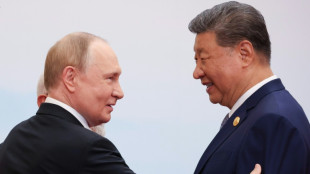 China's Xi and Iran's Pezeshkian in Kyrgyzstan, Putin expected

 Rescuers hunt for missing after deadly N.Cyprus ferry accident

 Ethiopia's Abiy could consolidate power as 'executive president'

 Crude prices rise on US-Iran strikes, equities mixed after Warsh remarks

 South Korea court gives Unification Church leader 2 years prison

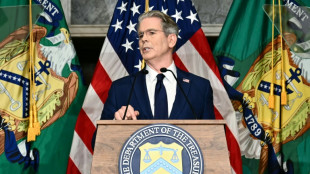 US hosts G20 finance talks with growth, Iran pressure on agenda

 African players in Europe: Wissa flick seals Newcastle victory

 Venice film preview: Clooney, Oasis and Musk

 Poorly Djokovic crashes out of US Open first round

As a global election season widely expected to be mired in misinformation and falsehoods fast approaches, the big US-based tech platforms are walking back policies meant to curb them, stoking alarm.
Whether it is YouTube scrapping a key misinformation policy or Facebook altering fact checking controls, the social media giants are demonstrating a certain lassitude with being the sheriffs of the internet Wild West.
The changes have come in a climate of layoffs, cost-cutting measures and pressure from right-wing groups that accuse the likes of Facebook-parent Meta or YouTube owner Google of suppressing free speech.
This has spurred tech companies to loosen content moderation policies, downsize trust and safety teams and, in the case of Elon Musk-owned X (formerly Twitter), restore accounts known for pushing bogus conspiracies.
Those moves, researchers say, have eroded their ability to tackle what is expected to be a deluge of misinformation during more than 50 major elections around the world next year, not only in the United States, but also in India, Africa and the European Union.
"Social media companies aren't ready for the 2024 election tsunami," the watchdog Global Coalition for Tech Justice said in a report this month.
"While they continue to count their profits, our democracies are left vulnerable to violent coup attempts, venomous hate speech, and election interference."
In June, YouTube said it will stop removing content that falsely claims the 2020 US presidential election was plagued by "fraud, errors or glitches," a move sharply criticized by misinformation researchers.
YouTube justified its action, saying that removing this content could have the "unintended effect of curtailing political speech."
- 'Era of Recklessness' -
Twitter, now known as X, said in November it would no longer enforce its COVID misinformation policy.
Since billionaire Musk's turbulent acquisition of the platform last year, it has restored thousands of accounts that were once suspended for violations including spreading misinformation and introduced a paid verification system that researchers say has served to boost conspiracy theorists.
Last month, the platform said it would now allow paid political advertising from US candidates, reversing a previous ban and sparking concerns over misinformation and hate speech in next year's election.
"Musk's control over Twitter has helped usher in a new era of recklessness by large tech platforms," Nora Benavidez, from the nonpartisan group Free Press, told AFP.
"We're observing a significant rollback in concrete measures companies once had in place."
Platforms are also under pressure from conservative US advocates who accuse them of colluding with the government to censor or suppress right-leaning content under the guise of fact-checking.
"These companies think that if they just keep appeasing Republicans, they'll just stop causing them problems when all they're doing is increasing their own vulnerability," said Berin Szoka, president of TechFreedom, a think tank.
For years, Facebook's algorithm automatically moved posts lower in the feed if they were flagged by one of the platform's third-party fact-checking partners, including AFP, reducing the visibility of false or misleading content.
Facebook recently gave US users the controls, allowing them to move this content higher if they want, in a potentially significant move that the platform said will give users more power over its algorithm.
- Hot topic -
The hyperpolarized political climate in the United States has made content moderation on social media platforms a hot-button issue.
Earlier this month, the US Supreme Court temporarily put on hold an order limiting the ability of President Joe Biden's administration to contact social media companies to remove content it considers to be misinformation.
A lower court of Republican-nominated judges had given that order, ruling that US officials went too far in their efforts to get platforms to censor certain posts.
Misinformation researchers from prominent institutions such as the Stanford Internet Observatory also face a Republican-led congressional inquiry as well as lawsuits from conservative activists who accuse them of promoting censorship -- a charge they deny.
Tech sector downsizing that has gutted trust and safety teams and poor access to platform data have further added to their challenges.
"The public urgently needs to know how platforms are being used to manipulate the democratic process," Ramya Krishnan, from the Knight First Amendment Institute at Columbia University, told AFP.
"Independent research is crucial to exposing these efforts, but platforms continue to get in the way by making it more costly and risky to do this work."
X.Karnes--AMWN