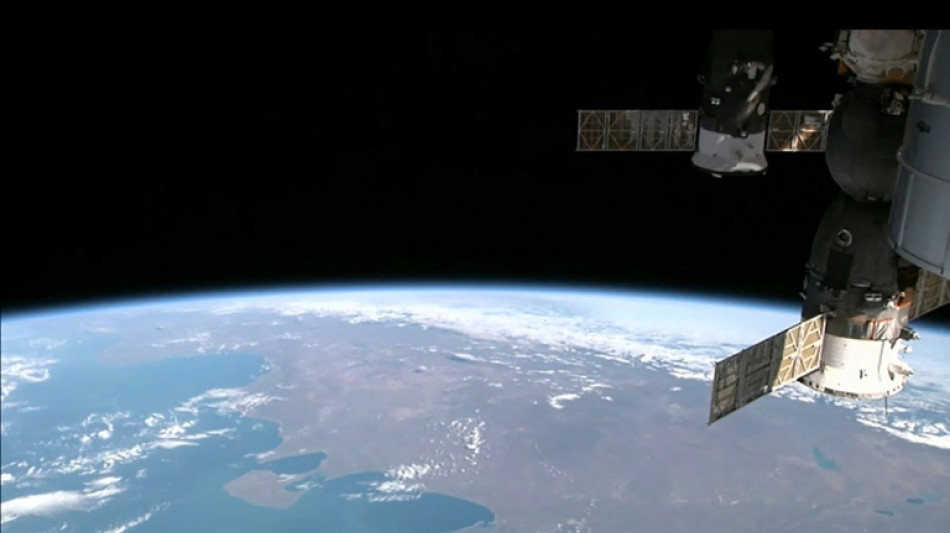
Mouse embryos grown in space for first time: Japan researchers / Photo: HANDOUT - NASA/AFP/File
 Benzema ends brief stint with Al Hilal in Saudi league

 Djokovic's Grand Slam future uncertain after brutal US Open defeat

 Turkey says regional defence pact not against any country

 US vows to keep economic pressure on Iran as G20 finance talks begin

 Shein valued at $26.3 bn in Hong Kong market debut

 Crude prices rise above $90 per barrel on US-Iran strikes

 Liverpool sign Barcola from PSG for reported £124 million

 Putin, Xi, Iran's Pezeshkian in Kyrgyzstan for summit

 Fully Permitted Tanzanian Gold Project Clears Path to Construction as Financing, EPCM Fall in Place (LVGLF)

 EdWealth Announces MoneyBench Benchmark Comparing AI Money Answers From Ed, ChatGPT and Gemini

 Root says new balls behind batsmen's struggles in England

 Swollen rivers, washed-out roads hamper Nepal rescue effort

 In France's north, winegrowers bet on a warmer future

 Deadly virus stalks South Africa's sardines

 South Korea women's football body probes 'period' insult

 Transitional Fashion Essentials for Autumn: Key Pieces from M&S and Joe Browns
 China's Xi and Iran's Pezeshkian in Kyrgyzstan, Putin expected

 Rescuers hunt for missing after deadly N.Cyprus ferry accident

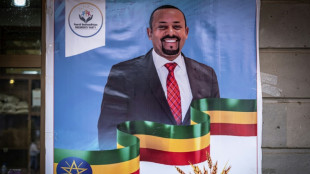 Ethiopia's Abiy could consolidate power as 'executive president'

 Crude prices rise on US-Iran strikes, equities mixed after Warsh remarks
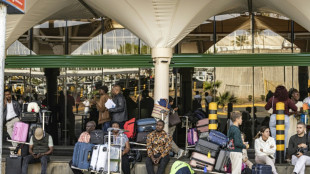
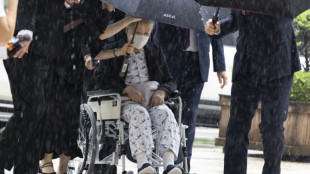 South Korea court gives Unification Church leader 2 years prison

 US hosts G20 finance talks with growth, Iran pressure on agenda

 African players in Europe: Wissa flick seals Newcastle victory

 Venice film preview: Clooney, Oasis and Musk

 Poorly Djokovic crashes out of US Open first round

Mouse embryos have been grown on the International Space Station and developed normally in the first study indicating it could be possible for humans to reproduce in space, a group of Japanese scientists said.
The researchers, including Teruhiko Wakayama, professor of University of Yamanashi's Advanced Biotechnology Centre, and a team from the Japan Aerospace Space Agency (JAXA), sent frozen mouse embryos on board a rocket to the ISS in August 2021.
Astronauts thawed the early-stage embryos using a special device designed for this purpose and grew them on the station for four days.
"The embryos cultured under microgravity conditions developed" normally into blastocysts, cells that develop into the foetus and placenta, the scientists said.
The experiment "clearly demonstrated that gravity had no significant effect," the researchers said in a study that was published online in the scientific journal iScience on Saturday.
They also said there were no significant changes in condition of the DNA and genes, after they analysed the blastocysts that were sent back to their laboratories on Earth.
This is "the first-ever study that shows mammals may be able to thrive in space," University of Yamanashi and national research institute Riken said in a joint statement on Saturday.
It is "the world's first experiment that cultured early-stage mammalian embryos under complete microgravity of ISS," the statement said.
"In the future, it will be necessary to transplant the blastocysts that were cultured in ISS's microgravity into mice to see if mice can give birth" to confirm that the blastocysts are normal, it added.
Such research could be important for future space exploration and colonisation missions.
Under its Artemis programme, NASA plans to send humans back to the Moon in order to learn how to live there long-term to help prepare a trip to Mars, sometime towards the end of the 2030s.
P.Costa--AMWN