
New York Times sues OpenAI, Microsoft in copyright clash / Photo: ANGELA WEISS - AFP/File
 Sabalenka kickstarts US Open three-peat bid as Fils crashes out

 Fils upset by resurgent Tsitsipas at US Open

 Trump says AI data center opponents want to be 'backwards and poor'

 Pakistan ditch coaches, send seven players home after England defeats

 Galliano pulls Met Gala exhibit after antisemitism backlash

 Afghan people should 'not be abandoned': top Red Cross official

 Six defining moments of Lionel Messi's Argentina career

 Trump blasts US backlash against data centers

 It 'hurts' says Messi of decision to retire from international football

 Benzema ends brief stint with Al Hilal in Saudi league

 Djokovic's Grand Slam future uncertain after brutal US Open defeat

 Turkey says regional defence pact not against any country

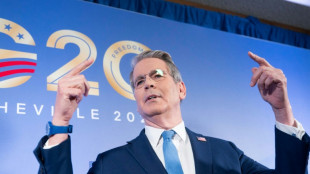 US vows to keep economic pressure on Iran as G20 finance talks begin

 Shein valued at $26.3 bn in Hong Kong market debut

 Crude prices rise above $90 per barrel on US-Iran strikes

 Liverpool sign Barcola from PSG for reported £124 million

 Putin, Xi, Iran's Pezeshkian in Kyrgyzstan for summit

 Fully Permitted Tanzanian Gold Project Clears Path to Construction as Financing, EPCM Fall in Place (LVGLF)

 EdWealth Announces MoneyBench Benchmark Comparing AI Money Answers From Ed, ChatGPT and Gemini

 Root says new balls behind batsmen's struggles in England

 Swollen rivers, washed-out roads hamper Nepal rescue effort

 In France's north, winegrowers bet on a warmer future

 Deadly virus stalks South Africa's sardines

 South Korea women's football body probes 'period' insult

 Transitional Fashion Essentials for Autumn: Key Pieces from M&S and Joe Browns

The New York Times sued ChatGPT-maker OpenAI and Microsoft in a US court on Wednesday, alleging that the companies' powerful AI models used millions of articles for training without permission.
Through their AI chatbots, the companies "seek to free-ride on The Times' massive investment in its journalism by using it to build substitutive products without permission or payment," the lawsuit said.
With the suit, The New York Times chose a more confrontational approach to the sudden rise of AI chatbots, in contrast to other media groups such as Germany's Axel Springer or the Associated Press that have entered content deals with OpenAI.
The Times, one of the most respected news organizations in the United States, is seeking damages, as well as an order that the companies stop using its content -- and destroy data already harvested.
While no sum is specifically requested, the Times alleges that the infringement could have cost “billions of dollars in statutory and actual damages."
OpenAI and Microsoft couldn't immediately be reached for comment.
Microsoft, the world’s second biggest company by market capitalization, is a major investor in OpenAI, and swiftly implemented the powers of AI to its own products after the release of ChatGPT last year.
The AI models that power ChatGPT and Microsoft's Copilot (formerly Bing) were trained for years on content available on the internet, under the assumption that it was fair to be used without need for compensation.
But the lawsuit, filed in a federal court in New York, argued that the unlawful use of the Times' work to build artificial intelligence products created a potential rival and threatened its ability to provide quality journalism.
"These tools were built with and continue to use independent journalism and content that is only available because we and our peers reported, edited, and fact-checked it at high cost and with considerable expertise," a spokesperson for the Times said.
- Not 'transformative' -
The Times said it attempted to seal a content agreement with OpenAI and Microsoft, but that the companies maintained that their technology was "transformative" and therefore did not need a commercial arrangement.
The lawsuit said that content generated by ChatGPT and Copilot closely mimicked New York Times style and that the paper's content was given a privileged status in perfecting the chatbot technology.
It also said that content that proved to be false was sourced incorrectly to The New York Times.
"There is nothing 'transformative' about using The Times’ content without payment to create products that substitute for The Times and steal audiences away from it," the lawsuit alleged.
The emerging AI giants are facing a wave of lawsuits over their use of internet content to build their AI systems that create content on simple prompts.
Last year, "Game of Thrones" author George RR Martin and other best-selling fiction writers filed a class-action lawsuit against OpenAI, accusing the startup of violating their copyrights to fuel ChatGPT.
Universal and other music publishers have sued artificial intelligence company Anthropic in a US court for using copyrighted lyrics to train its AI systems and in generating answers to user queries.
US photo distributor Getty Images has accused Stability AI of profiting from its pictures and those of its partners in order to make visual AI that creates original images on simple demand.
With lawsuits piling up, Microsoft and AI player Google have announced they would provide legal protection for customers sued for copyright infringement over content generated by its AI.
F.Schneider--AMWN