-
 Sabalenka kickstarts US Open three-peat bid as Fils crashes out
-
Apple CEO Tim Cook gives nod to founder Steve Jobs in final memo

-
 Fils upset by resurgent Tsitsipas at US Open
-
Russian finance minister makes unexpected appearance at G20

-
 Trump says AI data center opponents want to be 'backwards and poor'
-
Happy to be back in NY, Sabalenka advances

-
 Pakistan ditch coaches, send seven players home after England defeats
-
Naomi Watts to receive lifetime award at top Spain film fest

-
 Galliano pulls Met Gala exhibit after antisemitism backlash
-
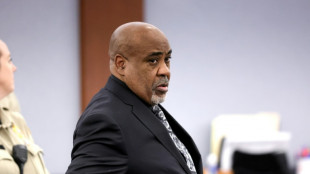
Jury hears closing arguments in Tupac Shakur murder trial
-
 Afghan people should 'not be abandoned': top Red Cross official
-
Pakistan sack coach, send seven players home after England defeats

-
 Six defining moments of Lionel Messi's Argentina career
-
New storms threaten Grand Canyon flood search, 2 bodies recovered

-
 Trump blasts US backlash against data centers
-
France takes aim at ultra-fast fashion with new levy
-
 It 'hurts' says Messi of decision to retire from international football
-
Tribunal says India cannot withdraw from water treaty with Pakistan

-
 Benzema ends brief stint with Al Hilal in Saudi league
-
John Galliano pulls US exhibition after antisemitism backlash

-
 Djokovic's Grand Slam future uncertain after brutal US Open defeat
-
French Top 14 boss offers 'no guarantees' for first Club World Cup

-
 Turkey says regional defence pact not against any country
-
Munoz reunites with Glasner after joining Forest from Palace

-
 US vows to keep economic pressure on Iran as G20 finance talks begin
-
Liverpool sign Barcola from PSG for £124 million

-
 Shein valued at $26.3 bn in Hong Kong market debut
-
Putin, Xi hold talks in Kyrgyzstan as regional summit begins

-
 Crude prices rise above $90 per barrel on US-Iran strikes
-
ChatGPT becomes first AI chatbot to face tougher EU rules

-
 Liverpool sign Barcola from PSG for reported £124 million
-
Man City sign Palmeiras winger Allan on five-year deal

-
 Putin, Xi, Iran's Pezeshkian in Kyrgyzstan for summit
-
More flooding feared at Grand Canyon after storm leaves 15 missing

-
 Fully Permitted Tanzanian Gold Project Clears Path to Construction as Financing, EPCM Fall in Place (LVGLF)
-
RedHill Divests Talicia® to Apotex for $18 Million Cash Upfront Plus Milestones to Fuel Strategic Growth Opportunities

-
 EdWealth Announces MoneyBench Benchmark Comparing AI Money Answers From Ed, ChatGPT and Gemini
-
MEXC Data: BTC Breaks $80,000, Major-Asset Spot Trading Volume Surges 300%

-
 Root says new balls behind batsmen's struggles in England
-
G20 finance talks open as US seeks to ramp up pressure on Iran

-
 Swollen rivers, washed-out roads hamper Nepal rescue effort
-
Solving Agent Sprawl: The Case for Enterprise Orchestration

-
 In France's north, winegrowers bet on a warmer future
-
Springboks switch Kolbe to full-back for third All Blacks Test

-
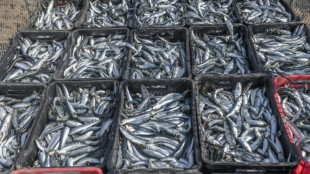 Deadly virus stalks South Africa's sardines
-
Malaysia's Sarawak eyes cloud seeding as haze worsens

-
 South Korea women's football body probes 'period' insult
-
World leaders need to see rising oceans in Pacific: UN official

-
 Transitional Fashion Essentials for Autumn: Key Pieces from M&S and Joe Browns
-
Xiaomi Pad 9 Pro Leak Suggests 12.5-Inch Display and Massive Battery

Private US lunar lander faces failure after 'critical' fuel loss
A historic private mission to land on the Moon faced near-certain failure Monday after the spacecraft suffered a "critical loss" of fuel, dealing a major blow to America's hopes of placing its first robot on the lunar surface in five decades.
Fixed to the top of United Launch Alliance's new Vulcan rocket, which was making its first flight, Astrobotic's Peregrine Lunar Lander blasted off overnight from Florida's Cape Canaveral Space Force Station, then successfully separated from its launch vehicle.
A few hours later, Astrobotic began reporting technical troubles, starting with an inability to orient Peregrine's top-mounted solar panel towards the Sun and keep its onboard battery topped up, due to a malfunction in its propulsion system.
Though engineers "improvised" a way to tilt the spacecraft in the right direction and keep its power going, the company posted on X that the same failure appeared to be the causing "critical loss of propellant."
On Monday night, Astrobotic said it had approximately 40 hours of fuel remaining before Peregrine entered an "uncontrollable tumble."
"At this time, the goal is to get Peregrine as close to lunar distance as we can before it loses the ability to maintain its Sun-pointing position and subsequently loses power," the company said, leaving observers wondering whether they may attempt a crash landing, even if controlled descent was out of the question.
Earlier, they released an image taken from a mounted camera that showed extensive damage to an outer layer of the spacecraft, saying it was evidence of the propulsion system anomaly without explaining further.
Peregrine was supposed to reach the Moon, then orbit for several weeks before landing in a mid-latitude region called Sinus Viscositatis on February 23.
A soft landing on Earth's nearest celestial neighbor has thus far only been accomplished by a handful of national space agencies: the Soviet Union was first, in 1966, followed by the United States, which is still the only country to put people on the Moon.
China has successfully landed three times since 2013, while India was the most recent to achieve the feat last year.
- Pivot to private -
The United States is turning to the commercial sector to stimulate a broader lunar economy and ship its hardware at a fraction of the cost under the Commercial Lunar Payload Services (CLPS) program -- but Astrobotic's apparent failure could lead to criticism of the new strategy.
NASA Administrator Bill Nelson however doubled down, praising the success of ULA's Vulcan rocket on its maiden voyage, which maintained the company's 100 percent success rate in more than 150 launches.
"Spaceflight is a daring adventure, and @astrobotic is making progress for CLPS deliveries and Artemis. @NASA will continue to expand our reach in the cosmos with our commercial partners," Nelson said on X.
NASA paid Astrobotic more than $100 million, while another contracted company, Houston-based Intuitive Machines, is looking to launch in February and land near the Moon's south pole.
The space agency hopes to use such missions to probe the lunar environment, paving the way for its Artemis program to return astronauts to the Moon later this decade, in preparation for future missions to Mars.
- Failure happens -
Controlled touchdowns on the Moon are challenging, with roughly half of all attempts failing.
In the absence of an atmosphere that would allow the use of parachutes, a spacecraft must navigate treacherous terrain using only its thrusters to slow descent.
Private missions by Israel and Japan, as well as a recent attempt by the Russian space agency, have all ended in failure -- though Japan's space agency is targeting mid-January for the touchdown of its SLIM lander launched last September.
In addition to the science instruments it carried for NASA, Peregrine contains more colorful cargo paid for by private customers, such as a physical Bitcoin as well as cremated remains and DNA, including those of Star Trek creator Gene Roddenberry, legendary sci-fi author Arthur C. Clarke, and a dog.
The Navajo Nation, America's largest Indigenous tribe, had objected to sending human remains to the Moon, calling it a desecration of a sacred space. Though they were granted a last-ditch meeting with White House and NASA officials, their misgivings were ultimately ignored.
D.Cunningha--AMWN