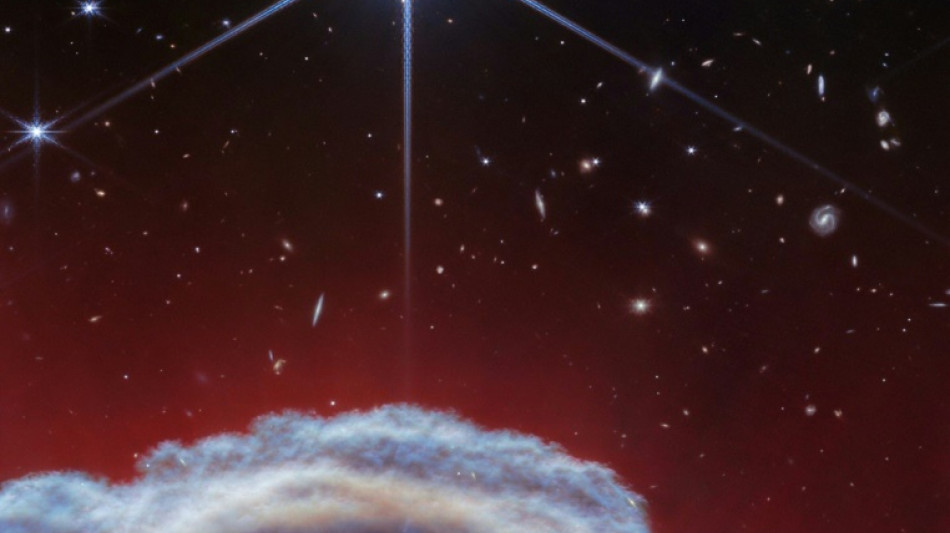
Webb telescope takes stunning images of Horsehead Nebula's 'mane' / Photo: - - ESA, NASA, CSA, STScI/AFP
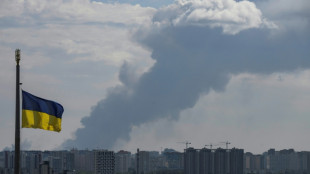
 'Massive' Russian missile, drone attack on Kyiv kills 8
 Defence tech hub Munich booms as Europe rearms
 Nigeria rethinks criminalisation of suicide

 Osaka channels NBA icon Iverson to reach US Open second round
 Fast-fashion giant Shein plunges 10% on Hong Kong debut
 South Korea hire former Spain boss Moreno as interim coach

 China-Taiwan friction clouds Pacific summit

 Two dead after stabbing in New York's Times Square

 Anthropic signs $35B computing deal with startup backed by Nvidia
 Drones in Ithaca: Azov's Odyssey turns Ukraine war into modern myth
 Boat builders keep Pakistan's fishing heritage afloat

 Australia axe Labuschagne for Zimbabwe, South Africa ODI series

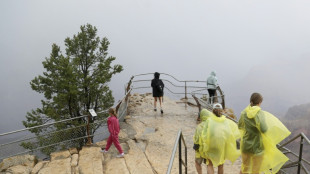 Heavy rain at Grand Canyon after flood kills 2, dozen missing

 Kushner blames soccer power struggle for World Cup plan collapse

 Buoyant Alcaraz shakes off nerves to advance at US Open
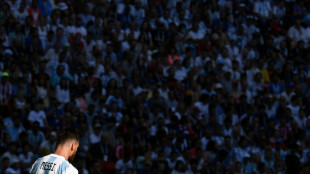
 US draws European pushback with Russia G20 finance invite

 Jury begins deliberations in Tupac Shakur murder trial
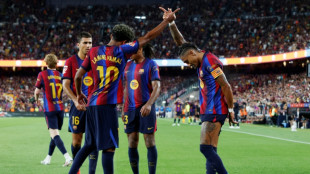
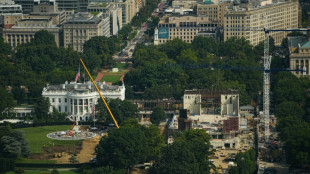 US Supreme Court allows Trump ballroom project to proceed

 Trump says US reviewing position on Falkland Islands

 Saka strikes as flawless Arsenal punish troubled Villa

 Oil prices surge on renewed fighting in US-Iran war

 Cycling superstar Pogacar has surgery after Vuelta crash
 Man City agree deal for Everton's Ndiaye

 Apple CEO Tim Cook gives nod to founder Steve Jobs in final memo

 Russian finance minister makes unexpected appearance at G20

NASA's James Webb telescope has captured the most detailed infrared images ever taken of the Horsehead Nebula, one of the most majestic and recognizable objects in the night sky, the space agency said Monday.
The new observations show the top of the "horse's mane," revealing for the first time the small scale structures on the edge of the giant cloud of dust and gas.
Located roughly 1,300 light years away in the constellation Orion ("The Hunter"), the iconic silhouette of a horse's head and neck rises from what look like churning waves of interstellar foam.
Webb, the most powerful space observatory ever built, is able to detect infrared light at unprecedented resolutions, revealing objects that cannot be seen using the visible spectrum in optical telescopes.
"An international team of astronomers has revealed for the first time the small-scale structures of the illuminated edge of the Horsehead," a NASA statement said.
As ultraviolet light evaporates the dust cloud, particles are swept away by the outflow of heated gas -- a process Webb has now shown in action.
The observations have also given astronomers new insights into how dust blocks and emits light, and a better idea of the nebula's multidimensional shape.
The work was the result of an study led by Karl Misselt of the University of Arizona, and published Monday in Astronomy & Astrophysics.
The Horsehead Nebula has fascinated space enthusiasts since its discovery in 1888 by the renowned Scottish astronomer Williamina Fleming.
While it appears shadowy in optical light, the nebula comes to life when viewed through infrared wavelengths, taking on transparent and ethereal hues.
This delicate pillar of hydrogen gas infused with dust is being steadily worn away by the radiation of a nearby star. Astronomers estimate the Horsehead will disappear in another five million years.
G.Stevens--AMWN