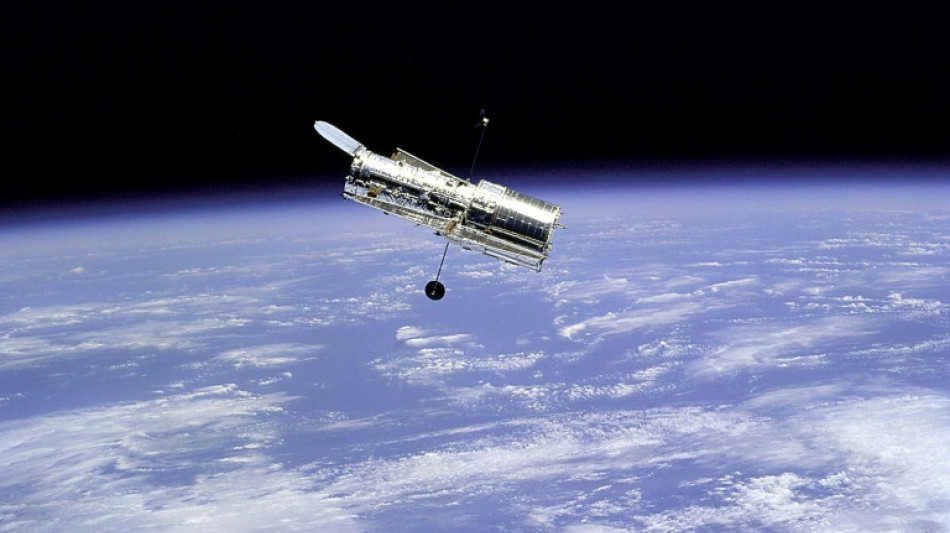
Hubble trouble: Veteran space telescope forced to take it easy / Photo: NASA - NASA/AFP/File
 Afghanistan war victims left 'without justice', UN says

 Iran president offers US olive branch before Putin meeting

 China-Nepal flood toll tops 1,000 as tunnel rescue offers last hope
 Japan to relax overtime regulation under workaholic PM
 Thwarted Niger mutiny exposes junta's Russia dependence
 Illegal mining ravages S.Africa's economic hub
 Nepal's wall of missing offers last hope after Himalayan flood

 US to press G20 on light-touch AI regulation

 2 die in Grand Canyon flash flood, only 1 person unaccounted for
 US Army Secretary Driscoll submits resignation: White House
 Oil extends gains, stocks drop as Trump issues fresh Iran warning
 Tsitsipas says Kyrgios's positive cocaine test 'kind of expected'

 In Japan's mountains, a different way to manage bears
 Middle East war a boon for UAE defence giant with global ambitions
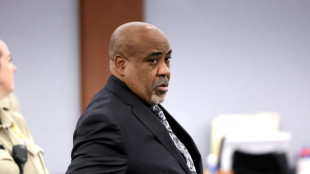 Former gang member found guilty of murdering Tupac Shakur
 Connecting Excellence Group PLC Announces Treasury up By 10 BTC to 72.941 & £655,999 Raised

 InterContinental Hotels Group PLC Announces Transaction in Own Shares - September 01
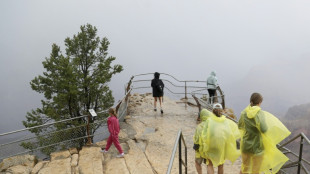 Heavy rain at Grand Canyon after flood kills 2, dozen missing
 Kushner blames soccer power struggle for World Cup plan collapse

 Buoyant Alcaraz shakes off nerves to advance at US Open
 US draws European pushback with Russia G20 finance invite
 Jury begins deliberations in Tupac Shakur murder trial
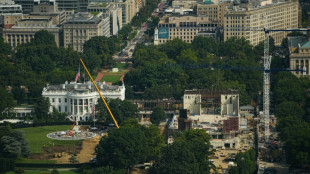 US Supreme Court allows Trump ballroom project to proceed

 Trump says US reviewing position on Falkland Islands

 Saka strikes as flawless Arsenal punish troubled Villa
The venerable Hubble Space Telescope, which has revolutionized astronomical discovery since its launch in 1990, will ease into retirement with a scaled-back observing schedule, NASA officials said Tuesday.
One of the three gyroscopes that control the direction in which the telescope points has become unstable in recent months, leading to intermittent "safe mode" episodes -- most recently on May 24.
"After completing a series of tests and carefully considering our options, we have made the decision that we will transition Hubble to operate using only one of its three remaining gyros," said NASA's Mark Clampin, director of the astrophysics division.
The other gyro will be kept powered up in reserve for potential future use.
The transition, which should be completed by mid-June, will reduce Hubble's efficiency at carrying out science observations by 12 percent, dropping from 85 orbits a week to 74, said Patrick Crouse, project manager for the Hubble Space Telescope mission.
Over the course of a year, it will still be able to view the full night sky. It will no longer be able to track objects that are closer than Mars -- though such targets were rare anyway, added Crouse.
NASA calculates there is a greater than 70 percent chance of operating with this configuration through 2035. At the end of the telescope's life, the US space agency plans to safely de-orbit or otherwise dispose of the popular science instrument.
"We do not see Hubble as being on its last legs, we do think it's a very capable observatory, (poised) to do exciting science with other observatories in orbit and those that will join us in orbit," said Crouse.
- Most distant star -
Named for astronomer Edwin Hubble, the telescope was launched in 1990 and operates about 320 miles (515 kilometers) above Earth.
Between 1993 and 2009 astronauts visited Hubble five times on repair missions.
NASA and SpaceX previously said they were studying a possible mission that would re-boost Hubble's orbit, which gradually decays over time due to Earth's gravitational pull, and part of that review also considered ways to mitigate against the loss of gyros.
But Clampin said ideas of adding extra gyros to the outside of the telescope were "just notional concepts -- we never even got to the point of actually looking at what that would look like, and how we would do that."
Arguably among the most valuable instruments in scientific history, Hubble continues to make important discoveries, including in 2022 when it detected the farthest individual star ever seen -- Earendel, whose light took 12.9 billion years to reach us.
Clampin said despite its diminished capacity, Hubble keeps performing a "breadth of great science," from investigating objects in our solar system to studying early galaxies to collaborating with the newer James Webb Space Telescope to probe the atmospheres of exoplanets.
While Webb, now the premier space telescope, excels in infrared detection, Hubble's primary focus on visible light provides a complementary capability, enhancing their combined scientific impact.
F.Schneider--AMWN