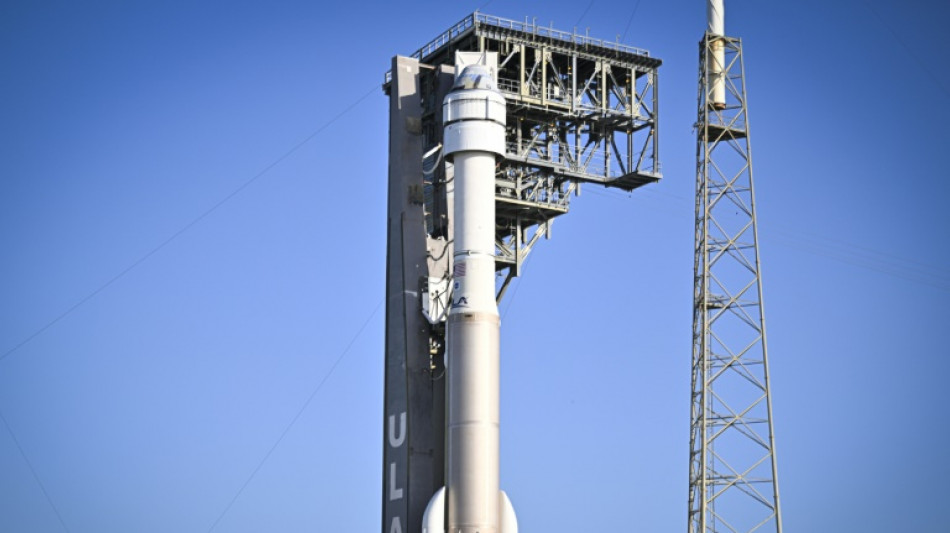
Liftoff, finally: Boeing Starliner launches first crew on third try / Photo: Miguel J. Rodriguez Carrillo - AFP
 Man City chase Fernandez, Arsenal eye Alvarez on deadline day
 El Nino hammering Peru anchovy fishing: industry officials

 Mass Russian barrage kills 12 in Kyiv

 PineX Capital Launches MetaTrader 5 as Prop Firm Expands Trading Platform Offering
 Women survivors face sanitation woes in Nepal relief camp
 Oil extends gains, stocks mixed as Trump issues fresh Iran warning
 Thai resort readies for US carrier's 5,000 sailors
 AI startup Manus says resumes independent operations

 'Massive' Russian missile, drone attack on Kyiv kills 8
 Defence tech hub Munich booms as Europe rearms
 Nigeria rethinks criminalisation of suicide

 Osaka channels NBA icon Iverson to reach US Open second round

 Fast-fashion giant Shein plunges 10% on Hong Kong debut
 South Korea hire former Spain boss Moreno as interim coach
 China-Taiwan friction clouds Pacific summit

 Two dead after stabbing in New York's Times Square

 Anthropic signs $35B computing deal with startup backed by Nvidia
 Drones in Ithaca: Azov's Odyssey turns Ukraine war into modern myth
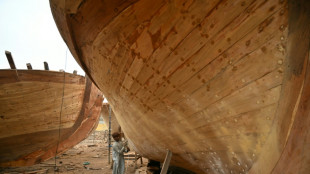 Boat builders keep Pakistan's fishing heritage afloat
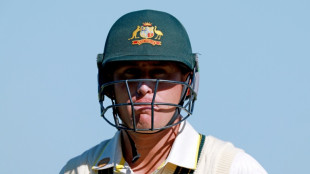 Australia axe Labuschagne for Zimbabwe, South Africa ODI series

 CRI Merges In Morrison & Smith, Expanding Alabama Footprint

 Connecting Excellence Group PLC Announces Treasury up By 10 BTC to 72.941 & £655,999 Raised

 InterContinental Hotels Group PLC Announces Transaction in Own Shares - September 01
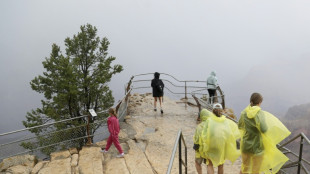 Heavy rain at Grand Canyon after flood kills 2, dozen missing

 Kushner blames soccer power struggle for World Cup plan collapse

Boeing on Wednesday launched its very first astronauts bound for the International Space Station aboard a Starliner capsule, which joins a select club of spacecraft to carry humans beyond Earth.
The third time turned out to be the charm for the aerospace giant, after two previous bids to fly with crew were aborted late into the countdown, for technical reasons.
Astronauts Butch Wilmore and Suni Williams, both of whom have two previous spaceflights under their belts, blasted off at 10:52 am (1452 GMT) from the Cape Canaveral Space Force Station in Florida, for a roughly one-week stay at the station.
"Suni and I are honored to share this dream of spaceflight with each and every one of you," Wilmore, who is commander of the test flight, said just before liftoff. "Let's put some fire in this rocket, and let's push it to the heavens."
Starliner becomes just the sixth type of US-built spaceship to fly NASA astronauts, following the Mercury, Gemini and Apollo programs in the 1960s and 1970s, the Space Shuttle from 1981 to 2011, and SpaceX's Crew Dragon from 2020.
The Starliner program has been beset by years of safety scares and delays, and a successful mission will offer Boeing a much-needed reprieve from the intense safety concerns surrounding its passenger jets.
NASA meanwhile is looking to certify Boeing as a second commercial operator to ferry crews to the ISS -- something Elon Musk's SpaceX has already been doing for the US space agency for four years.
- Embarrassing setbacks -
Both companies received multibillion-dollar contracts in 2014 to develop their crew capsules, following the end of the Space Shuttle program that left the US temporarily reliant on Russian rockets for rides.
Boeing, with its 100-year history, was heavily favored, but its program fell badly behind.
Setbacks ranged from a software bug that put the spaceship on a bad trajectory on its first uncrewed test, to the discovery that the cabin was filled with flammable electrical tape after the second.
The first crewed launch attempt on May 6 was scuppered in the final hours due to a buzzy valve on the United Launch Alliance Atlas V rocket the capsule sits atop.
Then on Saturday, things were even more dramatic with liftoff aborted with less than four minutes left on the countdown clock as the ground launch computer went into an automatic hold.
The problem was later traced to a faulty power supply source connected to the computer, with the malfunctioning unit since replaced.
In both cases, Wilmore and Williams were strapped in and ready to go, only to be forced to return to strict quarantine in their quarters.
The pair of ex-Navy test pilots might have been forgiven for thinking they were stuck in Groundhog Day as they waved their goodbyes to their families on Wednesday morning and headed to the astrovan that led them to the launchpad.
While teams worked to replace the faulty rocket valve that postponed the first crewed launch attempt, a small helium leak located in one of Starliner's thrusters came to light.
Rather than replace the seal, which would require taking the spaceship apart in its factory, NASA and Boeing officials declared it safe enough to fly as is.
The astronauts will now be charged with putting Starliner through the wringer, including taking manual control of the spacecraft on its way to the ISS.
During their stay on the research platform, they will continue to evaluate the craft, including simulating whether the ship can be used as a safe haven in the event of problems on the orbital outpost.
After undocking, Starliner will re-enter the atmosphere, with the crew experiencing 3.5G as they slow down from 17,500 miles an hour (28,000 kph) to a gentle parachute and airbag-assisted landing in the western United States.
L.Davis--AMWN