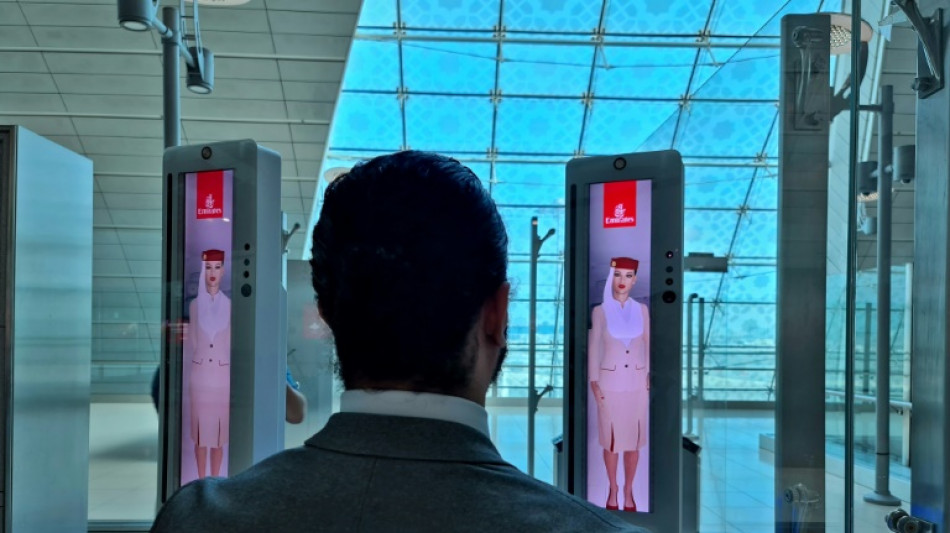
Settlement curbs firm's facial recognition database in US / Photo: Mohamad Ali Harissi - AFP
 Morning Roundup: Cycling Classic Returns as Cruise Port Opens and Plant Library Grows

 Cowbells Mark Return of Philadelphia Cycling Classic for Carpenter Family

 Apprenticeship Awards Name Derbyshire and Nottinghamshire Finalists

 £1m Dental Foundation Launches Mobile Care for Vulnerable People

 Firebloom EP01 Delivers Fast Stone-Baked Pizza Indoors and Outdoors

 Family-Run Cafe Opens Second Nottingham City Centre Location

 Aldi Sets Reduced Hours for August Bank Holiday

 UK Moves 2026 Boxing Day Bank Holiday to Monday

 HMS Belfast Exhibition Revisits the Final Days Before D-Day

 Barnum Musical Returns With Circus Spectacle

 London Marathon Two-Day Plan Raises Questions Over 2027 Disruption

 Wormwood Scrubs Failings Found After Wife's Urgent Warning Went Unheeded

 London Kids' Open-Top Bus Tour Offers Family Alternative to the Tube

 London Couple Cuts Annual Spending by £1,600 Without Giving Up Travel

 Dubai Investor Explains Dh50,000 Monthly Draw and Long-Term Strategy
 Oil Traders Weigh Iran War Risk Against Diplomatic Signals

 US Cancels Taif Sami Mohammed's Visa and Adds Her to Watchlist

 Tamil Nadu Assembly Clash Continues Over 10.5% Vanniyar Reservation

 Chennai Police Arrest Mother and Daughter Over ₹40 Lakh Chit Fund Case

 PSBB K.K. Nagar Pair Wins Madras Quiz

 Chennai Hospital Opens Upgraded Holistic Wellness Facility

 Okinawan Festival Returns With Revised Convention Center Format

 Hawaiʻi Supreme Court Ruling Removes Waters From Council Contest

 Consolidated Theatres Launches Hawaiʻi-Made Film Series in September

 Iceland votes on whether to resume EU membership talks

Startup Clearview AI has agreed to limit access to its controversial facial recognition database in the United States, settling a lawsuit filed by privacy advocates, a court filing showed Monday.
The deal, which needs approval by the court to become final, would resolve litigation filed two years ago by the American Civil Liberties Union (ACLU) and rights groups accusing Clearview of violating a strict biometric privacy law in the state of Illinois.
A main provision of the settlement permanently bans Clearview from making its "faceprint" database available to most businesses or other private entities in the country, according the ACLU.
"Clearview can no longer treat people's unique biometric identifiers as an unrestricted source of profit," said ACLU speech, privacy and technology director Nathan Freed Wessler.
"Before this agreement, Clearview ignored the fact that biometric information can be misused to create dangerous situations and threats" to lives, said Linda Xochitl Tortolero, chief executive of Chicago-based nonprofit Mujeres Latinas en Accion.
"Today that's no longer the case."
Clearview will also stop its practice of offering free trial accounts to police officers without the knowledge or approval of their employers, the ACLU said.
The ban does not limit Clearview from working with federal or state agencies other than those in Illinois, the lawsuit said.
Clearview admits no wrongdoing in the settlement.
Clearview AI says it has built up a database of more than 10 billion facial images taken from public websites, ranging from social media to news portals, which it touts as a tool for law enforcement.
- Still checking faces -
Clearview chief executive Hoan Ton-That said the company has told the court that it intends to make its facial recognition software available to commercial customers, without the database of images.
"Clearview AI's posture regarding sales to private entities remains unchanged," the chief executive said in response to an AFP inquiry.
Facial recognition is used to unlock smartphones, verify identities, board aircraft and more, he noted.
The settlement does not require any "material change" in the Clearview business model," said Cahill Gordon, an attorney representing the company.
Campaigners have condemned Clearview's use of images for being open to abuse, and a number of groups including Privacy International last year filed complaints with data regulators in France, Austria, Italy, Greece and Britain.
Italy's data privacy watchdog in March fined Clearview 20 million euros (almost $22 million) over its facial recognition software.
The watchdog ordered the company to delete data relating to people in Italy and banned it from further collection and processing of information there.
France's privacy watchdog as well in December ordered Clearview to delete data on its citizens and cease further collection.
Meanwhile in June last year, Canada's independent parliamentary watchdog ruled that both Clearview's database and the use of it by federal police were illegal.
L.Durand--AMWN