-
 Morning Roundup: Cycling Classic Returns as Cruise Port Opens and Plant Library Grows
-
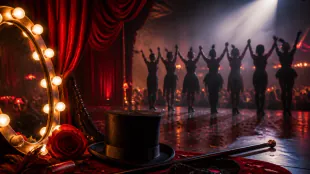
Philadelphia Burlesque Show Honoured Tim Curry Weeks Before His Death
-
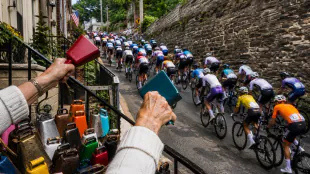 Cowbells Mark Return of Philadelphia Cycling Classic for Carpenter Family
-
Chinese Vehicle Exports Exceed Five Million in First Half of 2026

-
 Apprenticeship Awards Name Derbyshire and Nottinghamshire Finalists
-
NEOM Bath Foam Price Falls 45% in Limited Amazon Offer

-
 £1m Dental Foundation Launches Mobile Care for Vulnerable People
-
Boots Last Note Range Adds Five £12.99 Eau de Parfums

-
 Firebloom EP01 Delivers Fast Stone-Baked Pizza Indoors and Outdoors
-
£120 Autumn Throw Discounted to £35 in Seasonal Sale

-
 Family-Run Cafe Opens Second Nottingham City Centre Location
-
Former Pleasure Island Site Proposed as Cleethorpes Holiday Resort

-
 Aldi Sets Reduced Hours for August Bank Holiday
-
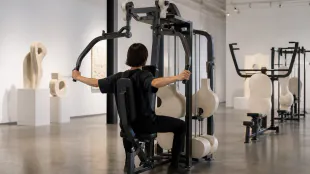
Nottingham Exhibition Replaces Gym Weights With Jesmonite Sculpture
-
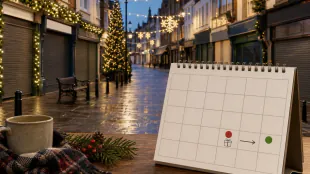 UK Moves 2026 Boxing Day Bank Holiday to Monday
-
HMRC Revises Company-Car Fuel Rates From September 1

-
 HMS Belfast Exhibition Revisits the Final Days Before D-Day
-
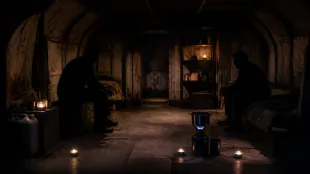
Slow Fire at Jermyn Street Theatre Examines Survival and Moral Choice
-
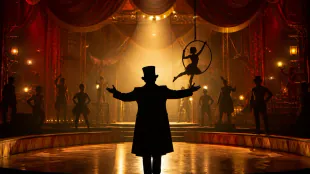 Barnum Musical Returns With Circus Spectacle
-
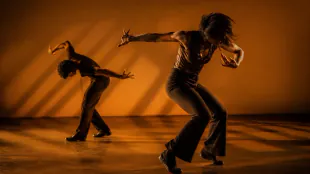
The Brown Suite Blends James Brown's Music With Street Dance
-
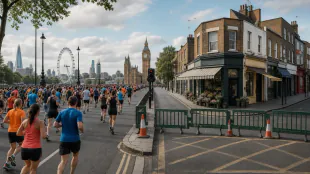 London Marathon Two-Day Plan Raises Questions Over 2027 Disruption
-
Southwark Council Error Leaves Vulnerable Woman Without Phone Service

-
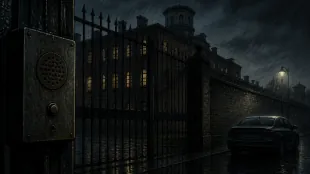 Wormwood Scrubs Failings Found After Wife's Urgent Warning Went Unheeded
-
Former Surbiton Teacher Barred Indefinitely for Sexual Misconduct
-
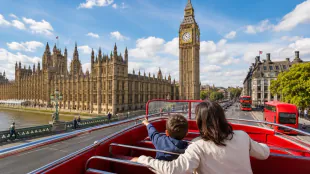 London Kids' Open-Top Bus Tour Offers Family Alternative to the Tube
-
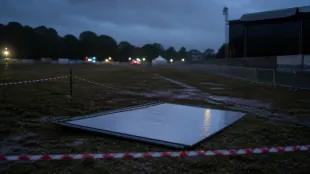
Fatal Sign Collapse Ends Big Church Festival Early
-
 London Couple Cuts Annual Spending by £1,600 Without Giving Up Travel
-
Rapper Criticises Theresa May During All Points East Performance

-
 Dubai Investor Explains Dh50,000 Monthly Draw and Long-Term Strategy
-
Baladi App Turns Lebanon's Broken Infrastructure Into a Public Map

-
 Oil Traders Weigh Iran War Risk Against Diplomatic Signals
-
Netflix Series Reconstructs Mica Miller's Life and Death

-
 US Cancels Taif Sami Mohammed's Visa and Adds Her to Watchlist
-
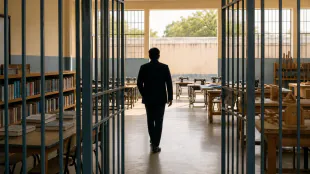
Vijay Orders More Rehabilitation Opportunities During Puzhal Prison Visit
-
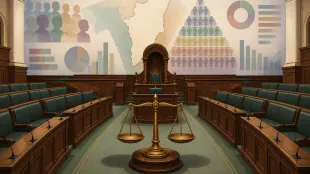 Tamil Nadu Assembly Clash Continues Over 10.5% Vanniyar Reservation
-
Suitcase Murder Suspect Captured in Manipur

-
 Chennai Police Arrest Mother and Daughter Over ₹40 Lakh Chit Fund Case
-
Chennai Waste Debate Pits Worker Demands Against Dumping Complaints

-
 PSBB K.K. Nagar Pair Wins Madras Quiz
-
Athiya Agarwal Reflects on the Culture and Community of Chennai

-
 Chennai Hospital Opens Upgraded Holistic Wellness Facility
-
Ammunition Found in Woman's Cabin Bag at Chennai Airport

-
 Okinawan Festival Returns With Revised Convention Center Format
-
Anthony Arceneaux Outlines Hawaiʻi Offense Before 2026 Season

-
 Hawaiʻi Supreme Court Ruling Removes Waters From Council Contest
-
Muse Honolulu Site Moves Toward October Demolition Preparations

-
 Consolidated Theatres Launches Hawaiʻi-Made Film Series in September
-
State Seeks Tips After Vandalism at Maui High Restroom Project

-
 Iceland votes on whether to resume EU membership talks
-
Heavy gunfire rocks Niger capital, state TV signal cut
First image of black hole at Milky Way's centre revealed
An international team of astronomers on Thursday unveiled the first image of a supermassive black hole at the centre of our own Milky Way galaxy -- a cosmic body known as Sagittarius A*.
The image -- produced by a global team of scientists known as the Event Horizon Telescope (EHT) Collaboration -- is the first, direct visual confirmation of the presence of this invisible object, and comes three years after the very first image of a black hole from a distant galaxy.
"For decades, we have known about a compact object that is at the heart of our galaxy that is four million times more massive than our Sun," Harvard University astronomer Sara Issaoun told a press conference in Garching, Germany, held simultaneously with other media events around the world.
"Today, right this moment, we have direct evidence that this object is a black hole."
Black holes are regions of space where the pull of gravity is so intense that nothing can escape, including light.
The image thus depicts not the black hole itself, because it is completely dark, but the glowing gas that encircles the phenomenon in a bright ring of bending light.
As seen from Earth, it appears the same size as a donut on the surface of the Moon, Issaoun explained.
"These unprecedented observations have greatly improved our understanding of what happens at the very centre of our galaxy," EHT project scientist Geoffrey Bower, of Taiwan's Academia Sinica, said in a statement.
The research results are published in The Astrophysical Journal Letters.
- Virtual telescope -
Sagittarius A* -- abbreviated to Sgr A*, and pronounced "sadge-ay-star" -- owes its name to its detection in the direction of the constellation Sagittarius.
Located 27,000 light years from Earth, its existence has been assumed since 1974, with the detection of an unusual radio source at the centre of the galaxy.
In the 1990s, astronomers mapped the orbits of the brightest stars near the centre of the Milky Way, confirming the presence of a supermassive compact object there -- work that led to the 2020 Nobel Prize in Physics.
Though the presence of a black hole was thought to be the only plausible explanation, the new image provides the first direct visual proof.
Capturing images of such a faraway object required linking eight giant radio observatories across the planet to form a single "Earth-sized" virtual telescope called the EHT.
"The EHT can see three million times sharper than the human eye," German scientist Thomas Krichbaum of the Max Planck Institute for Radio Astronomy told reporters.
"So, when you are sitting in a Munich beer garden, for example, one could see the bubbles in a glass of beer in New York."
The EHT gazed at Sgr A* across multiple nights for many hours in a row -- a similar idea to long-exposure photography and the same process used to produce the first image of a black hole, released in 2019.
That black hole is called M87* because it is in the Messier 87 galaxy.
- Einstein would be 'ecstatic' -
The two black holes bear striking similarities, despite the fact that Sgr A* is 2,000 times smaller than M87*.
"Close to the edge of these black holes, they look amazingly similar," said Sera Markoff, co-chair of the EHT Science Council, and a professor at the University of Amsterdam.
Both behaved as predicted by Einstein's 1915 theory of General Relativity, which holds that the force of gravity results from the curvature of space and time, and cosmic objects change this geometry.
Despite the fact Sgr A* is much closer to us, imaging it presented unique challenges.
Gas in the vicinity of both black holes moves at the same speed, close to the speed of light. But while it took days and weeks to orbit the larger M87*, it completed rounds of Sgr A* in just minutes.
The brightness and pattern of the gas around Sgr A* changed rapidly as the team observed it, "a bit like trying to take a clear picture of a puppy quickly chasing its tail," said EHT scientist Chi-kwan Chan of the University of Arizona.
The researchers had to develop complex new tools to account for the moving targets.
The resulting image -- the work of more than 300 researchers across 80 countries over a period of five years -- is an average of multiple images that revealed the invisible monster lurking at the centre of the galaxy.
"The fact that we're able to make an image of one, something that should be unseeable... I think that that's just really exciting," Katie Bouman, a Caltech professor who played a key role in creating the image, told AFP.
Scientists are now eager to compare the two black holes to test theories about how gasses behave around them -- a poorly understood phenomenon thought to play a role in the formation of new stars and galaxies.
Probing black holes -- in particular their infinitely small and dense centers known as singularities, where Einstein's equations break down -- could help physicists deepen their understanding of gravity and develop a more advanced theory.
"What about Einstein? Would he smile seeing all these hundreds of scientists still not having proven him wrong?" said Anton Zensus of the Max Planck Institute.
"I rather think that he would be ecstatic seeing all the experimental possibilities we have in this field today."
P.Silva--AMWN