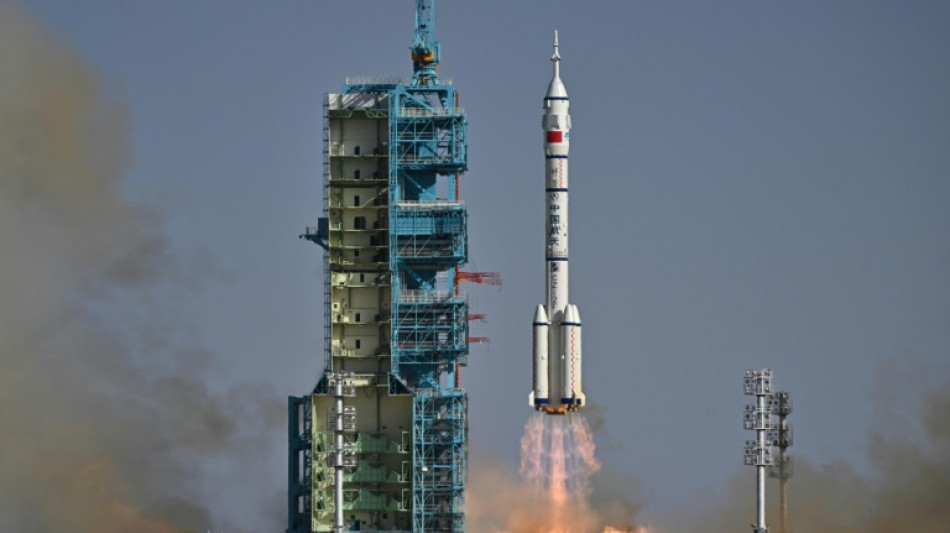
Three Chinese astronauts blast off for Tiangong space station / Photo: Pedro Pardo - AFP
 US midterms begin with chaos over mail-voting crackdown
 Russell tops second practice to beat Ferrari and Antonelli in Italy

 'I love the players we have', insists Arsenal boss Arteta

 Jury resumes deliberations in case of US mother who killed her three children

 Farage's Reform UK meets under cloud of new donation scandal
 Man Utd in 'good place' despite imperfect squad, says Carrick

 Le Pen party sparks furore with 'turn off tap' to Ukraine call

 Emery says Madjo's time will come after Villa Euro exclusion
 Workers reeling after VW cuts open door to factory closures
 Liquid Mercury Announces Initial Closing of ACQUA1 Offering

 Stocks slip as robust US jobs data stokes rate hike chances
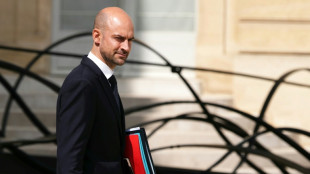 France to abandon 'distorted' Mercator map projection: minister

 Celtic, Rangers away fans shut out from Old Firm derbies
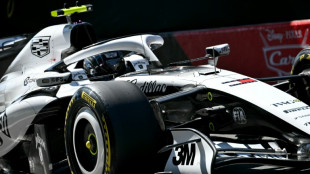 Cadillac enjoying 'very respectable' first season, says team boss

 Five acquitted over deadly 2017 landslide in Swiss Alps
 France unveils 1 bn euro farm aid package after climate-hit summer
 Irish heroine Taylor eyes fairytale finish to trailblazing ring career
 Weather and war push up food prices in August: FAO
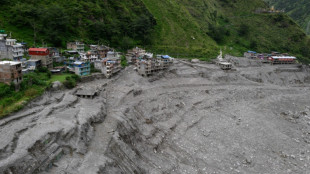
 'No longer safe': Nepal flood survivors left landless
 Stocks mixed before US jobs data, oil dips
 Optimised urinals and buried underwear at 2026 Ig Nobels

 German factory orders rise again in latest recovery sign
 Nepal's 'Himalayan tsunami': what we know

 SPAYZ.io brings Africa’s payment growth story to Forex Expo Dubai 2026

 Zelensky slams his security services for 'unacceptable' shootout
A Chinese rocket carrying three astronauts to the country's space station blasted off from its remote launch site Thursday, the latest milestone in Beijing's race to become a leading celestial power.
Beijing has pumped billions of dollars into its space programme in recent years in an effort to achieve what President Xi Jinping describes as the Chinese people's "space dream".
The world's second-largest economy has bold plans to send a crewed mission to the Moon by the end of the decade and eventually build a base on the lunar surface.
Thursday's launch of the Shenzhou-20 mission is intended to ferry a team of three astronauts to China's Tiangong space station.
The Long March-2F rocket lifted into the air in a plume of flame and smoke at the Jiuquan Satellite Launch Base in the desert of northwest China, AFP journalists saw, heralding the start of the six-month mission.
Leading the newest crew is Chen Dong, 46, a former fighter pilot and veteran space explorer who in 2022 became the first Chinese astronaut to clock up more than 200 cumulative days in orbit.
The other two crew members -- 40-year-old former air force pilot Chen Zhongrui, and 35-year-old former space technology engineer Wang Jie -- are embarking on their first space flight.
Hundreds of people brandishing bouquets and miniature national flags packed into the streets of the space base hours before the launch to see the astronauts off on Thursday afternoon.
A band played a rousing military march as the trio, clad in white spacesuits, waved in front of a red banner proclaiming: "Learn from our astronauts! Salute our astronauts!"
"We wish you success!" the crowd shouted in unison as the crew members passed.
Live images on state television then showed the three astronauts being transported by bus to the launch site, beyond which vast stretches of empty desert could be seen.
The crew will work on Tiangong for six months, carrying out experiments in physics and life sciences and installing protective equipment against space debris.
For the first time, they will also bring aboard planarians –- aquatic flatworms known for their regenerative abilities.
The team will also conduct spacewalks, replenish supplies and carry out general maintenance on the space station.
Three astronauts currently aboard Tiangong are scheduled to return to Earth on April 29 after completing handover procedures.
Busloads of space enthusiasts waited by a barren highway several hours ahead of Thursday's launch, braving the high desert sun to catch a glimpse of the rocket perched on the horizon.
A kiosk by the entrance to the launch base did brisk trade in toy rockets and mission-themed memorabilia.
- Jewel in the crown -
During a government tour on Wednesday afternoon, AFP journalists saw the rocket ensconced in a sky-blue launch tower, surrounded by red flags as workers in blue jumpsuits made final checks before the launch.
China's space programme is the third to put humans in orbit and has also landed robotic rovers on Mars and the Moon as it seeks parity with the world's two most established celestial powers, the United States and Russia.
Crewed by rotating teams of three astronauts every six months, Tiangong -- whose name means "celestial palace" in Chinese -- is the jewel in its crown.
China has been excluded from the International Space Station since 2011, when the United States banned NASA from collaborating with Beijing.
It has since sought to bring other countries into its space programme, and signed a deal with longtime ally Pakistan in February to bring the first foreign astronaut aboard Tiangong.
As part of this process, "two Pakistani astronauts will be selected to come to China for training", the CMSA confirmed on Wednesday.
P.Stevenson--AMWN